Scientific Name
Cotyledon orbiculata f. dinteri Jacobsen
Synonym(s)
Cotyledon orbiculata var. dinteri
While Hermann Jacobsen originally described this plant as Cotyledon orbiculata var. dinteri in 1954, he published it as Cotyledon orbiculata f. dinteri in National Cactus and Succulent Journal Vol. 10, No 4, p 80, published by the British Cactus and Succulent Society in 1955.
Scientific Classification
Family: Crassulaceae
Subfamily: Kalanchoideae
Genus: Cotyledon
Etymology
The specific epithet "dinteri (DIN-ter-ee)" honors Mortiz Kurt Dinter🡕 (1868–1945), a German botanist and collector of succulents.
Origin
Cotyledon orbiculata f. dinteri is native to South Africa. It is not accepted as a separate form and is treated as a synonym of Cotyledon orbiculata var. orbiculata.
Description
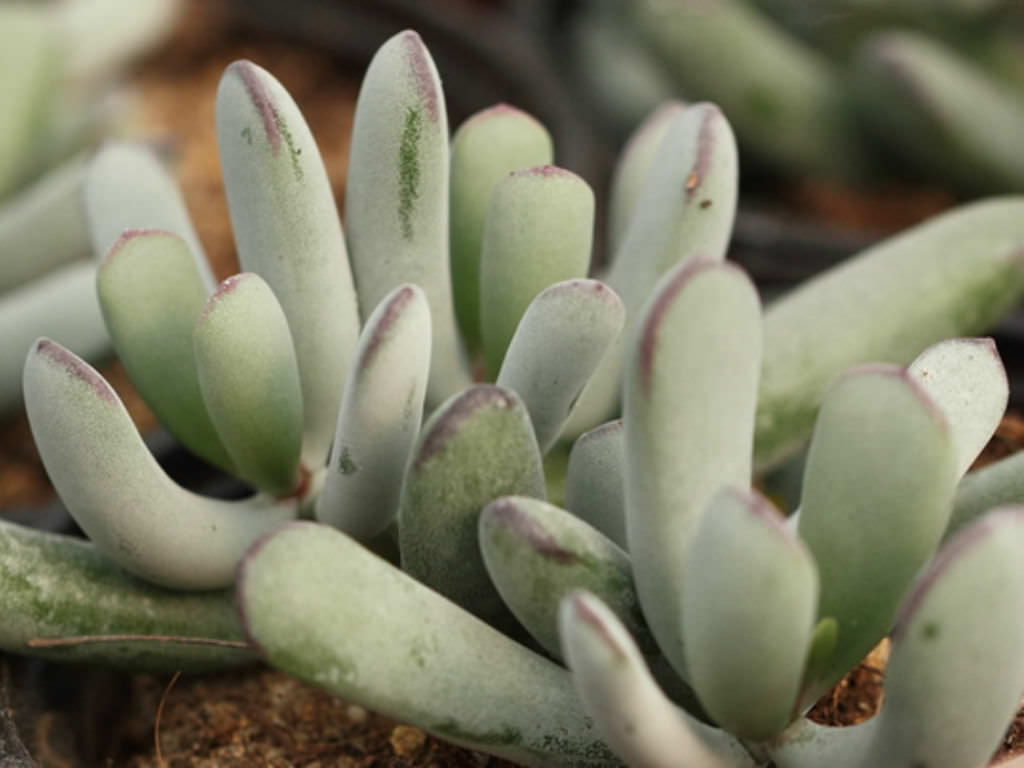
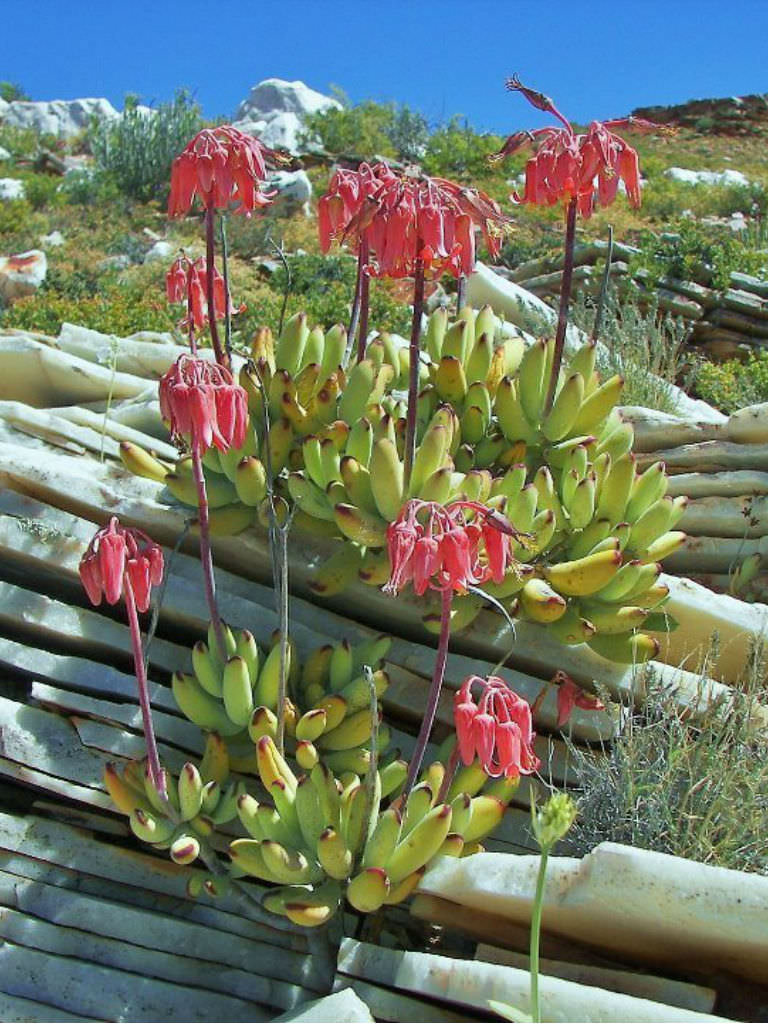
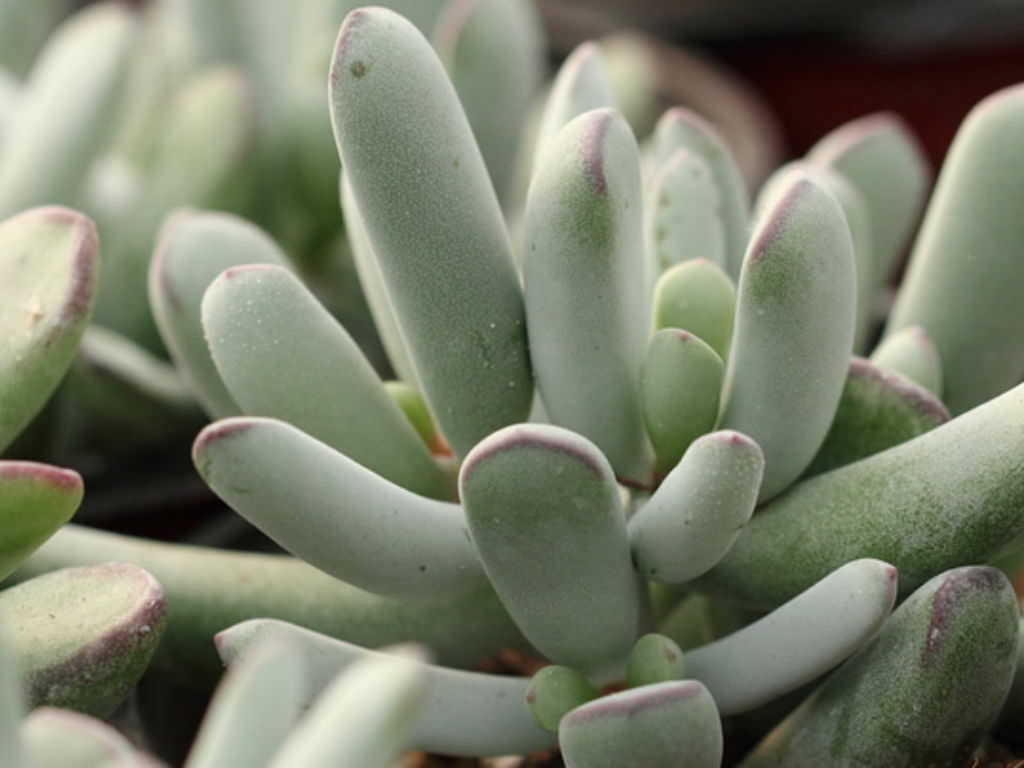
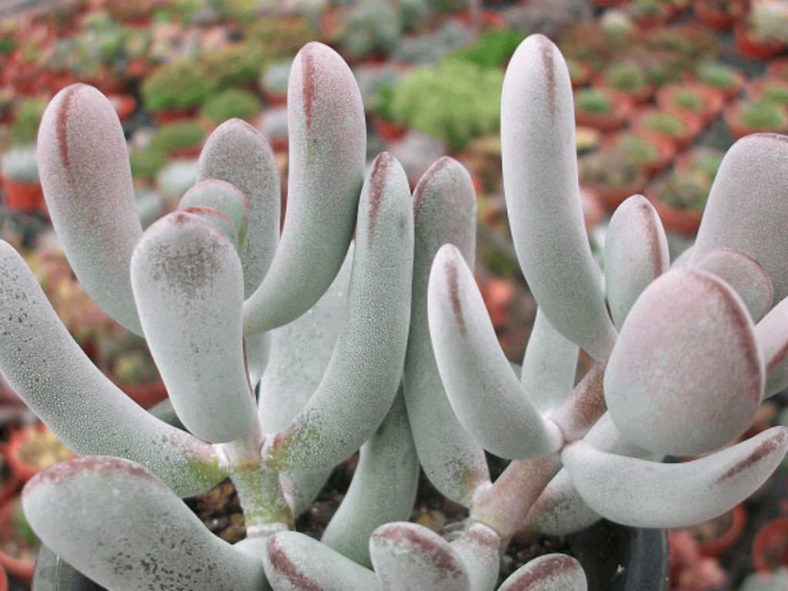
Cotyledon orbiculata f. dinteri is a beautiful succulent shrub with branches that bear powdery gray-green leaves with dark red to brown tip coloration when grown in full sun. It can grow up to 5 feet (1.5 m) tall. The leaves can measure up to 1.8 inches (4.5 cm) long, up to 0.8 inches (2 cm) wide, and nearly as thick as wide. They are narrowed into the very short leaf stalk.
The flowers are bell-shaped, orange to orange-red, and can reach up to 1.2 inches (3 cm) in length. They droop from the top of stalks that can grow up to 2 feet (60 cm) tall.
How to Grow and Care for Cotyledon orbiculata f. dinteri
Hardiness: USDA hardiness zone 9b to 11b: from 25°F (-3.9°C) to 50°F (10°C).
Cotyledons can be divided into two groups. One group consists of evergreen plants that grow in summer. The other group consists of deciduous plants, splendidly magnificent, with large, solid, fleshy stems. The second group grows during the winter and sheds its leaves during the summer.
Cotyledons require a free-draining, gritty mix and plenty of sunlight. They are tolerant of cool, frost-free conditions during the winter if kept dry. Some require pruning to maintain an attractive shape.
Cotyledons should be kept in a sunny position. Follow general succulent watering procedures. Be careful not to overwater when they are deciduous.
As succulents go, Cotyledons certainly are rewarding garden and indoor subjects, practically independent of irrigation in all but full desert conditions. However, they cannot survive in poor light or with poor drainage.
Feed it once or twice during the growing season with a fertilizer specifically formulated for cacti and succulents (poor in nitrogen), including all micronutrients and trace elements diluted to ½ the strength recommended on the label.
See more at How to Grow and Care for Cotyledon.
Links
- Back to genus Cotyledon
- Succupedia: Browse succulents by Scientific Name, Common Name, Genus, Family, USDA Hardiness Zone, Origin, or cacti by Genus
Photo Gallery