Scientific Name
Cotyledon campanulata Marloth
Synonym(s)
Cotyledon teretifolia
Scientific Classification
Family: Crassulaceae
Subfamily: Kalanchoideae
Genus: Cotyledon
Etymology
The specific epithet "campanulata" (pronounced "kam-pan-yoo-LAH-tuh") means "bell-shaped" and refers to the shape of the flowers.
Origin
Cotyledon campanulata is native to South Africa. It usually grows in clumps on lower slopes and in depressions from east of Willowmore to Graaff-Reinet and the Fish River valley in the Eastern Cape province.
Description
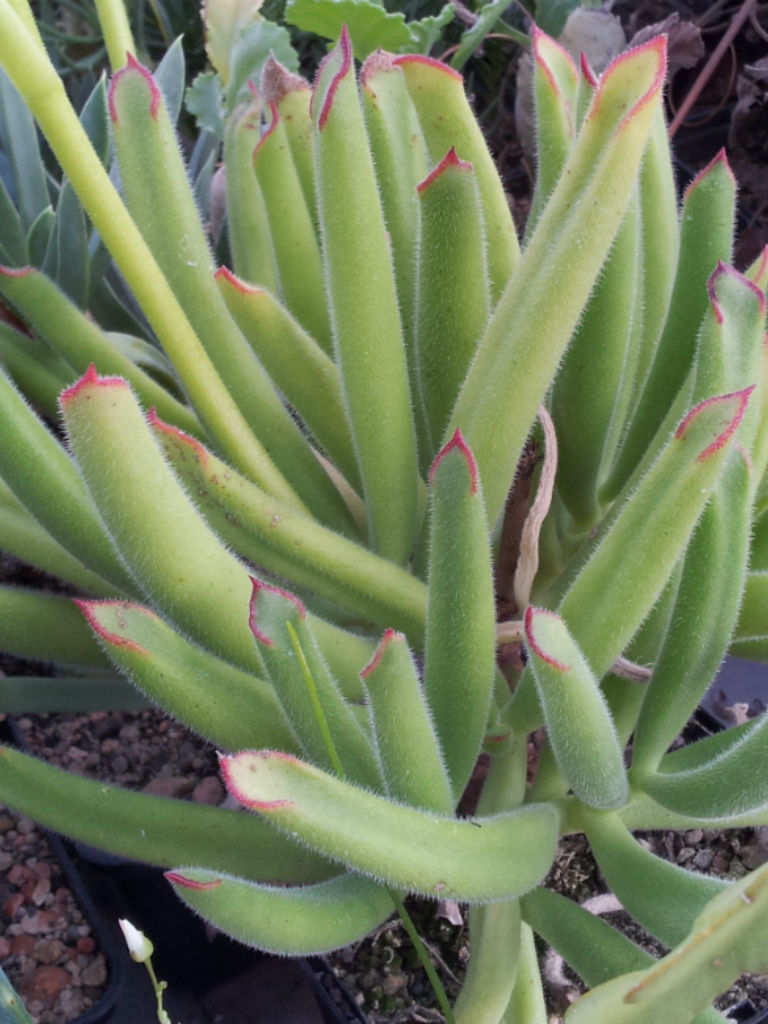
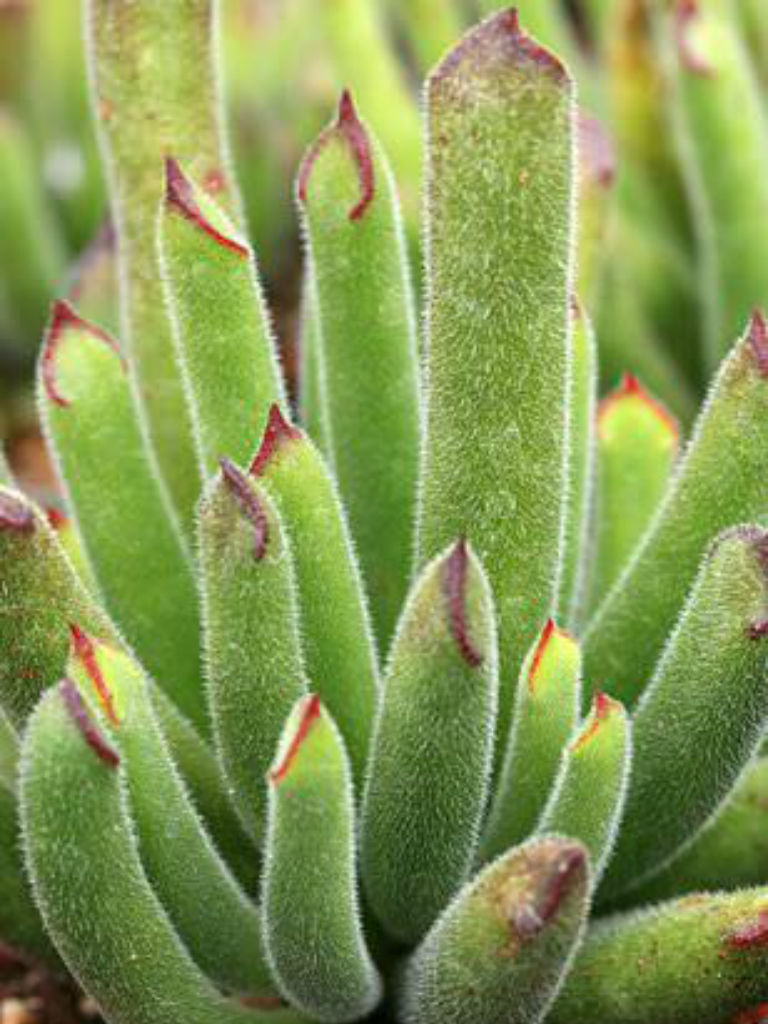
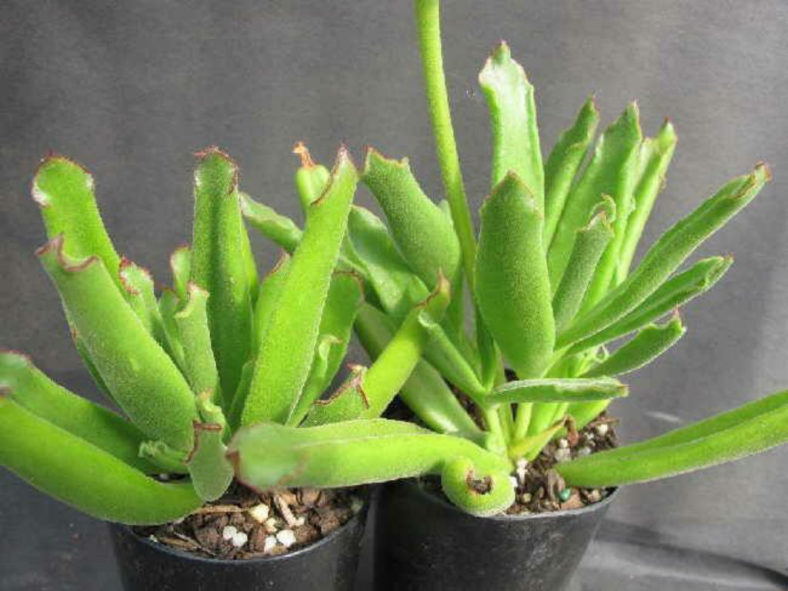
Cotyledon campanulata is a succulent shrublet with spreading to decumbent branches and finger-like, finely hairy, green to yellowish-green leaves with often heart-shaped tips, each with an undulating, reddish-brown margin. It can grow up to 8 inches (20 cm) tall, much-branched from the base. The leaves are opposite, linear to lance-shaped, measuring up to 5.2 inches (13 cm) long and 1.4 inches (3.5 cm) wide.
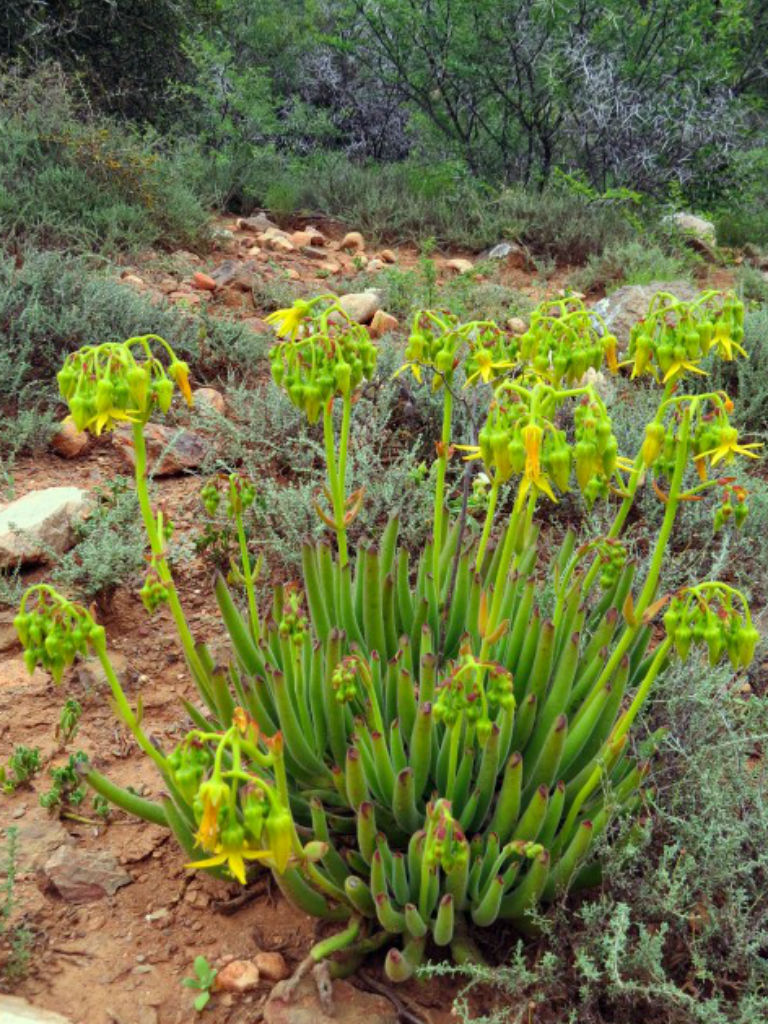
The inflorescence is an erect thyrse with 3 to 5 dichasia, each with 3 to 8 flowers, and can grow up to 12 inches (30 cm) tall. The bell-shaped flowers have triangular sepals the same color as the leaves and a yellow to yellowish-green corolla with a cylindrical to urn-shaped tube and lance-shaped petals.
How to Grow and Care for Cotyledon campanulata
Hardiness: USDA hardiness zone 9b to 11b: from 25°F (-3.9°C) to 50°F (10°C).
Cotyledons can be divided into two groups. One group consists of evergreen plants that grow in summer. The other group consists of deciduous plants, splendidly magnificent, with large, solid, fleshy stems. The second group grows during the winter and sheds its leaves during the summer.
Cotyledons require a free-draining, gritty mix and plenty of sunlight. They tolerate cool, frost-free conditions during the winter if kept dry. Some require pruning to maintain an attractive shape. Cotyledons should be kept in a sunny position. Follow general succulent watering procedures. Be careful not to overwater them when they are deciduous.
As succulents go, Cotyledons certainly are rewarding garden and indoor subjects, practically independent of irrigation in all but full desert conditions. However, they cannot survive in poor light or with poor drainage in wet weather.
Feed it once or twice during the growing season with a fertilizer specifically formulated for cacti and succulents (poor in nitrogen), including all micronutrients and trace elements diluted to ½ the strength recommended on the label.
See more at How to Grow and Care for Cotyledon.
Links
- Back to genus Cotyledon
- Succupedia: Browse succulents by Scientific Name, Common Name, Genus, Family, USDA Hardiness Zone, Origin, or cacti by Genus
Photo Gallery
Click on a photo to see a larger version.