Scientific Name
Bergeranthus multiceps (Salm-Dyck) Schwantes
Synonym(s)
Mesembryanthemum multiceps
Scientific Classification
Family: Aizoaceae
Subfamily: Ruschioideae
Tribe: Ruschieae
Genus: Bergeranthus
Etymology
The specific epithet "multiceps (MUL-tee-seps)" means "many-headed; having many heads" and refers to the crown of the rootstock.
Description
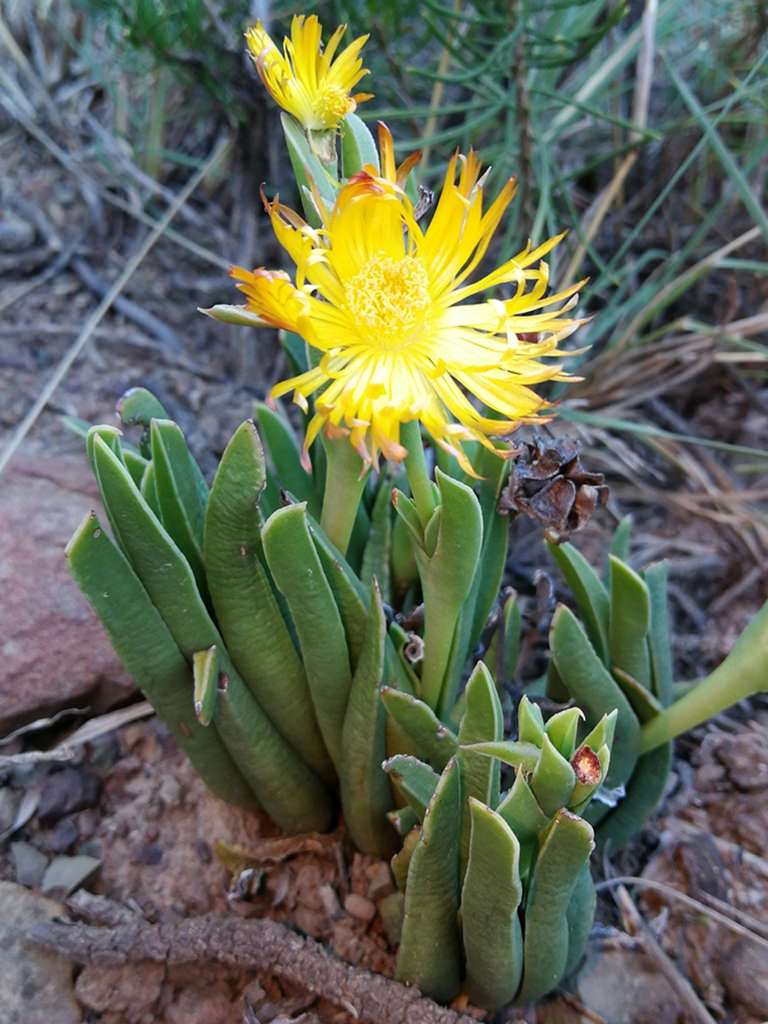
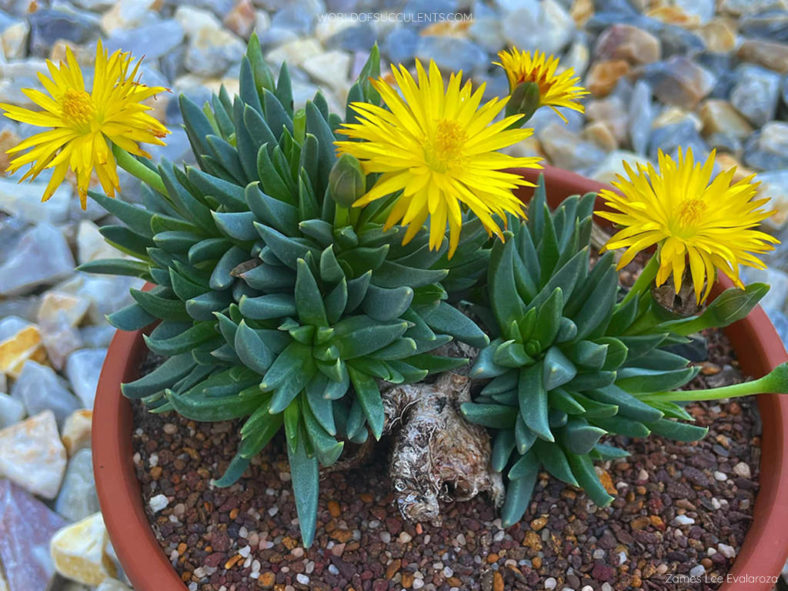
Bergeranthus multiceps is a small succulent that forms a tightly packed clump of suberect, tapering leaves. It can grow up to 3.2 inches (8 cm) tall and develop a single fleshy rootstock that expands with age. The rootstock can reach a diameter of 1.6 inches (4 cm). The leaves are fleshy, green, and triangular in cross-section.
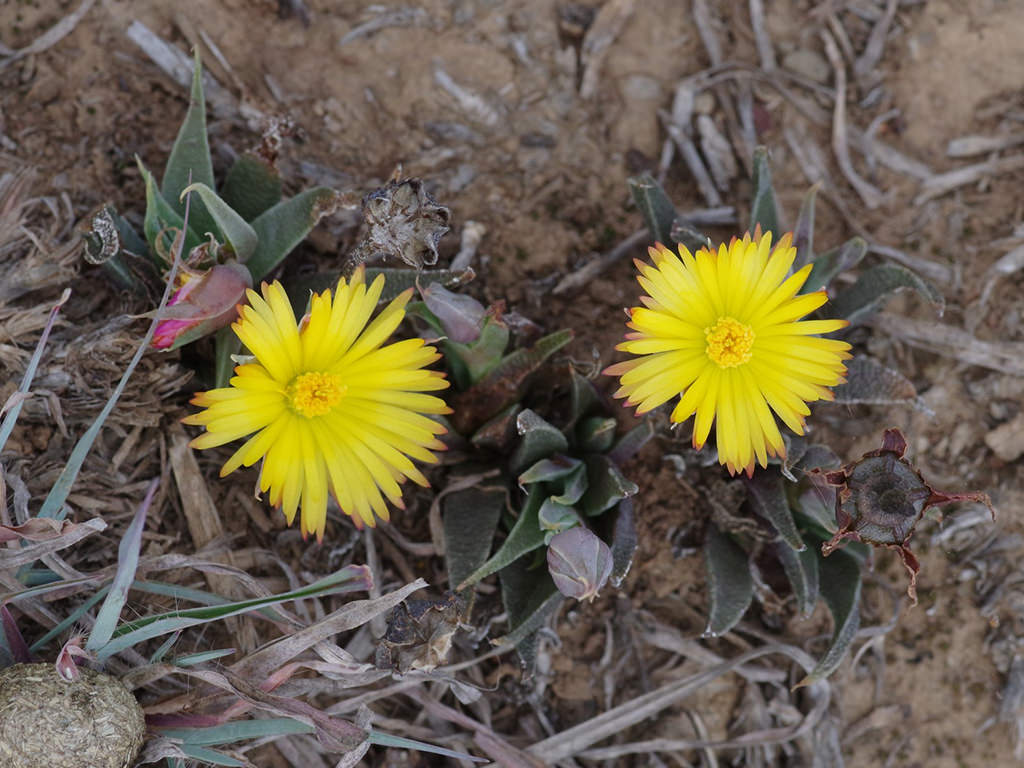
In summer, the yellow flowers with a pink reverse appear on slender pedicels from a short, branched stem. The flowers can reach up to 1.6 inches (4 cm) in diameter and open in the late afternoon or evening. The fruits are 5-locular capsules with pear-shaped seeds.
Origin
Bergeranthus multiceps is native to South Africa. It occurs between Uitenhage (officially renamed Kariega) and East London, and northward to Cradock in the Eastern Cape, growing on sandstone outcrops.
How to Grow and Care for Bergeranthus multiceps
Light: This succulent needs bright light but does not like too much direct sun. A sunny windowsill where the plant receives 4 to 5 hours of direct sunlight early in the day and partial shade in the afternoon is the perfect spot to grow your B. multiceps indoors.
Soil: B. multiceps thrives best in porous soil mixes that allow water to drain away quickly. You can use a commercial potting mix specially designed for succulents or make your own.
Temperature: High temperatures are not a problem for this plant as long as there is plenty of fresh air, but it has poor resistance to extreme cold. B. multiceps can withstand temperatures as low as 20 °F (-6.7 °C). USDA Plant Hardiness Zones 9a to 11b, 20 to 50 °F (-6.7 to 10 °C).
Watering: B. multiceps requires little or no water when it goes dormant, usually in winter. When it begins to grow again in spring, it is safe to water deeply, allowing the soil to dry between waterings. If leaves start to wrinkle during active growth, your plant needs water.
Fertilizing: This small succulent is a light feeder and does not need fertilizer if repotted every two years.
Repotting: B. multiceps will stay happy in the same pot for several decades. The common reasons for repotting are to divide the plant or to give it a larger growing space. The best time to repot this plant is at the beginning of the active growth period, but the repotting can be done almost any time while the plant is actively growing.
Propagation: This species is easily propagated by cuttings, division, and seeds. The best time to take cuttings is in summer. Divide your B. multiceps in late winter before it begins to break dormancy. Sow the seeds in spring or early summer in a pot with a well-drained soil mix.
Learn more at How to Grow and Care for Mesembs.
Toxicity of Bergeranthus multiceps
B. multiceps is considered non-toxic to humans and pets.
Links
- Back to genus Bergeranthus
- Succupedia: Browse succulents by Scientific Name, Common Name, Genus, Family, USDA Hardiness Zone, Origin, or cacti by Genus
Photo Gallery
Click on a photo to see a larger version.