

Ariocarpus scaphirostrus is an endangered, slow-growing geophytic cactus native exclusively to a single valley in Nuevo León, Mexico. Commonly known as Living Rock Cactus, it is highly prized among cactus collectors for its distinct, spineless triangular tubercles and vibrant fall blooms.
Taxonomy of Ariocarpus scaphirostrus
Scientific Name
Ariocarpus scaphirostrus Boed.
Synonym(s)
Ariocarpus scaphirostrus var. swobodae, Ariocarpus scaphirostris
Common Name(s)
Living Rock Cactus
Scientific Classification
Family: Cactaceae
Subfamily: Cactoideae
Tribe: Cacteae
Genus: Ariocarpus
Etymology
The generic name "Ariocarpus" (pronounced "ar-ree-oh-KAR-pus") possibly means "Aria-fruited," referring to a supposed resemblance between Ariocarpus fruits and those of the genus Aria.
The specific epithet "scaphirostrus" (pronounced "skay-fee-ROS-trus") means "boat-beaked; having a boat-shaped beak" and refers to the boat-shaped tips of this species' tubercles.
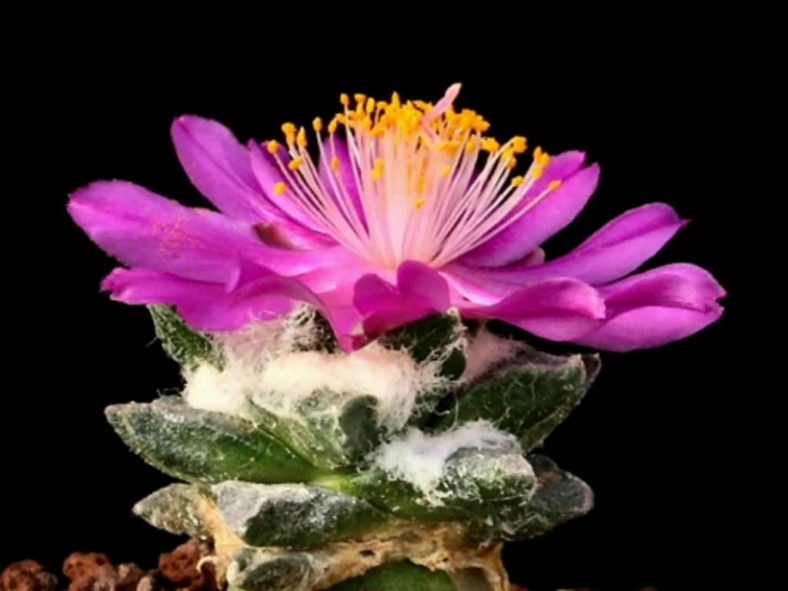
Description
Ariocarpus scaphirostrus, also spelled Ariocarpus scaphirostris, is a slow-growing geophytic cactus with a dark green-to-brown, subglobose stem with large, divergent tubercles. The solitary stem can grow up to 3.6 inches (9 cm) in diameter. The tubercles are triangular in cross-section and slightly incurved, measuring up to 1.6 inches (4 cm) long and 0.3 inches (0.8 cm) wide.
The magenta-colored flowers can reach a diameter of 1.6 inches (4 cm) and appear in the fall. The fruits, which are reddish-green to brown, can grow up to 0.6 inches (1.5 cm) long and 0.3 inches (0.8 cm) in diameter. They contain tiny black seeds.
Origin
Ariocarpus scaphirostrus is native to Mexico. It occurs in the Rayones Valley in Nuevo León, typically between layers of flaky limestone schist, where soil and moisture can accumulate.
How to Grow and Care for Ariocarpus scaphirostrus
Light: Provide very bright light with several hours of direct sunlight. Ariocarpus scaphirostrus can tolerate strong sunlight when properly acclimated, but avoid suddenly exposing greenhouse-grown or indoor plants to intense direct sun. Gradually increase sun exposure to prevent sunburn. Young seedlings benefit from partial shade.
Soil: Use an extremely well-draining, predominantly mineral substrate. A suitable mix includes pumice, lava rock, coarse sand, and fine gravel, with only a small amount of organic material. You can also include a little limestone grit, as the species naturally grows in calcareous habitats. Avoid dense, peat-rich mixes that retain moisture.
Hardiness: Ariocarpus scaphirostrus prefers warm conditions during the growing season and a cool, completely dry rest during winter. Protect it from frost and prolonged cold, especially when grown in a pot. Keep it in a bright, well-ventilated, frost-free location during winter. It is generally considered suitable for USDA hardiness zones 9b–11b, which have average annual extreme minimum temperatures ranging from 25°F to 50°F (-3.9°C to 10°C).
Watering: Water sparingly during the active growing season, typically from late spring through early fall. Water thoroughly, but allow the soil to dry out completely before watering again. Reduce watering as temperatures fall and keep the plant almost completely dry during its cool winter rest. Never leave the roots in persistently moist soil, as they are highly susceptible to rot. Also, avoid watering during cold, humid weather.
Fertilizing: Feed sparingly during the active growing season with a highly diluted, low-nitrogen fertilizer formulated for cacti. One or two applications per growing season are generally sufficient. Avoid fertilizing Ariocarpus scaphirostrus during its winter dormancy or immediately after repotting.
Repotting: Repot about every 2–3 years, or as needed. Use a relatively deep pot with drainage holes to accommodate its substantial taproot. Handle the root carefully, as damage can make the plant more susceptible to rot. Allow any damaged roots to dry before planting, and keep the plant dry for a period after repotting.
Propagation: Ariocarpus scaphirostrus is primarily propagated by seed. Sow fresh seeds in a fine, well-draining mineral substrate and provide warmth, light, and consistent humidity during germination. Protect young seedlings from strong direct sunlight, and avoid letting them dry out completely. Growth is extremely slow, and grafting seedlings onto a suitable rootstock can accelerate development. This species rarely produces offsets, so vegetative propagation is uncommon.
Learn more at How to Grow and Care for Ariocarpus.
Toxicity of Ariocarpus scaphirostrus
Species-specific toxicity information is limited. Some members of the genus Ariocarpus contain alkaloids, so do not ingest the plant. Keep it away from children and pets.
Photo Gallery
Click on a photo to see a larger version.


Internal Links
- Explore all plants within the genus Ariocarpus.
- Explore all plants within the family Cactaceae.