Scientific Name
Ariocarpus agavioides (Castañeda) E.F.Anderson
Synonym(s)
Ariocarpus kotschoubeyanus subsp. agavioides, Neogomesia agavioides
Common Name(s)
Tamaulipas Living Rock Cactus, Magueyito
Scientific Classification
Family: Cactaceae
Subfamily: Cactoideae
Tribe: Cacteae
Genus: Ariocarpus
Etymology
The generic name "Ariocarpus" (pronounced "ar-ree-oh-KAR-pus") possibly means "Aria-fruited," referring to a supposed resemblance between Ariocarpus fruits and those of the genus Aria.
The specific epithet "agavioides" (pronounced "ah-gah-vee-OH-id-eez") means "Agave-like; resembling Agave" and refers to the likeness of this species to the members of the genus Agave.
Although often written as "agavoides," the correct original spelling is "agavioides." The epithet was first published as Neogomesia agavioides by Marcelino Castañeda y Nuñez de Cáceres in 1941 and retained when the species was transferred to Ariocarpus in 1962. The alternative spelling "agavoides" is an attempted correction, but the International Code of Nomenclature🡕 does not permit this correction in this case.
Description
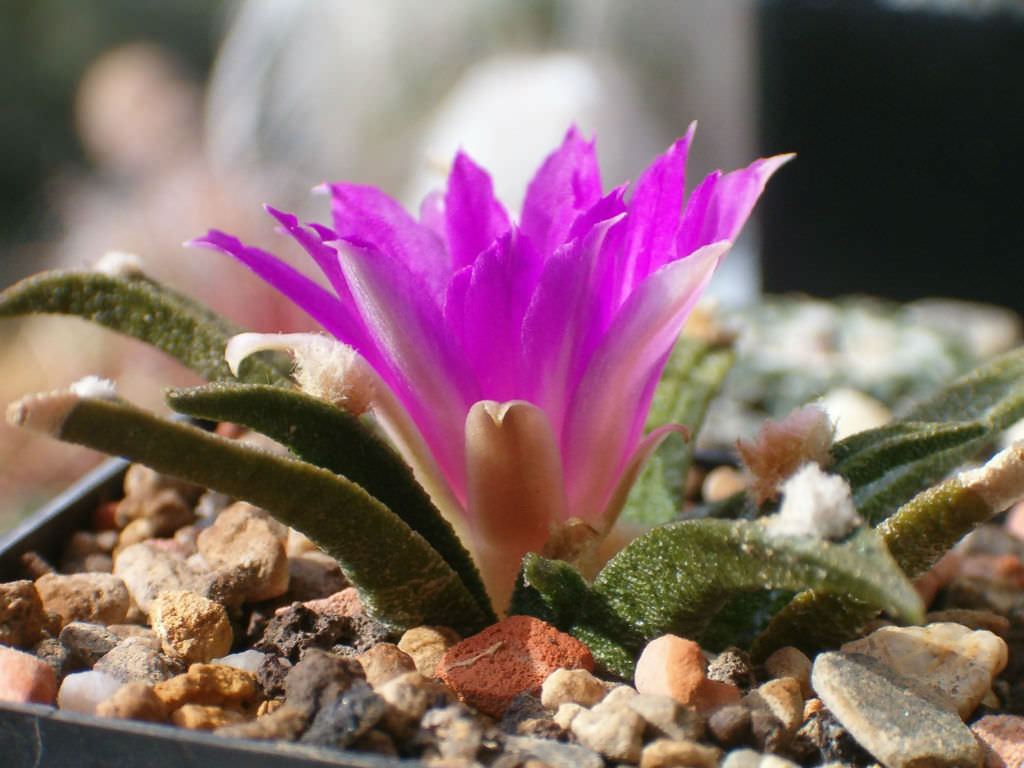
Ariocarpus agavioides, often misspelled Ariocarpus agavoides, is a small cactus with a greenish-brown, rosette-shaped stem with divergent, often flaccid tubercles. The stem is subglobose and somewhat flattened, and it can grow up to 2.4 inches (6 cm) long and up to 3.2 inches (8 cm) in diameter. The rest of the plant is the rootstock, which grows underground. The tubercles are acute at the apices, flattened adaxially, and not strongly incurved; they can reach up to 2.8 inches (7 cm) long and 0.4 inches (1 cm) wide. The woolly areoles are round, measuring up to 0.2 inches (0.5 cm) in diameter, and are 0.5 inches (1.2 cm) from the tips of the tubercles. The spines are usually absent or, if present, are rarely two. They are whitish and can grow up to 0.4 inches (1 cm) long.
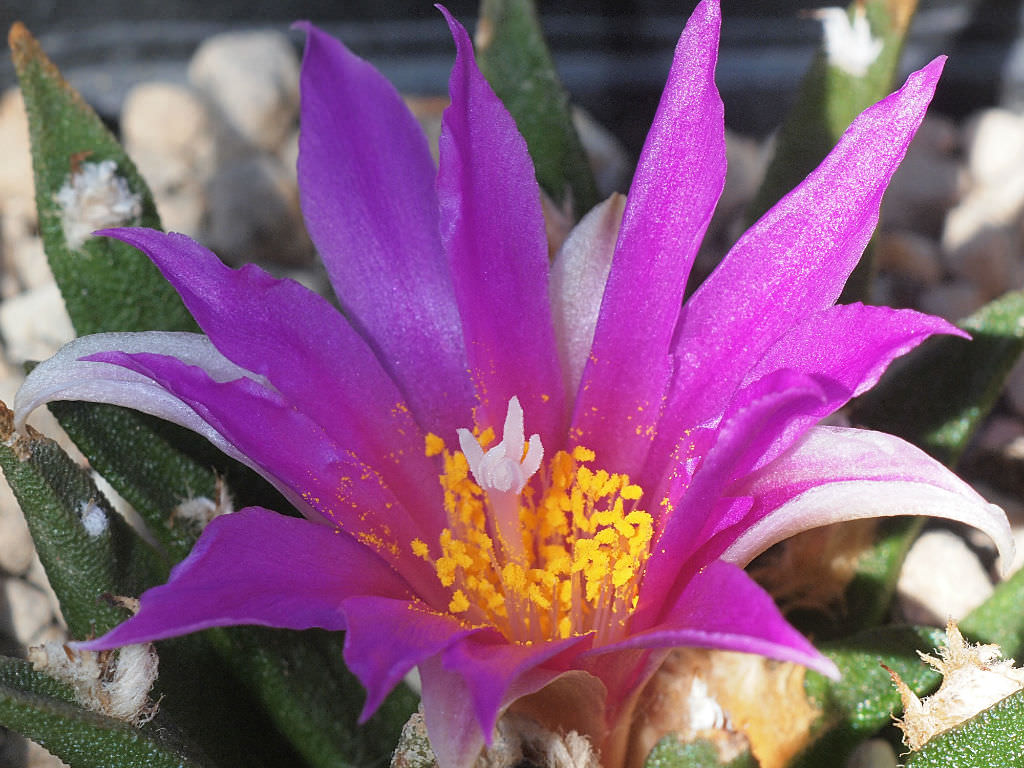
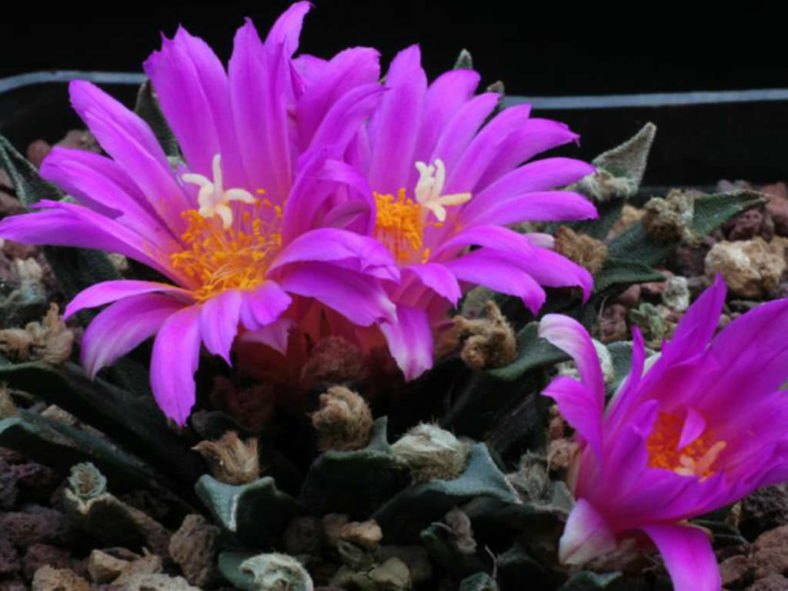
The flowers are magenta and can reach up to 2 inches (5 cm) long and 1.6 inches (4 cm) in diameter. They appear in the fall on mature plants that are 5 to 8 years old. The fruits are pinkish-red to reddish-purple, globose, and can grow up to 1 inch (2.5 cm) in diameter.
Origin
Ariocarpus agavioides is native to Tamaulipas and San Luis Potosí in Mexico. It grows on rocky limestone hills and alluvial plains at about 3,950 feet (1,200 m).
How to Grow and Care for Ariocarpus agavioides
Hardiness: USDA hardiness zones 9b to 11b, which have average annual extreme minimum temperatures ranging from 25°F (-3.9°C) to 50°F (10°C).
Grow your Ariocarpus in soil specifically formulated for cacti. You can buy a cactus mix at your local nursery. Avoid using generic soil mixes, as they will not provide sufficient aeration and drainage. Additionally, using a container without a hole, whether a pot or a terrarium, is a bad idea for the same reason.
Ariocarpus needs a lot of sunlight. However, in hot, dry areas, excessive sunlight can damage them, so use a shade cloth to limit exposure or move them out of direct sunlight during the hottest hours of the day. In more temperate areas, direct sunlight is fine.
These cacti prefer room temperature or slightly cooler and low humidity.
Water your Ariocarpus when it is dry, but wait until the soil is completely dry before watering again. How long this takes will vary depending on your climate and the size of your pot, if you use one.
Learn more at How to Grow and Care for Ariocarpus.
Links
- Back to genus Ariocarpus
- Succupedia: Browse succulents by Scientific Name, Common Name, Genus, Family, USDA Hardiness Zone, Origin, or cacti by Genus
Photo Gallery
Click on a photo to see a larger version.