

Aloe maculata, commonly known as Soap Aloe, is a highly variable species that often hybridizes with similar Aloes, making it somewhat difficult to identify. It is part of the Saponariae series along with Aloe davyana, Aloe greatheadii, Aloe petrophila, and Aloe umfoloziensis. For many years, Aloe maculata has been incorrectly called Aloe saponaria (now a synonym of Aloe microstigma subsp. microstigma). The sap from the leaves of this species has traditionally been used as a remedy and as a soap substitute in various cultures.
Taxonomy of Aloe maculata
Scientific Name
Aloe maculata All.
Common Name(s)
Soap Aloe, Zebra Aloe
Scientific Classification
Family: Asphodelaceae
Subfamily: Asphodeloideae
Genus: Aloe
Etymology
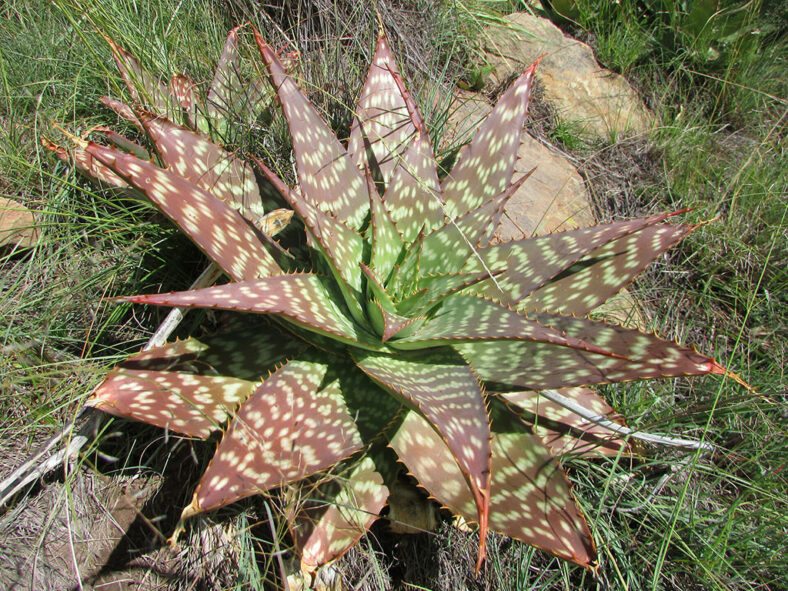
The specific epithet "maculata" (pronounced "mak-yuh-LAH-tuh") means "spotted; marked with spots" and refers to the white spots on the leaves of this species.
Subspecies of Aloe maculata
- Aloe maculata subsp. ficksburgensis
- Aloe maculata subsp. maculata
Cultivars and Hybrids of Aloe maculata
Origin of Aloe maculata
Aloe maculata is native to South Africa, Eswatini, Lesotho, and Zimbabwe. It grows in rocky outcrops and grassland.
Description of Aloe maculata
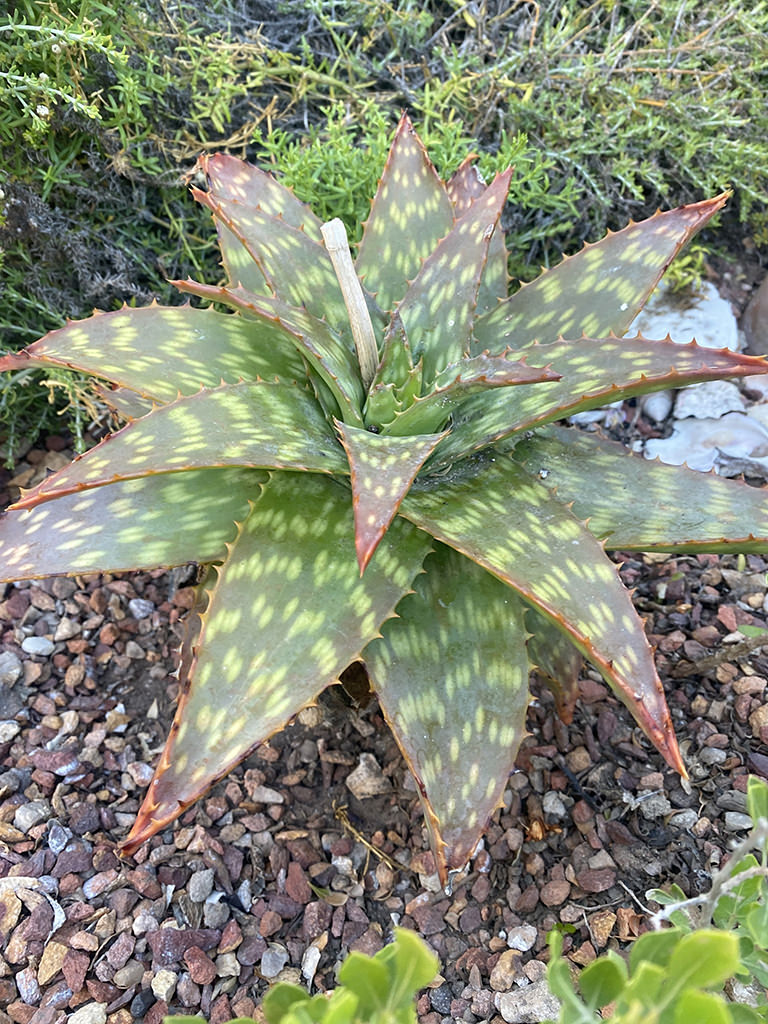
Aloe maculata, for long incorrectly known as Aloe saponaria, is a succulent plant that forms rosettes of green, lance-shaped leaves with many pale spots in irregular, wavy, transverse rows. The rosettes are usually stemless and can be either solitary or suckering, forming a dense clump over time. The leaves are variable in length and shape, measuring up to 20 inches (50 cm) long and 4.8 inches (12 cm) wide. They are mostly recurved towards the twisted, usually dried tips, with a flat to slightly channeled upper surface and a convex lower surface with fewer or no spots. The color of the leaves can turn reddish, brownish, or purplish when exposed to intense sunlight. The margins of the leaves are lined with brown deltoid teeth.
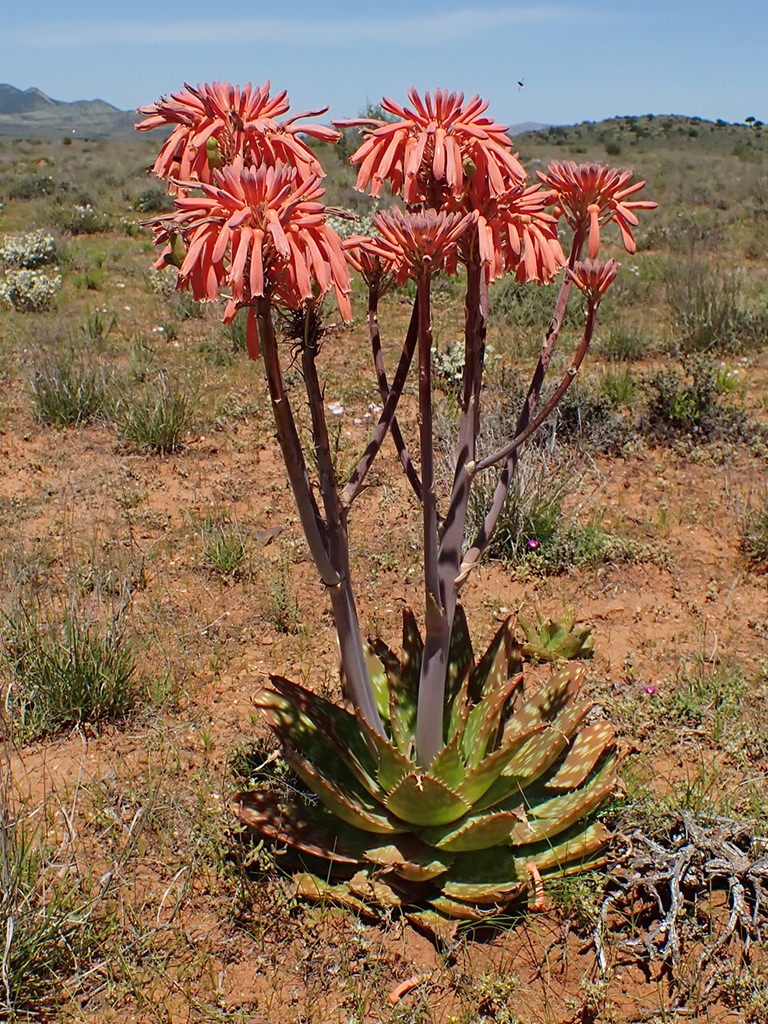
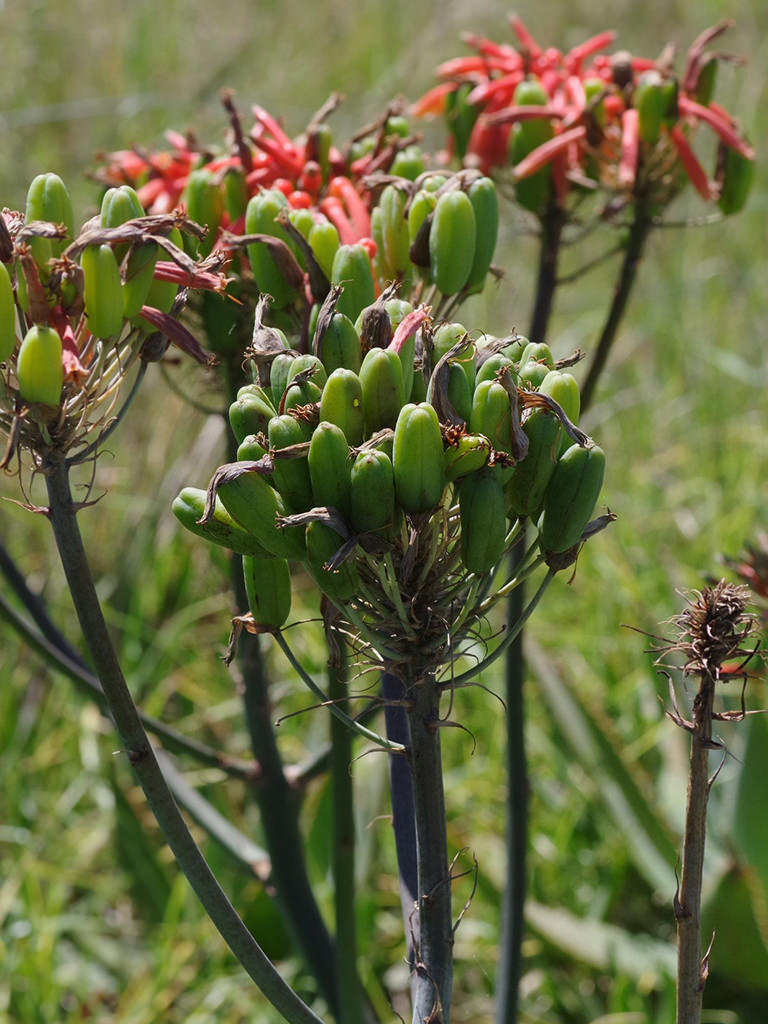
This variable species can be distinguished from other spotted Aloes by its flat-topped inflorescences and usually uniformly colored flowers. The inflorescences typically have 4 to 12 branches. The flowers of Aloe maculata range in color from red and orange to yellow and can appear in winter, spring, or summer. The stalks of the open flowers are longer than those of the buds.
How to Grow and Care for Aloe maculata
Light: When growing Aloe maculata indoors, place it in a window that receives plenty of bright, indirect sunlight. Rotate the pot once or twice a week to ensure all sides of the plant receive equal lighting. Outdoors, the plant prefers light shade, especially during the hottest parts of the day.
Soil: Great drainage is essential for this plant, as prolonged moisture can cause root rot. Use commercial soil for succulents, or make your own well-draining mix.
Temperature: When temperatures shift below 50°F (10°C), it is time to bring this plant inside. It tolerates heat fairly well but will not survive a hard frost. Aloe maculata grows best in USDA Plant Hardiness Zones 8b to 11b, with average minimum winter temperatures ranging from 15°F to 50°F (-9.4°C to 10°C).
Watering: This plant needs regular watering but can tolerate short periods of drought. Water deeply, but only when the soil is completely dry to the touch, and do not let water stand in the rosettes. Cut back on watering during the winter months.
Fertilizing: Although it generally does not require fertilizer, Aloe maculata will benefit from additional nutrients. Use a water-soluble fertilizer diluted to half-strength.
Repotting: Repot only as needed during spring. Pick a container that is one size larger and has drainage holes.
Propagation: To propagate Aloe maculata, remove the offsets from a mature plant during the growing season. Starting from seeds is also easy. Sow the seeds during the warm months for best results.
Learn more at How to Grow and Care for Aloe.
Toxicity of Aloe maculata
Aloe maculata is non-toxic to people but is mildly toxic to pets if ingested.
Photo Gallery
Click on a photo to see a larger version.
Internal Links
- Explore all plants within the genus Aloe.
- Explore all plants within the family Asphodelaceae.