

Agave ovatifolia, commonly known as Whale's Tongue Agave, is a succulent plant with a dramatic architectural shape and exceptional cold tolerance. This species was first collected and distributed by Anna B. Nickels🡕 around 1894 as Agave noah. However, it was never formally described or published under this name. It was later described officially as Agave ovatifolia by Gregory Dirk Starr and José Angel Villarreal-Quintanilla in 2002.
Taxonomy of Agave ovatifolia
Scientific Name
Agave ovatifolia G.D.Starr & Villarreal
Synonym(s)
Agave noah
Common Name(s)
Oval-leaved Agave, Whale's Tongue Agave, Whale's Tongue Century Plant
Scientific Classification
Family: Asparagaceae
Subfamily: Agavoideae
Genus: Agave
Etymology
The specific epithet "ovatifolia" (pronounced "oh-vay-tih-FOH-lee-a") means "ovate-leaved; having ovate leaves" and refers to the broad oval leaves of this species.
Description
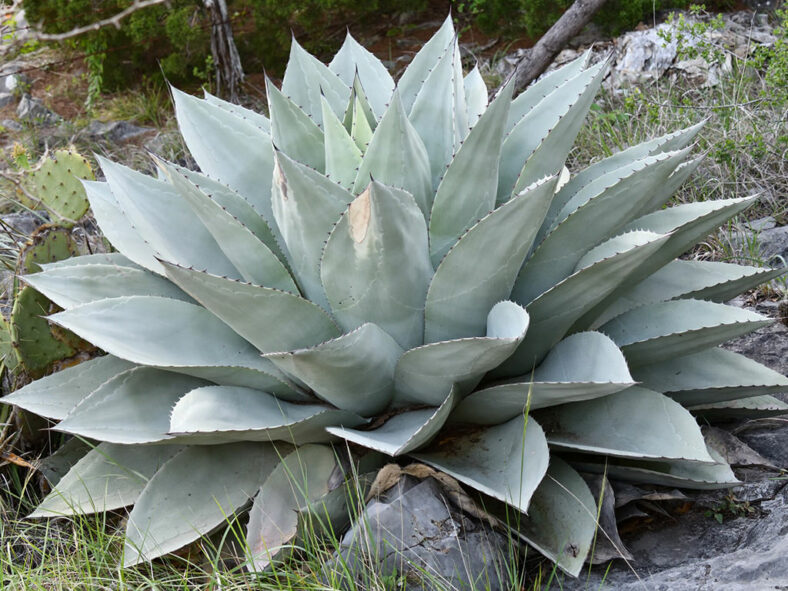
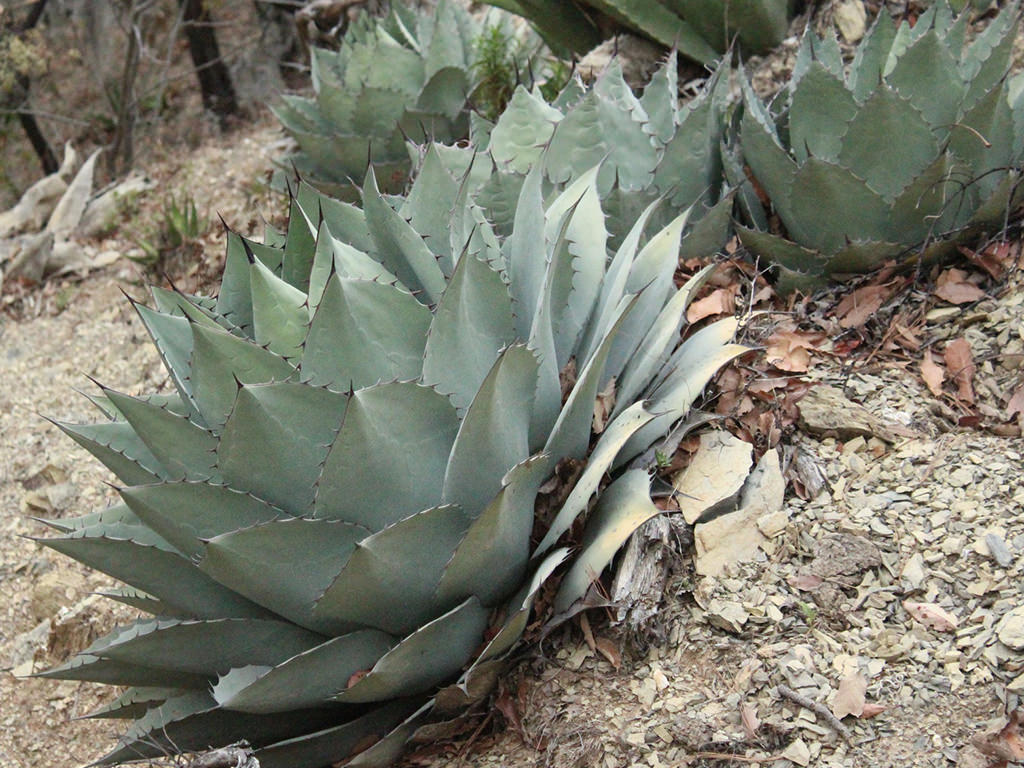
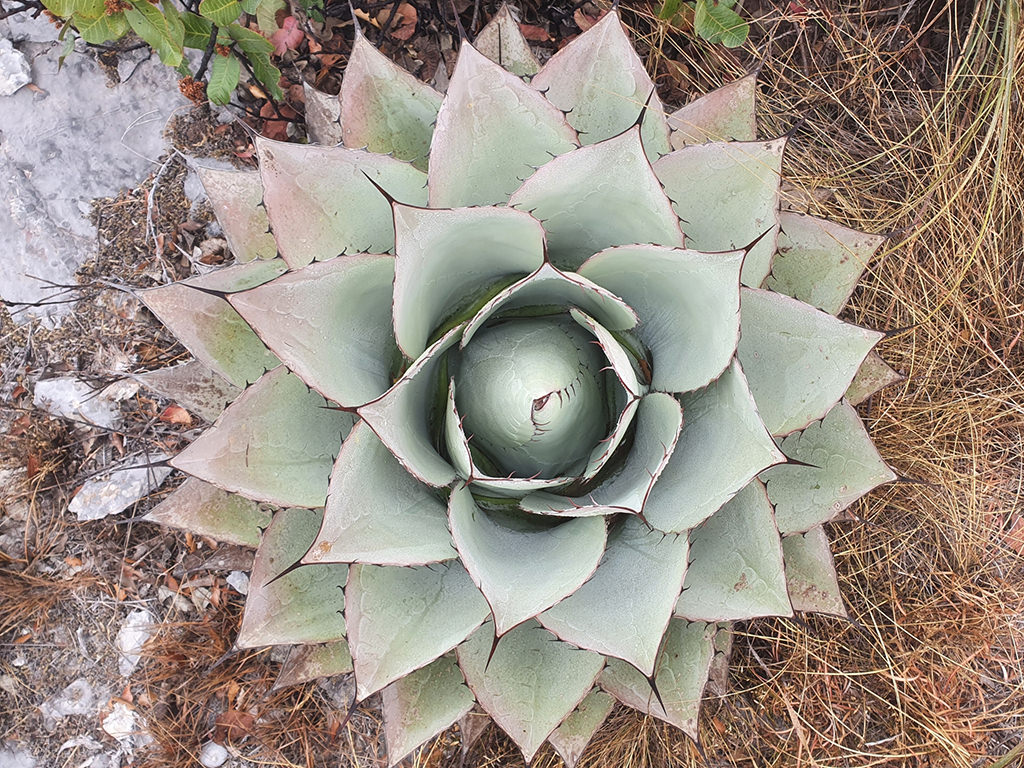
Agave ovatifolia is an impressive succulent that forms a dense, symmetrical, and usually solitary rosette of bluish-gray leaves. The rosette can grow up to 5 feet (1.5 m) tall and reach a diameter of 6.6 feet (2 m). The leaves are thick, rigid, broadly ovate, and slightly cupped, measuring up to 22 inches (55 cm) in length and 11.2 inches (28 cm) in width. They are smooth and have small, curled teeth along the margins, with a dark gray to black terminal spine that can reach up to 1 inch (2.5 cm) in length.
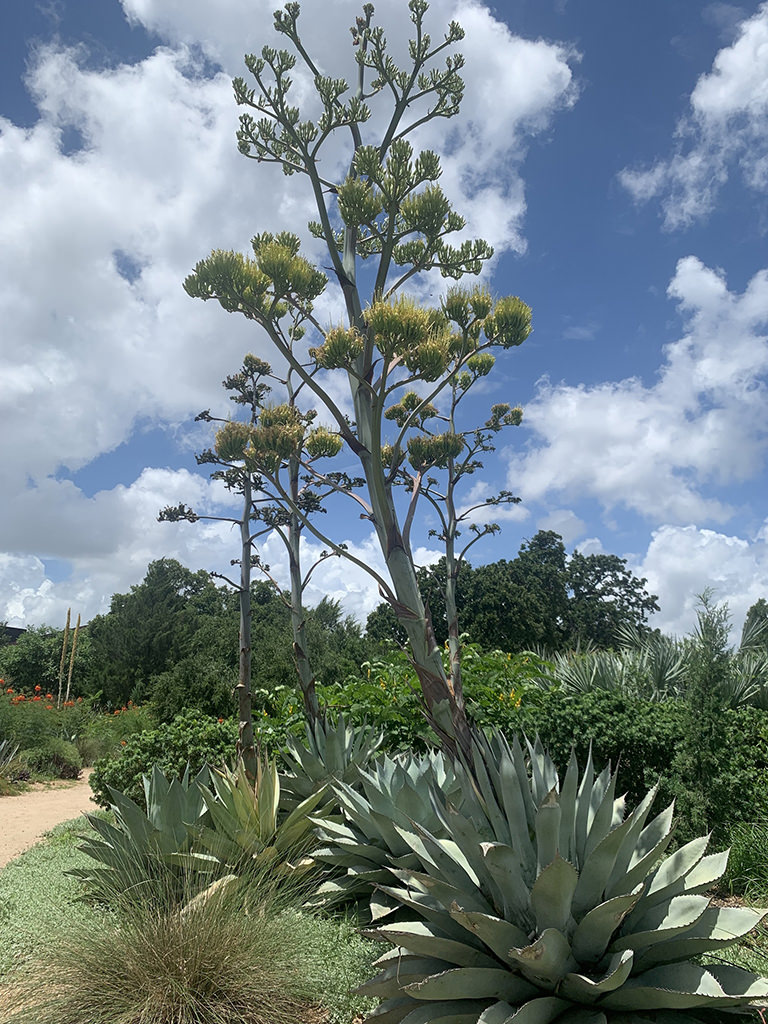
A mature rosette, typically between 10 and 20 years, produces a tall flower spike that can reach up to 16.4 feet (5 m) in height, usually in summer in its native habitat. The flower spike has several loosely arranged side branches, each bearing dense clusters of greenish-yellow flowers that can reach up to 0.8 inches (2 cm) in length. The following fruits are elongated, three-chamber capsules containing shiny, black, moon-shaped seeds. They can grow up to 2.4 inches (6 cm) long and 0.8 inches (2 cm) wide. After flowering, the rosette dies.
Origin
Agave ovatifolia is native to northeastern Mexico. It occurs in the Sierra de Lampazos in northern Nuevo León, typically at elevations from 3,700 to 7,000 feet (1,130 to 2,130 m).
How to Grow and Care for Agave ovatifolia
Light: Agave ovatifolia grows well in full sun to partial shade. If you are keeping it indoors, place it near a sunny window. From spring to fall, it enjoys being outdoors.
Soil: This plant can tolerate most soils as long as they have good drainage. However, it thrives in sandy or rocky soil.
Temperature: During the growing season, Agave ovatifolia prefers warm temperatures, but in winter it rests in cooler conditions. It grows best in USDA Plant Hardiness Zones 7b to 11b, with average minimum winter temperatures ranging from 5°F to 50°F (-15°C to 10°C).
Watering: To keep this plant healthy, water it thoroughly when the top of the soil feels dry from spring to fall. In winter, water it sparingly, about once a month. A plant in a container will require more frequent watering than a plant in the ground.
Fertilizing: In the spring, during the first two years, apply a small amount of fertilizer to the plant. Once Agave ovatifolia is established, it will take care of itself, and you no longer need to fertilize it.
Repotting: If you notice the plant is becoming pot-bound, repot it with fresh soil in a new pot slightly larger than the old one. After repotting, allow the plant a week or so to adjust before watering it again.
Propagation: Since it has a solitary growth habit, this plant can only be propagated by seeds.
Learn more at How to Grow and Care for Agave.
Toxicity of Agave ovatifolia
Agave ovatifolia is non-toxic to humans, but the sap of the leaves and inflorescence may be mildly poisonous to children and pets.
Photo Gallery
Click on a photo to see a larger version.
Internal Links
- Explore all plants within the genus Agave.
- Explore all plants within the family Asparagaceae.