Scientific Name
Agave attenuata 'Variegata'
Common Name(s)
Variegated Elephant's Trunk, Variegated Fox Tail Agave, Variegated Gooseneck Succulent, Variegated Lion's Tail, Variegated Swan's Neck, Variegated Soft-leaved Agave, Variegated Spineless Century Plant
Scientific Classification
Family: Asparagaceae
Subfamily: Agavoideae
Genus: Agave
Origin
Agave attenuata 'Variegata' is a form of Agave attenuata selected in cultivation for its variegated foliage.
Description
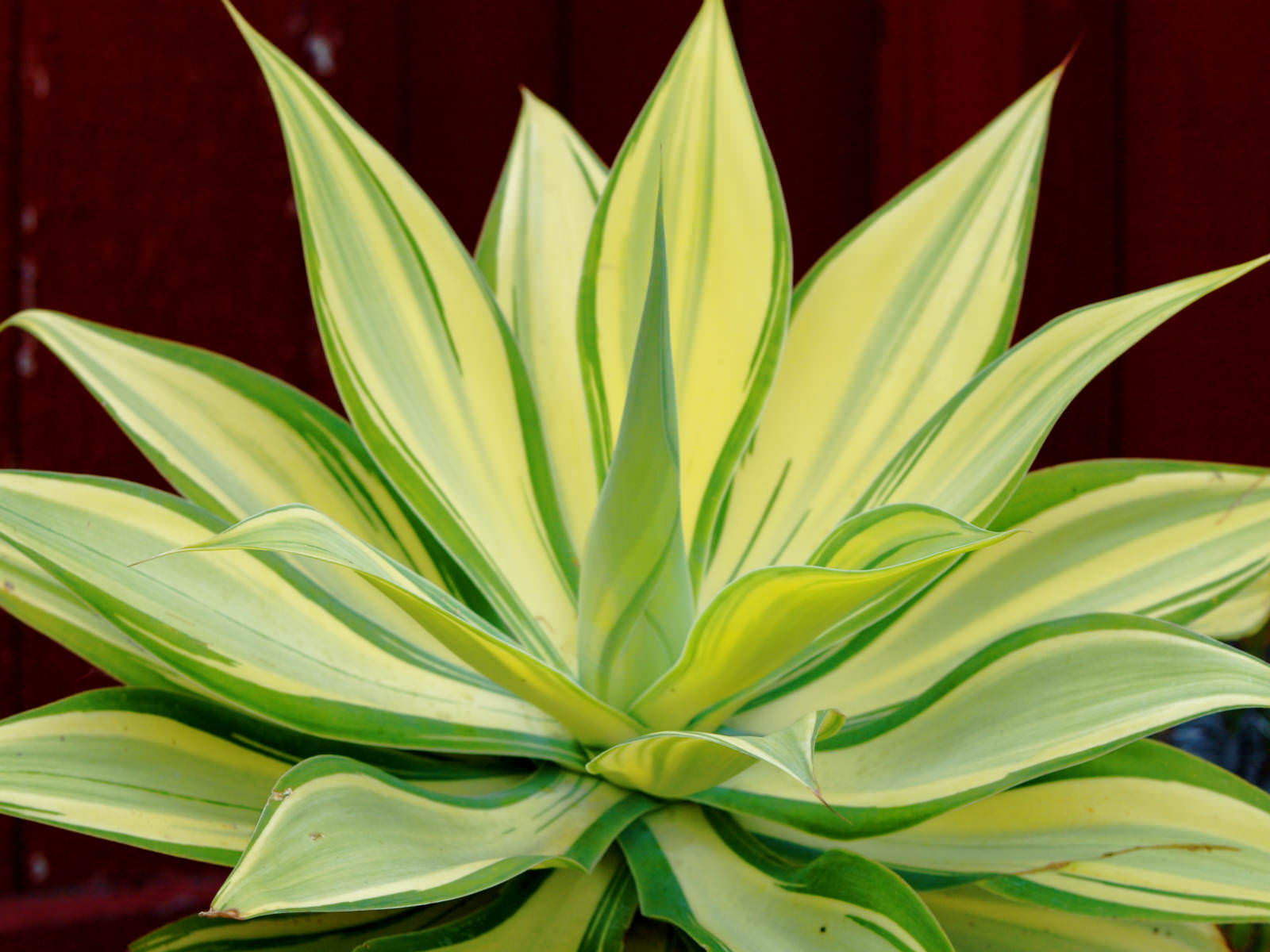
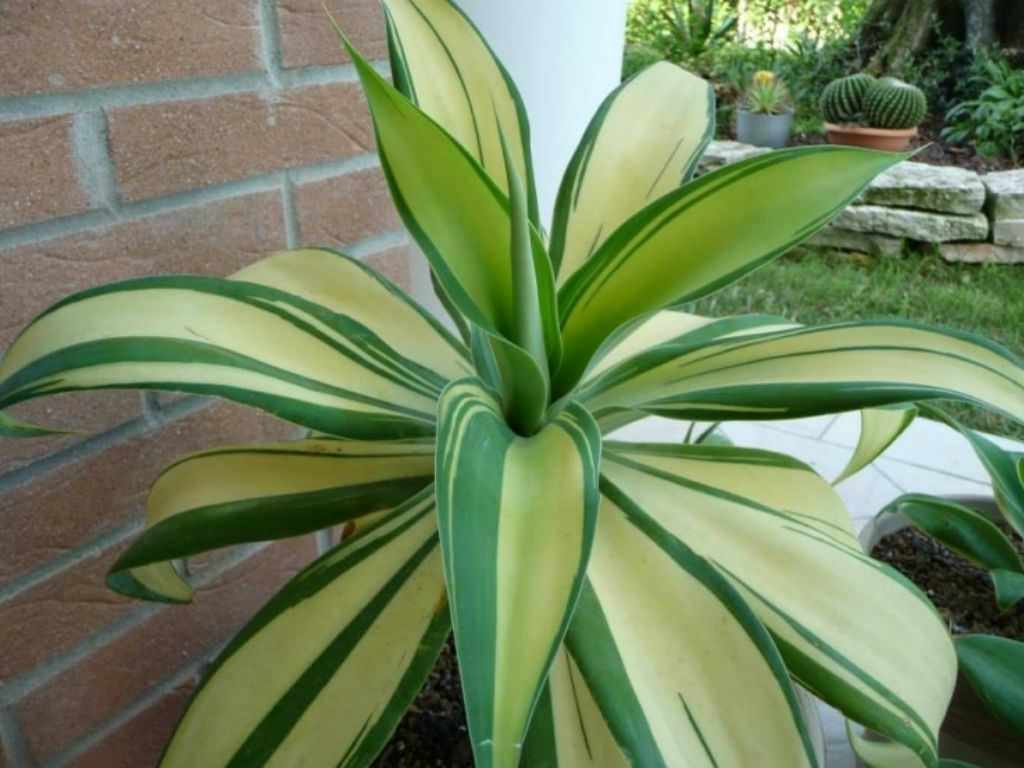
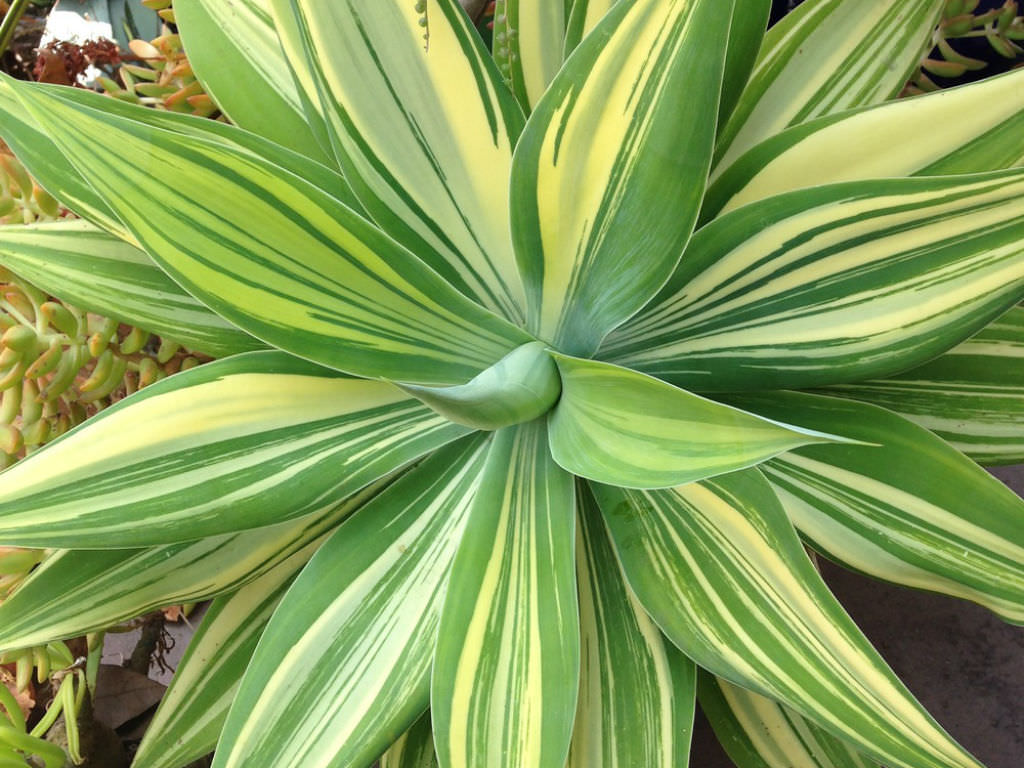
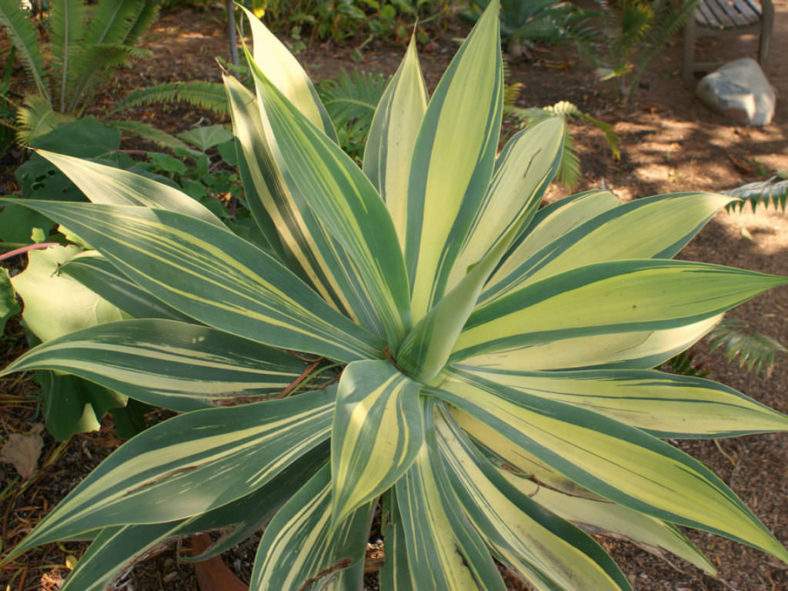
Agave attenuata 'Variegata' is an attractive succulent that forms rosettes of pale green leaves marked with creamy yellow stripes, primarily in the central portion. It can reach a height of 4 feet (1.2 m). The rosettes grow atop thick stems, reaching up to 8 feet (2.4 m) in diameter. The creamy-yellow stripes vary in width from leaf to leaf and plant to plant. Some leaves are almost entirely green with only a few thin stripes, while others are nearly completely creamy-yellow.
This plant grows more slowly than Agave attenuata and is very slow to produce offsets, if any.
How to Grow and Care for Agave attenuata 'Variegata'
Light: These plants require full sun to part shade. If you are growing Agaves indoors, choose a bright, sunny window with as much sun as possible. Agave plants love going outside from spring to fall.
Soil: Agaves will tolerate most soils as long as they have good drainage, but prefer sandy or rocky soil.
Hardiness: Agave attenuata 'Variegata' can withstand temperatures from 25°F to 50°F (-3.9°C to 10°C), in USDA hardiness zones 9b to 11b.
Watering: Mature plants are very drought-tolerant. From spring to fall, water your Agave thoroughly when the soil mix dries out. In winter, water sparingly about once a month. Plants in containers require more frequent watering than those in the ground.
Fertilizing: Give your Agaves a small amount of fertilizer in the spring during the first two years.
Repotting: When the pot becomes pot-bound, it becomes full of roots. If you notice your Agave becoming pot-bound, repot it into a pot slightly larger than the old one, using fresh soil.
Propagation: Since it can take years for Agaves to produce seeds, they are usually propagated by offsets.
Learn more at How to Grow and Care for Agave.
Toxicity of Agave attenuata 'Variegata'
Agave attenuata 'Variegata' is not toxic to humans, but the sap of the leaves and inflorescence may be mildly poisonous to children and pets.
Links
- Back to genus Agave
- Succupedia: Browse succulents by Scientific Name, Common Name, Genus, Family, USDA Hardiness Zone, Origin, or cacti by Genus
Photo Gallery
Click on a photo to see a larger version.