

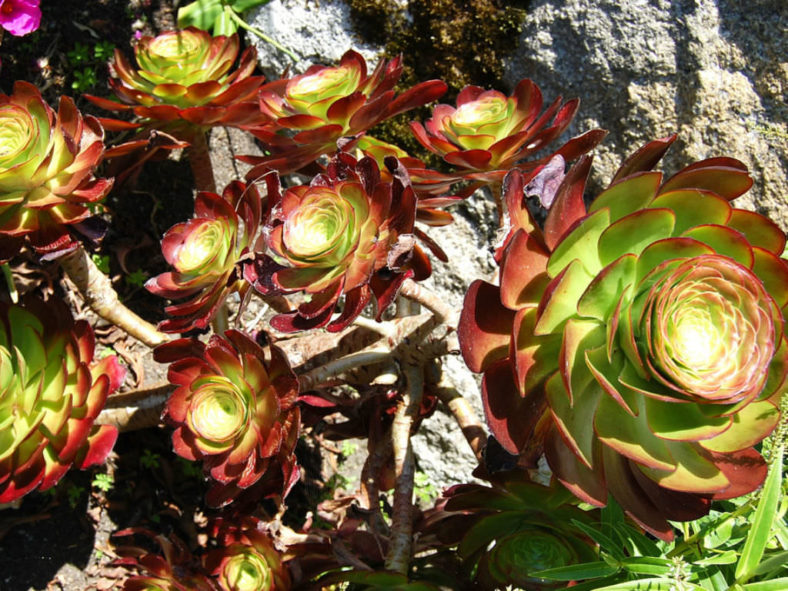
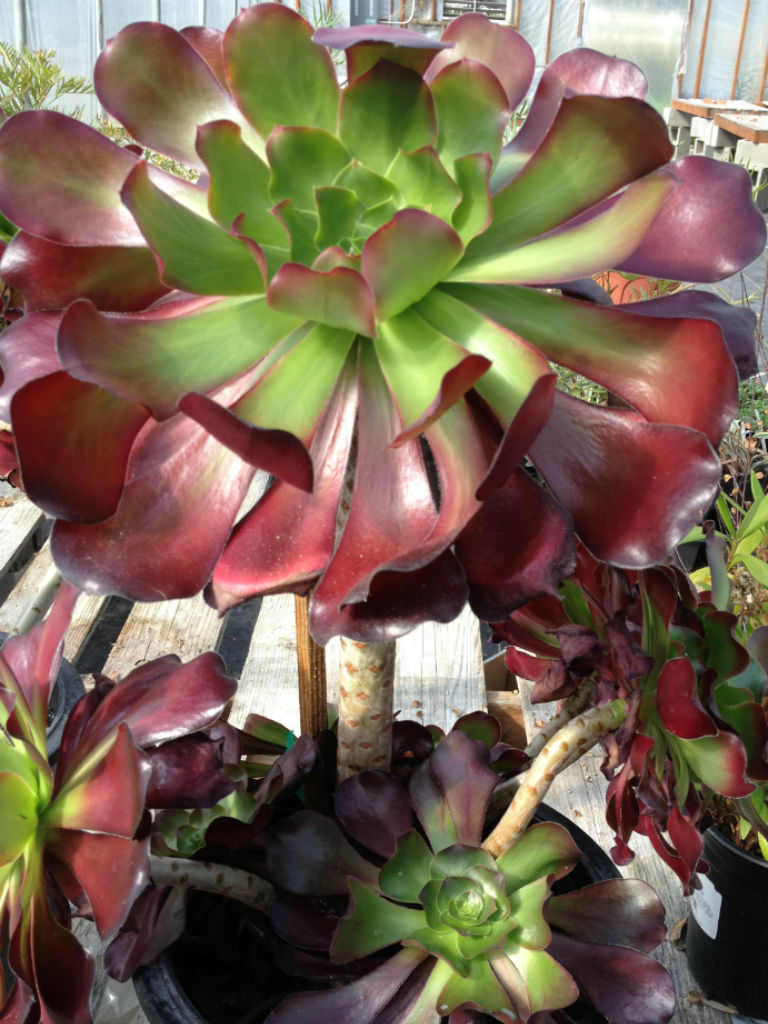
Aeonium 'Cyclops', commonly known as Giant Red Aeonium, is a striking, tall succulent with dark bronze rosettes that have green centers. This hybrid is a sibling of Aeonium 'Voodoo' and results from a cross between Aeonium undulatum and Aeonium arboreum 'Zwartkop'.
Taxonomy of Aeonium 'Cyclops'
Scientific Name
Aeonium 'Cyclops'
Common Name(s)
Giant Red Aeonium
Scientific Classification
Family: Crassulaceae
Subfamily: Sempervivoideae
Tribe: Aeonieae
Genus: Aeonium
Etymology
The generic name "Aeonium" (pronounced "ee-OH-nee-um") means "long-lasting" and refers to the enduring, perennial nature of the plants in the genus.
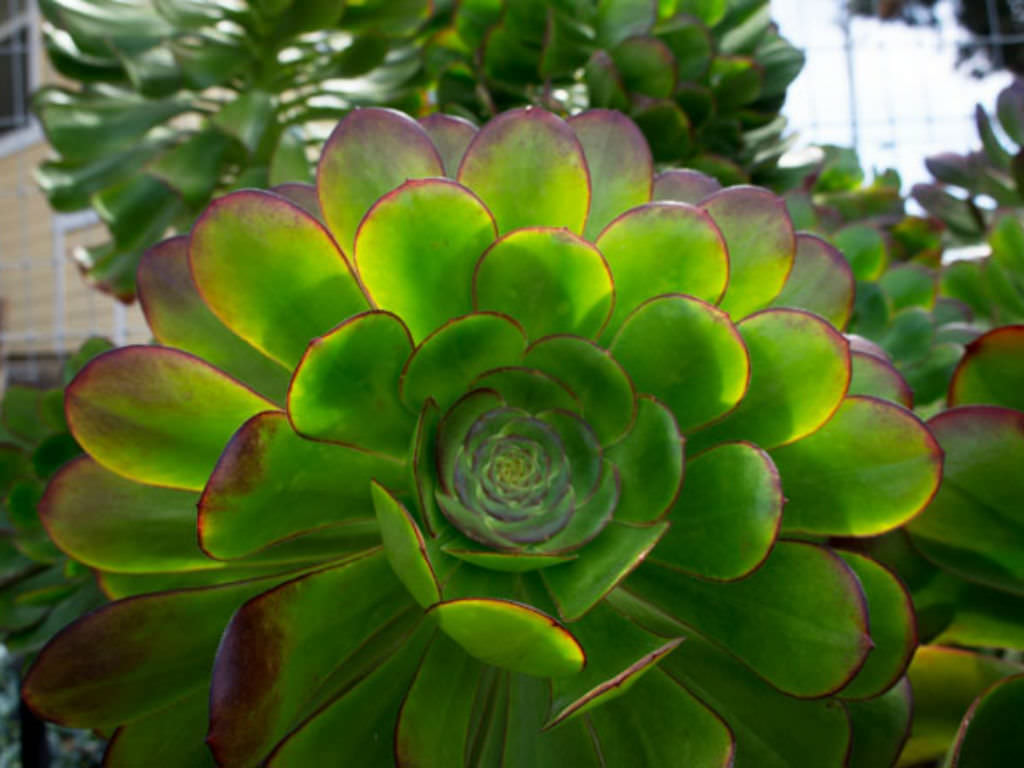
The cultivar epithet 'Cyclops' highlights the plant's impressive size and the distinctive "green eye" at the center of its rosettes. As new leaves emerge, they start green before maturing into a deep reddish-bronze. This striking contrast between the vibrant green center and the dark rosette resembles a single central eye, reminiscent of the giant Cyclopes from Greek mythology.
Description
Aeonium 'Cyclops' is a stunning succulent shrub that forms large rosettes of deep reddish-bronze leaves at the end of its branches. It can grow up to 4 feet (1.2 m) tall, with rosettes reaching a diameter of 12 inches (30 cm). The leaves initially emerge green, creating a "green eye" in the center of the rosettes.
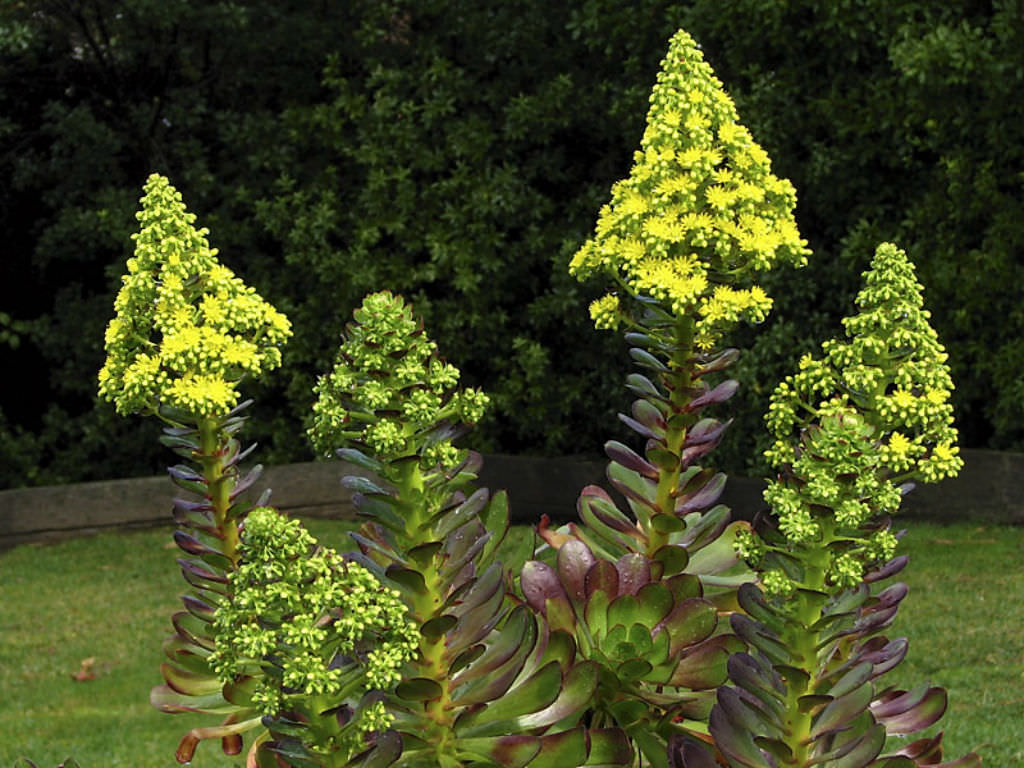
From late winter through early spring, the mature rosettes produce a flower stalk bearing a large, conical cluster of yellow, star-shaped flowers at its tip.
Origin
Aeonium 'Cyclops' is a hybrid created by the southern California horticulturist Jack Catlin.
How to Grow and Care for Aeonium 'Cyclops'
Light: Aeonium 'Cyclops' thrives in full sun to partial shade. However, during the summer months, especially in the hotter afternoon hours, it may benefit from light shade. If growing indoors, ensure the plant receives plenty of bright, indirect light to prevent it from becoming leggy and stretched.
Soil: Unlike most succulents, this plant requires sandy loam or regular potting soil amended with perlite. Avoid using pre-made soil mixes designed for succulents, as they typically provide less moisture than this plant needs.
Temperature: Aeonium 'Cyclopsa' does not like hot or dry weather, so it may go dormant in summer. It is hardy in USDA Plant Hardiness Zones 10a-11b, which have average annual extreme minimum winter temperatures ranging from 30°F to 50°F (-1.1°C to 10°C).
Watering: Water the plant thoroughly in the spring and fall, allowing the soil to dry out between waterings. During the winter, reduce watering. Although this plant requires more water than most succulents, excessive moisture can lead to root rot. Stop watering during summer dormancy, except in arid conditions.
Fertilizing: During the growing season, apply a water-soluble fertilizer diluted to half strength to stimulate growth and enhance the plant's appearance.
Repotting: If you're growing Aeonium 'Cyclopsa' in a container, repot it every 2 to 3 years in the spring. Always choose a pot with drainage holes to prevent root rot.
Propagation: This plant is easy to propagate by stem cuttings. Take cuttings during the growing season and allow the cut ends to dry for several days before planting.
Learn more in "How to Grow and Care for Aeonium."
Toxicity of Aeonium 'Cyclops'
Aeonium 'Cyclops' is considered non-toxic, making it safe for children and pets to grow around.
Photo Gallery
Click on a photo to see a larger version.
Internal Links
- Explore all plants within the genus Aeonium.
- Explore all plants within the family Crassulaceae.