Scientific Name
Adromischus cristatus var. clavifolius (Haw.) Toelken
Synonym(s)
Adromischus clavifolius, Cotyledon clavifolia
Scientific Classification
Family: Crassulaceae
Subfamily: Kalanchoideae
Genus: Adromischus
Etymology
The specific epithet "clavifolius" (pronounced "klav-ih-FOH-lee-us") means "club-leaved; having club-shaped leaves" and refers to the shape of the leaves of this species.
Origin
Adromischus cristatus var. clavifolius is native to South Africa. It occurs between Alexandria, Grahamstown, and East London in the Eastern Cape province and usually grows on shallow soil on rock outcrops.
Description
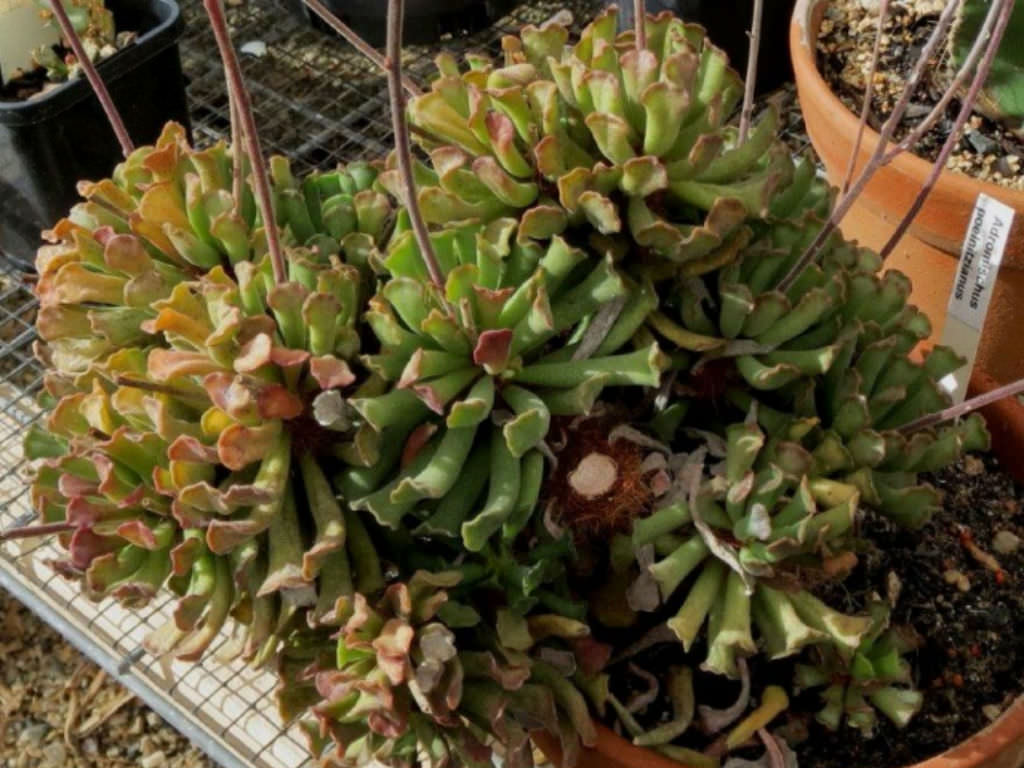
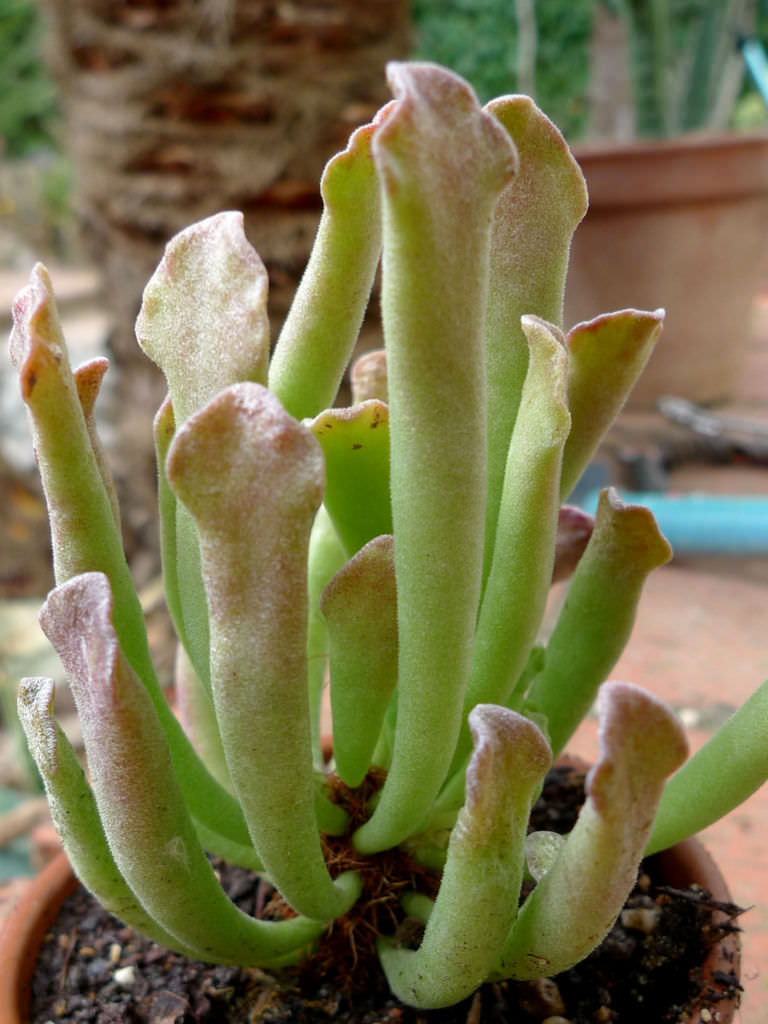
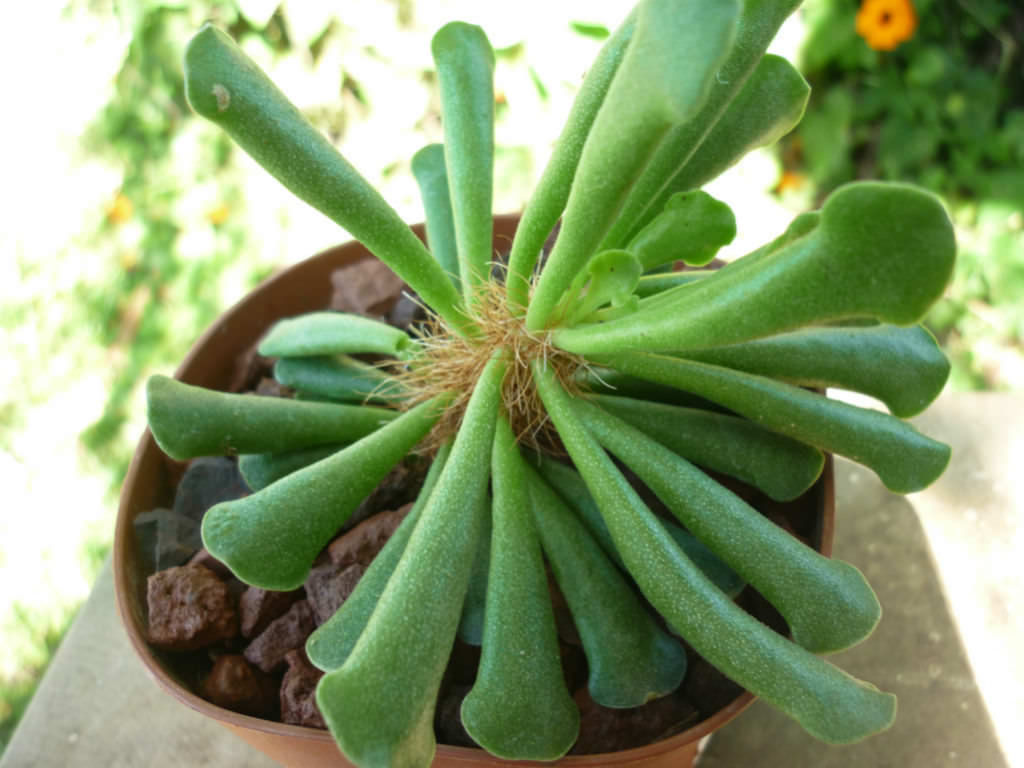
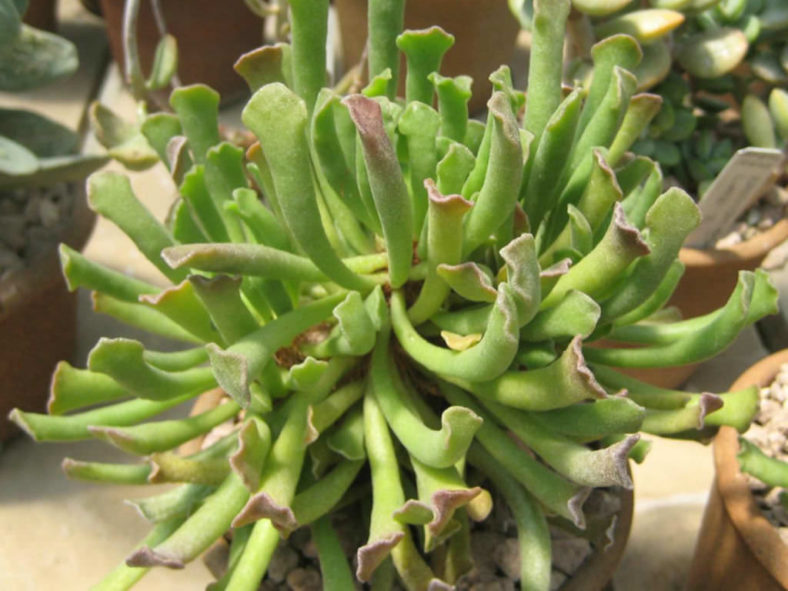
Adromischus cristatus var. clavifolius is a small succulent that forms a dense clump of short stems that bear long, narrow leaves with horny, usually undulate apical margins. The stems are often much-branched, moderately covered with aerial roots, and can grow up to 1.6 inches (4 cm) long. The leaves are very variable in shape and size. They are light green to grey-green, sometimes reddish at the tips, and usually have few glandular hairs, at least when young.
The flowers can reach up to 0.5 inches (1.2 cm) in length, have a grey-green corolla tube and white to pinkish petals, and appear in mid-summer on stalks that can grow up to 12 inches (30 cm) long. The inflorescences and flowers are usually hairy.
How to Grow and Care for Adromischus cristatus var. clavifolius
Hardiness: USDA hardiness zones 9b to 11b: from 25°F (-3.9°C) to 50°F (10°C).
Many species are easy to grow in any free-draining, gritty compost. Their compact habit allows a collection to be maintained in a small space, and they grow well on any sunny window ledge or the top shelf of the greenhouse. Water mostly from spring to fall, and let them dry out between waterings. Adromischus tolerates cool, frost-free conditions during the winter if kept dry. It is also important to keep water off the foliage during the winter. Mealybugs and vine weevils can be discouraged with a systemic insecticide.
Adromischus can be propagated from a single leaf, which should be placed against the side of the pot so that the stem ends touch the compost. Some species drop their leaves easily, and although each leaf will form a new plant, growing a large specimen can be challenging. In other cases, leaves for propagation must be carefully detached with a sharp knife.
Learn more at How to Grow and Care for Adromischus.
Links
- Back to genus Adromischus
- Succupedia: Browse succulents by Scientific Name, Common Name, Genus, Family, USDA Hardiness Zone, Origin, or cacti by Genus
Photo Gallery
Click on a photo to see a larger version.