Scientific Name
Crassula 'Buddha's Temple'
Scientific Classification
Family: Crassulaceae
Subfamily: Crassuloideae
Genus: Crassula
Etymology
The generic name "Crassula" (pronounced "KRASS-oo-la") means "somewhat thick" and refers to the thick, fleshy, and succulent nature of the leaves and stems that are characteristic of nearly every species in this genus.
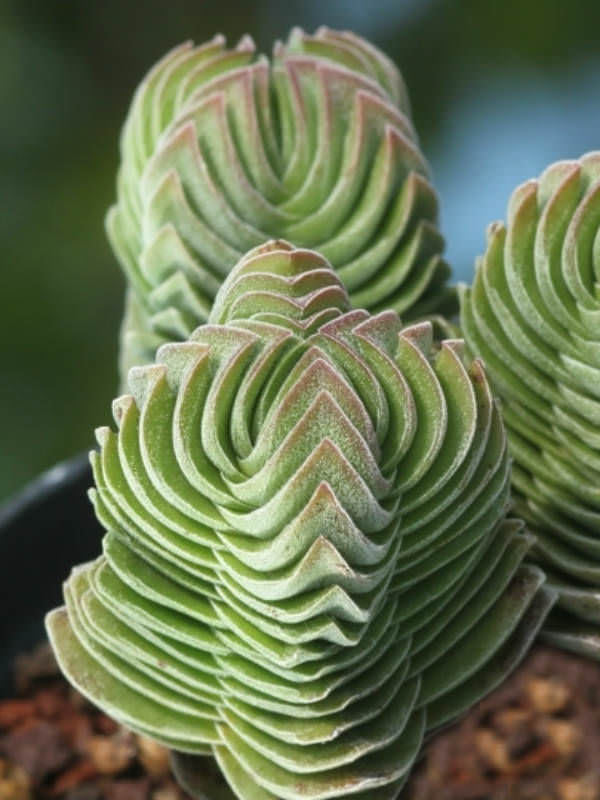
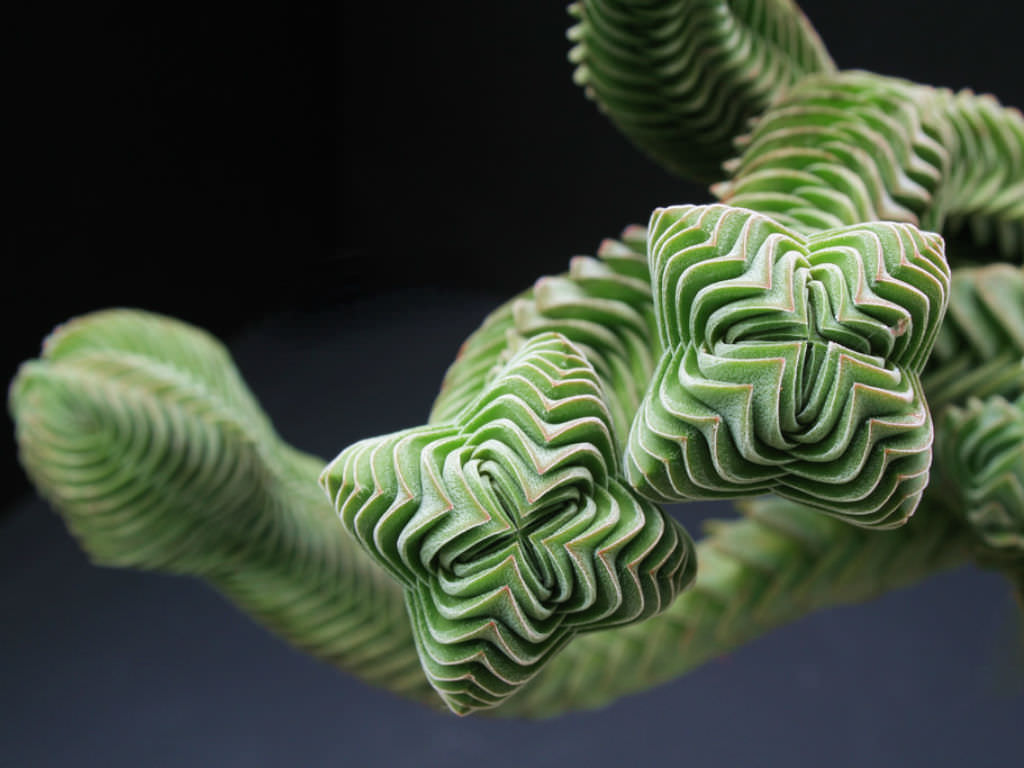
The cultivar epithet 'Buddha's Temple' refers to the tightly packed, layered leaves arranged along the thin stem, which create a distinctive geometric form resembling the tiered roof of a Buddhist temple.
Description
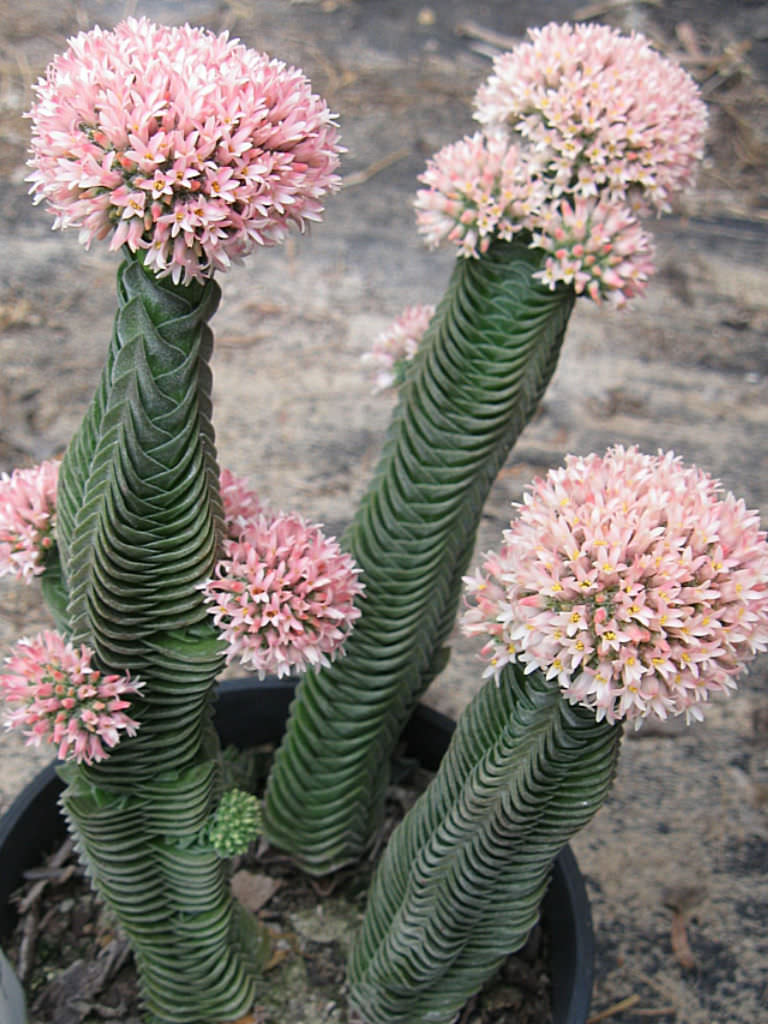
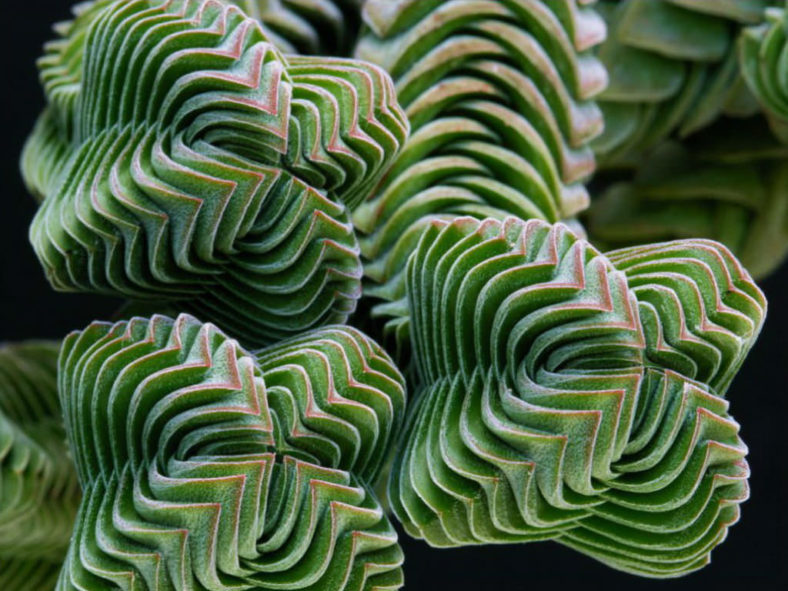
Crassula 'Buddha's Temple' is an eye-catching succulent with densely packed leaves gently curled at their tips, usually forming square-shaped columns. Because one of its parents, Crassula pyramidalis, is a variable species, there are also 5- or 6-angled forms of this hybrid. The columns can grow up to 6 inches (15 cm) tall and 1.6 inches (4 cm) wide, producing branches from the sides. The leaves are flat, heart-shaped, silvery-grey to grayish-green, and covered with a powdery coating.
The pink to nearly white flowers appear in compact, rounded clusters, usually in spring and summer.
Origin
Crassula 'Buddha's Temple' is a hybrid created by Myron Kimnach in 1959 from the cross between Crassula pyramidalis and Crassula perfoliata var. minor (formerly known as Crassula falcata).
How to Grow and Care for Crassula 'Buddha's Temple'
Light: Crassula plants prefer full sun to partial shade. However, intense afternoon sun during the hottest summer periods can burn plant leaves. Most Crassulas can be grown indoors if given enough light.
Soil: They are not particular about soil pH, but Crassulas require very porous, well-drained soil.
Hardiness: Crassula 'Buddha's Temple' can withstand temperatures from 25°F to 50°F (-3.9°C to 10°C) and is USDA hardiness zones 9b to 11b.
Watering: These plants have typical succulent watering needs. Avoid overwatering by using the "soak and dry" method: soak the soil, let it drain slowly, and let it dry out before watering again. Reduce watering in winter.
Fertilizing: Crassulas will benefit from a small amount of organic fertilizer in mid-spring when they start actively growing.
Repotting: Repot as needed, preferably in spring, at the beginning of active growth.
Propagation: Crassulas are typically started from leaves or stem cuttings, but they can also be grown from seeds or offsets.
Learn more at How to Grow and Care for Crassula.
Toxicity of Crassula 'Buddha's Temple'
Crassula plants are generally nontoxic to people and pets.
Links
- Back to genus Crassula
- Succupedia: Browse succulents by Scientific Name, Common Name, Genus, Family, USDA Hardiness Zone, Origin, or cacti by Genus
Photo Gallery
Click on a photo to see a larger version.