

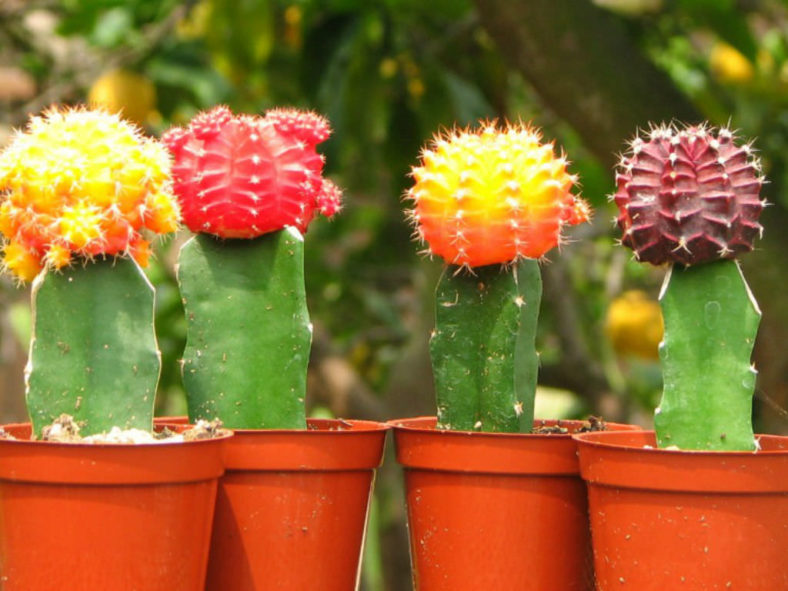
When people see these unusually colored cacti, they often mistake them for flowers. But in fact, they are two different species of cacti grafted together.
The brightly colored cactus on top is a mutant variant of a standard cactus. Eventually, if a mutant pup is created in the wild, it would detach from the parent plant and sadly die as it cannot photosynthesize. It cannot photosynthesize because it lacks chlorophyll (the green pigment essential for photosynthesis). So, for a mutant pup to survive, we need to find alternative means to provide it with nutrients. This is where the grafting comes in.
Rootstock plants, which can photosynthesize normally, are grafted onto by the mutant pups. They can provide enough nutrients for themselves and their grafted partner, allowing both to survive. Common rootstocks used in grafting cacti include species of Hylocereus, Myrtillocactus geometrizans, Trichocereus pasacana, Harrisia jusbertii, Cereus peruvianus, and many more.
The most colorful mutants you are likely to see are derived from the variegated forms of Gymnocalycium mihanovichii and Lobivia silvestrii. However, the possibilities of grafting are endless and not just limited to mutants.
How to Care for Grafted Cacti
Light: Place these plants indoors or under sheltered verandas or patios, as the rootstock is sensitive to cold and frost. They need partial sun, so a location next to a window is perfect if they are indoors.
Water: Very little maintenance is required for these guys to thrive. One of the main reasons grafted cacti suffer is overwatering. Water them sparingly, only when the soil is dry. This can take anywhere from one to two weeks to a month, depending on the location, time of year, and environmental factors. Water them thoroughly, and then let the water drain. If you are using saucers, ensure to empty them after each watering.
Source: fickleprickles.com.au
Links
- Succupedia: Browse succulents by Scientific Name, Common Name, Genus, Family, USDA Hardiness Zone, Origin, or cacti by Genus