Scientific Name
Weingartia canigueralii (Cárdenas) F.H.Brandt
Synonym(s)
Rebutia canigueralii, Sulcorebutia canigueralii
Scientific Classification
Family: Cactaceae
Subfamily: Cactoideae
Tribe: Trichocereeae
Genus: Weingartia
Etymology
The specific epithet "canigueralii" (pronounced "kah-nee-gweh-RAH-lee-eye") honors Father Juan Cañigueral, who discovered the species in April 1961 and was then the priest at La Recoleta in Sucre, Bolivia.
Origin
Weingartia canigueralii is native to Bolivia (Chuquisaca).
Description
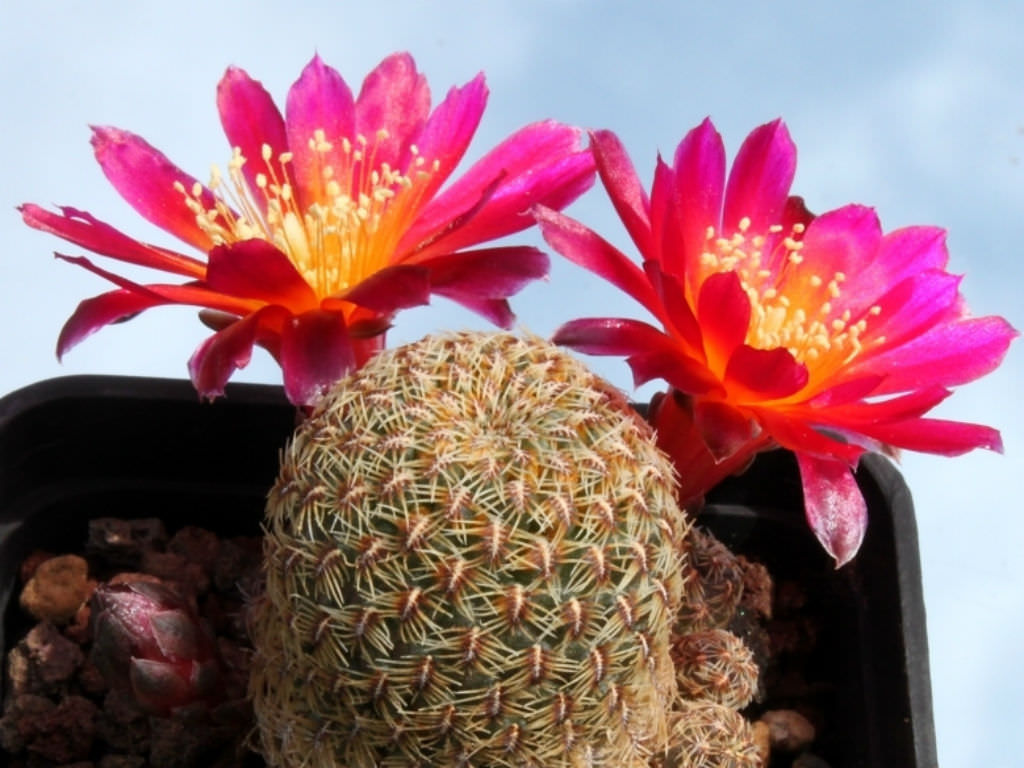
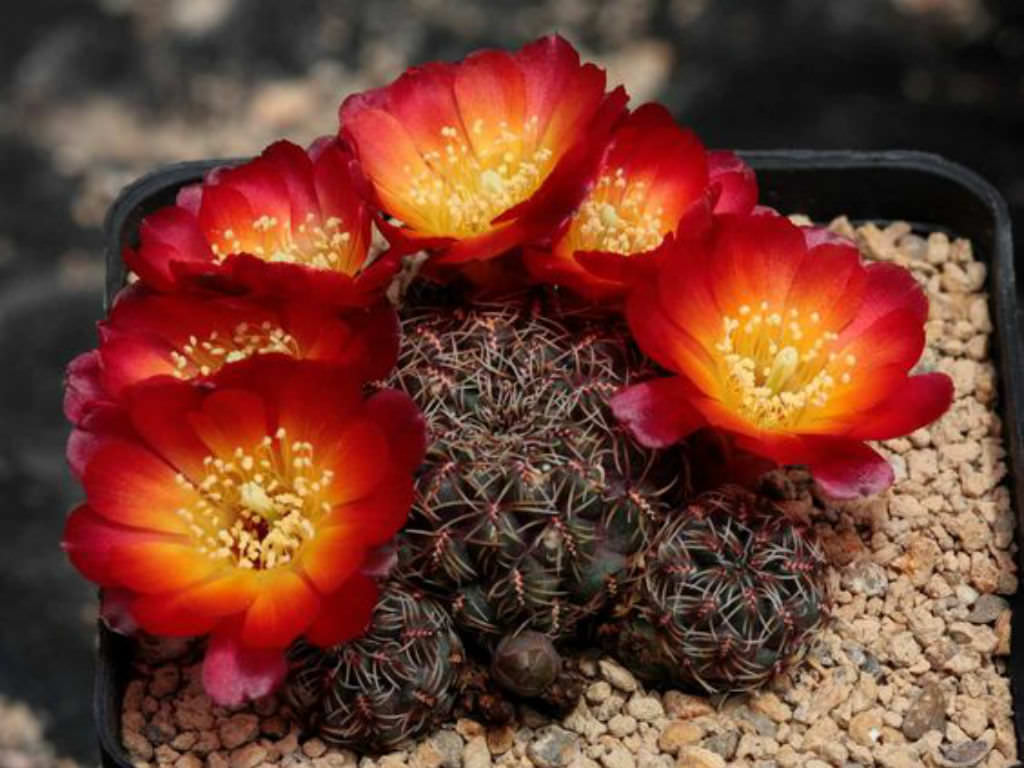
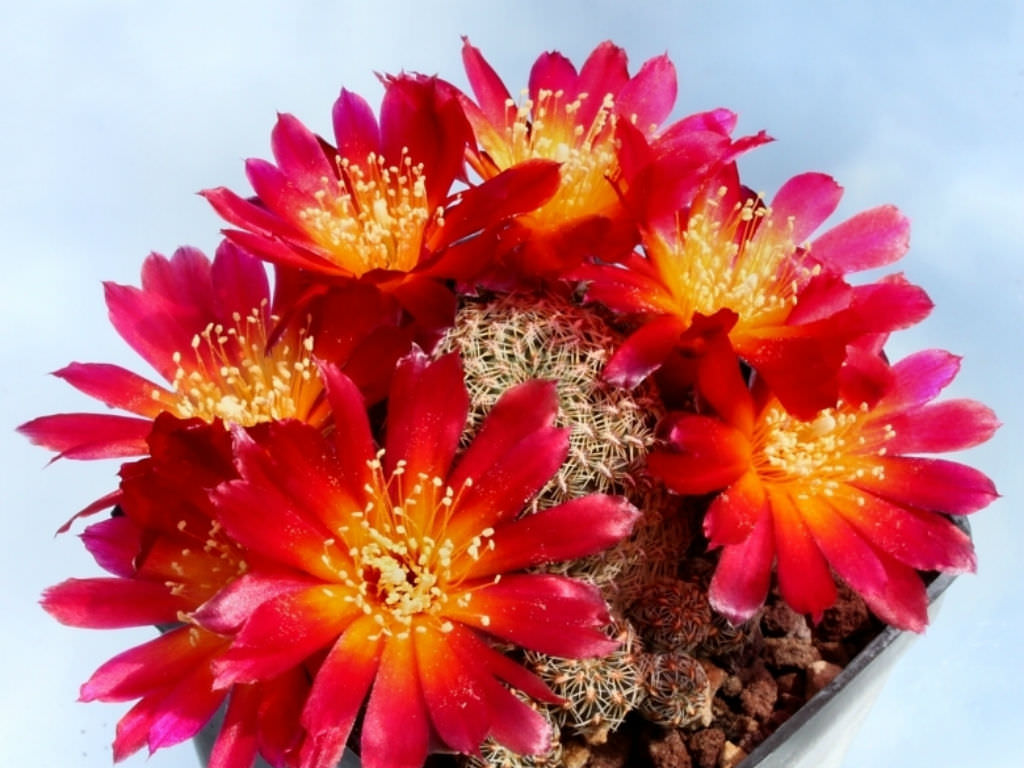
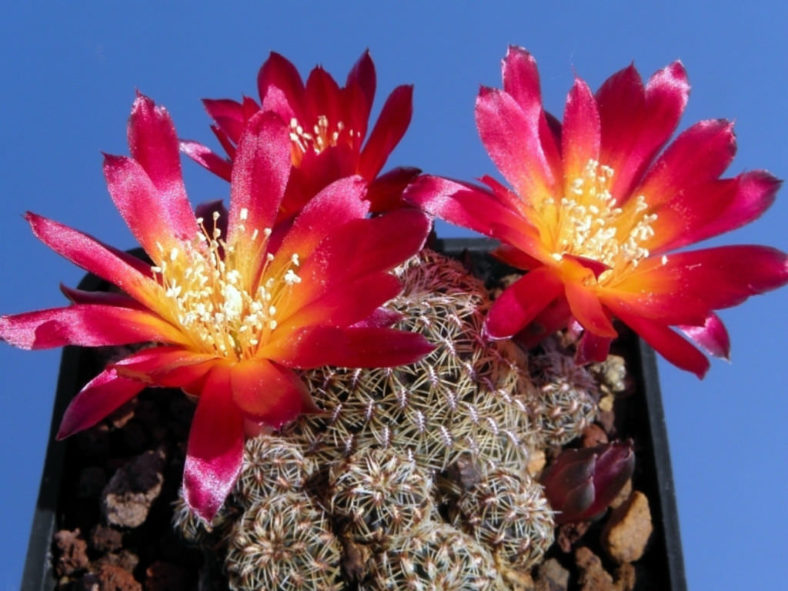
Weingartia canigueralii, also known as Rebutia canigueralii or Sulcorebutia canigueralii, is a slow-growing cactus that forms a dense clump of many small stems covered with clusters of spines. The stems vary in color from green and grey-green to dark purple. They can grow up to 1.6 inches (4 cm) tall and 2 inches (5 cm) in diameter, freely producing offsets that develop roots while still attached to the mother plant. The spines are whitish, grayish, straw-colored, or brown, with a darker base or almost black. Each areole bears 11 to 14 bristly, white, recurved radial spines. The central spines are usually absent.
The flowers are orange-red, lilac, or dark magenta, often bicolored with yellow or white throats. They usually appear from the base of the stems in late spring and remain open for 3 or 4 days. The flowers can reach 2 inches (5 cm) in length and are nearly equal in diameter.
Forms of Weingartia canigueralii
- Weingartia pulchra (not accepted as a separate species and is treated as a synonym of Weingartia canigueralii)
- Weingartia rauschii (not accepted as a separate species and is treated as a synonym of Weingartia canigueralii)
- Weingartia rauschii f. violacidermis
- Weingartia rauschii f. viridermis
How to Grow and Care for Weingartia canigueralii
Hardiness: USDA hardiness zones 9b to 11b: from 25°F (-3.9°C) to 50°F (10°C).
If you can grow cacti and succulents successfully, you can likely grow the popular Rebutias without too much trouble. Their water and light requirements are typical for many cactus species, including a winter cooling period to promote better blooming. Watering should be done carefully, allowing the plant to almost dry out between waterings. The cactus mustn't be exposed to prolonged dampness and standing water. Never let your cactus sit in a dish of water. Instead of propagating your offsets, let the plant form a large cluster for the best viewing. When it blooms, this will make a stunning display. Lastly, fertilize during the growing season for the best results.
Repot as needed, preferably during the warm season. To repot your Rebutia, ensure the soil is dry before repotting, then gently remove the pot. Knock away the old soil from the roots, removing any rotted or dead roots. Treat any cuts with a fungicide. Place the plant in its new pot and backfill it with potting soil, spreading the roots out as you repot. Leave the plant dry for a week or so, then begin to water lightly to reduce the risk of root rot.
Learn more at How to Grow and Care for Rebutia.
Links
- Back to genus Weingartia
- Succupedia: Browse succulents by Scientific Name, Common Name, Genus, Family, USDA Hardiness Zone, Origin, or cacti by Genus
Photo Gallery
Click on a photo to see a larger version.