Scientific Name
Turbinicarpus valdezianus (H.Moeller) Glass & R.Foster
Synonym(s)
Echinocactus valdezianus, Gymnocactus valdezianus, Mammillaria valdeziana, Neolloydia valdeziana, Normanbokea valdeziana, Pediocactus valdezianus, Pelecyphora valdeziana, Thelocactus valdezianus
Scientific Classification
Family: Cactaceae
Subfamily: Cactoideae
Tribe: Cacteae
Genus: Turbinicarpus
Etymology
The specific epithet "valdezianus" (pronounced "val-dez-ee-AH-nus") honors L. Valdez, sister-in-law of the German botanist Heinrich Möller🡕 (often written as Moeller), who sent him a specimen of this species from Coahuila, Mexico.
Origin
Turbinicarpus valdezianus is native to Mexico. It grows on limestone soil in Coahuila and San Luis Potosí.
Description
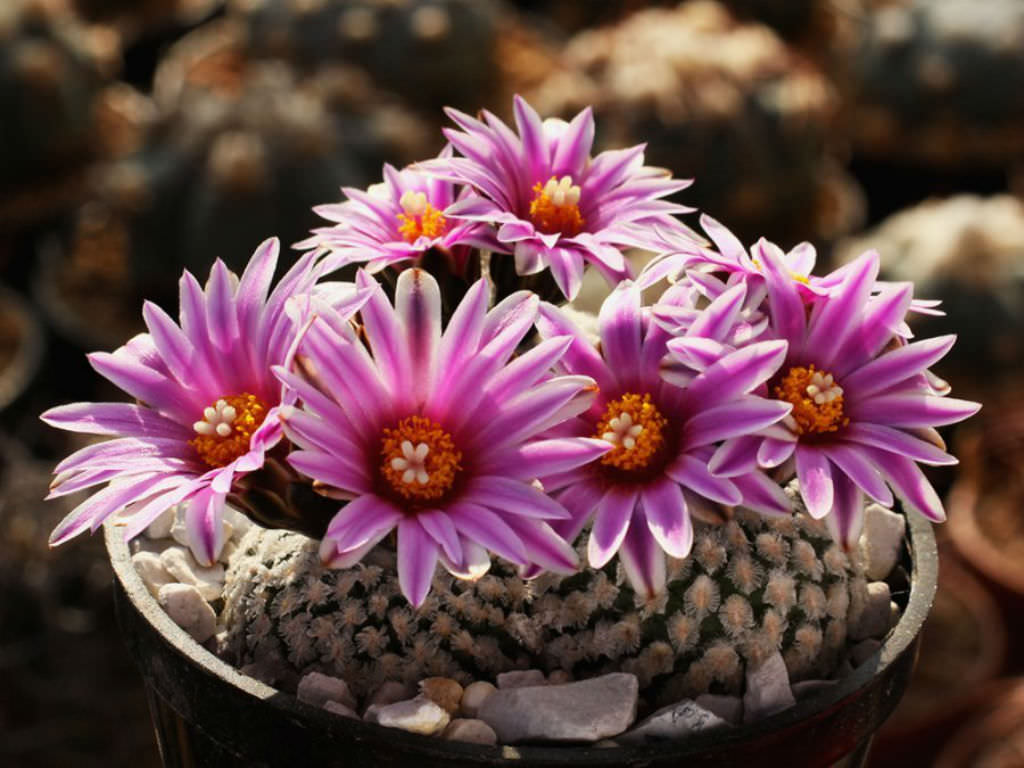
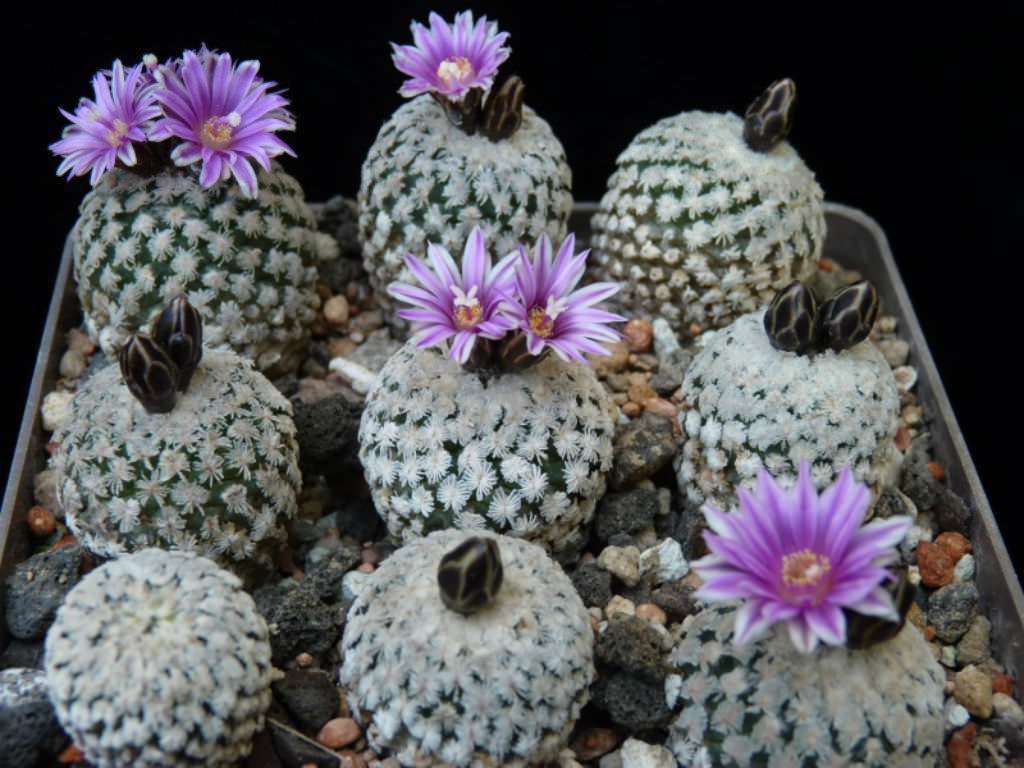
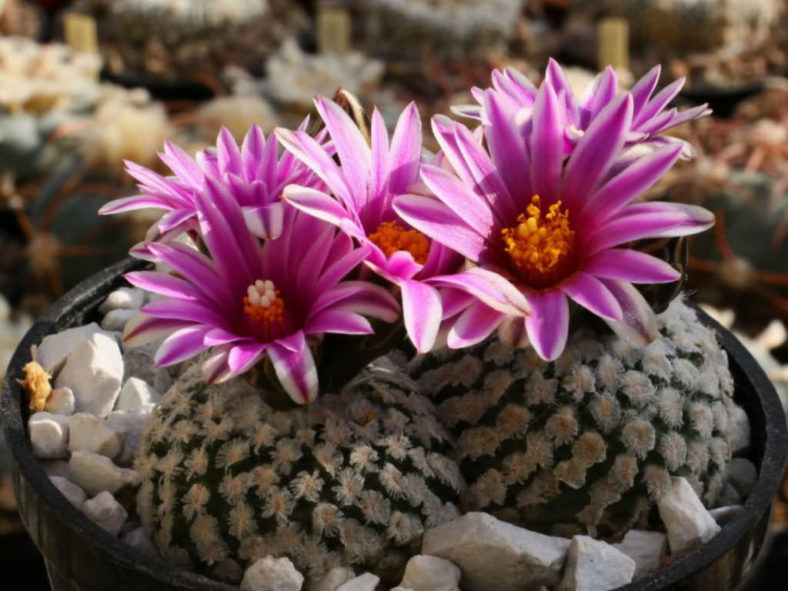
Turbinicarpus valdezianus is a dwarf cactus with a green, usually solitary stem with hatchet-shaped tubercles arranged in spiral rows and almost completely covered by short pectinate spines. The stem can grow up to 2 inches (5 cm) tall and 0.8 inches (2 cm) in diameter. At first spherical, it becomes cylindrical with age and has a depressed apex. Each areole bears about 25 to 30 distinctive white radial spines that spread horizontally, forming small umbrellas on the tips of the tubercles. Unlike some other species, this species lacks central spines.
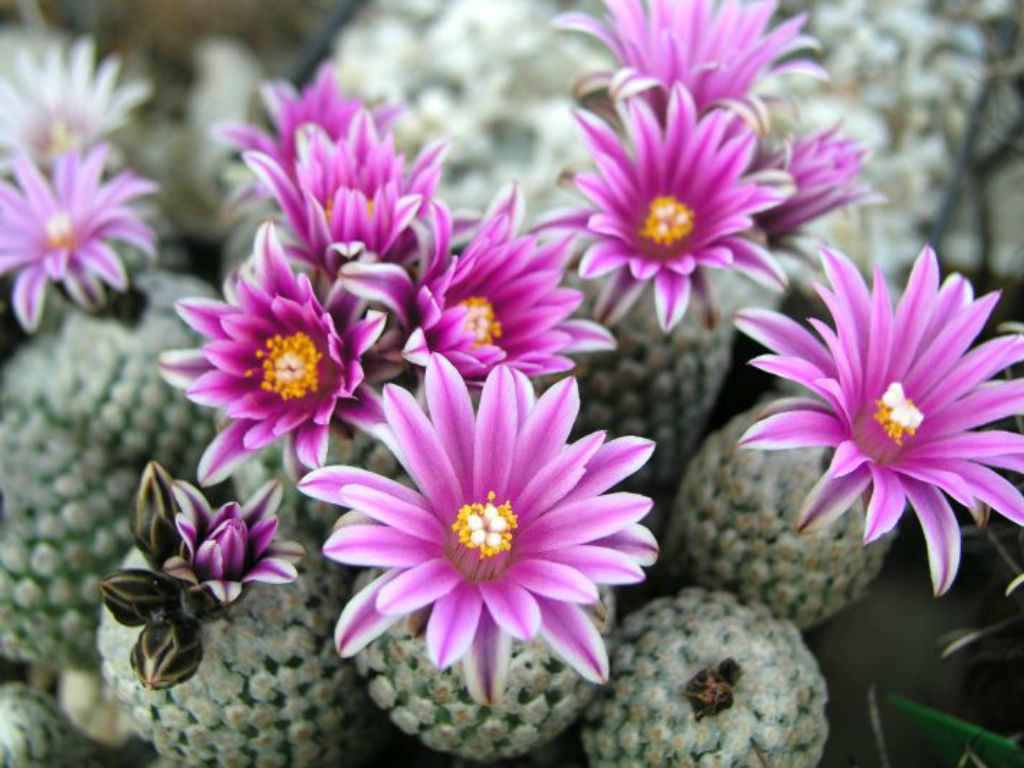
The flowers have lance-shaped, pinkish-white to bright pink petals with a darker magenta or reddish-brown midrib. They are funnel-shaped, appear from late winter to early spring, and can reach up to 1 inch (2.5 cm) in length and 1.2 inches (3 cm) in diameter. The fruits are spherical to barrel-shaped, dark greenish-brown, and contain tiny dark brown seeds.
Forms of Turbinicarpus valdezianus
- Turbinicarpus valdezianus var. albiflorus (not accepted as a separate variety and is treated as a synonym of Turbinicarpus valdezianus)
How to Grow and Care for Turbinicarpus valdezianus
Hardiness: USDA hardiness zone 9b to 11b: from 25°F (-3.9°C) to 50°F (10°C).
Turbinicarpus prefers full sun and a well-ventilated position to maintain good body color and spinal development.
The golden rule regarding watering is "never water when the compost is still damp." This is the one error that will certainly kill any plant! Watering should commence in the spring, depending on the weather conditions. The plants should initially be lightly sprayed to encourage gentle growth.
These cacti can withstand high summer temperatures and benefit from good ventilation. Do not be tempted to overcrowd the plants. They will be far happier with a bit of space to allow the air to circulate. Winter temperatures can be as low as 44-46°F (7-8°C), provided the plants are kept dry, and humidity is kept low by good ventilation on bright days.
See more at How to Grow and Care for Turbinicarpus.
Links
- Back to genus Turbinicarpus
- Succupedia: Browse succulents by Scientific Name, Common Name, Genus, Family, USDA Hardiness Zone, Origin, or cacti by Genus
Photo Gallery
Click on a photo to see a larger version.