Scientific Name
Titanopsis luderitzii Tischer
Accepted Scientific Name
Titanopsis schwantesii (Dinter ex Schwantes) Schwantes
Synonym(s)
Verrucifera luderitzii
Scientific Classification
Family: Aizoaceae
Subfamily: Ruschioideae
Genus: Titanopsis
Etymology
The specific epithet "luderitzii" (pronounced "loo-deh-RIT-tsee-eye") refers to the type locality of this species, which is 22 miles (35 km) south of Lüderitz in Namibia. Although it is sometimes spelled "luederitzii," the correct spelling is "luderitzii," as the town of Lüderitz is often written without the umlaut.
Origin
Titanopsis luderitzii is native to South Africa (Great Namaqualand) and Namibia. It is not accepted as a separate species and is treated as a synonym of Titanopsis schwantesii.
Description
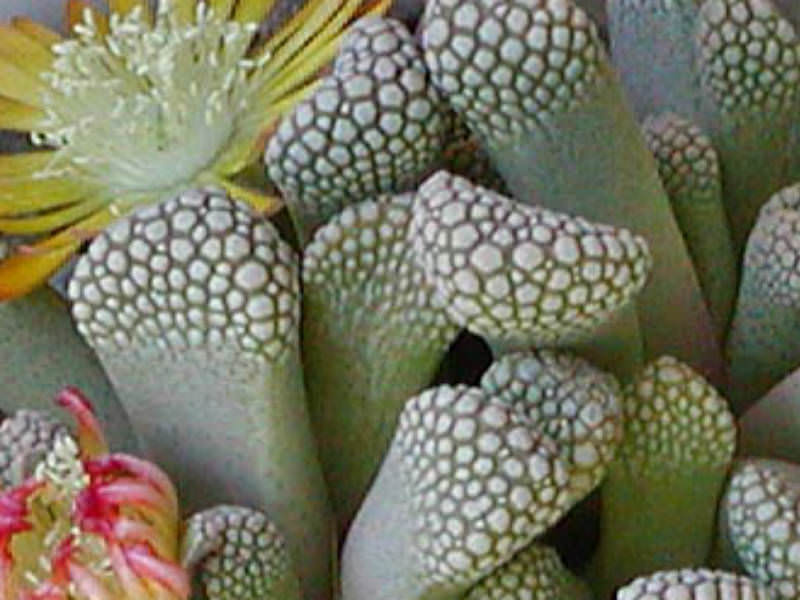
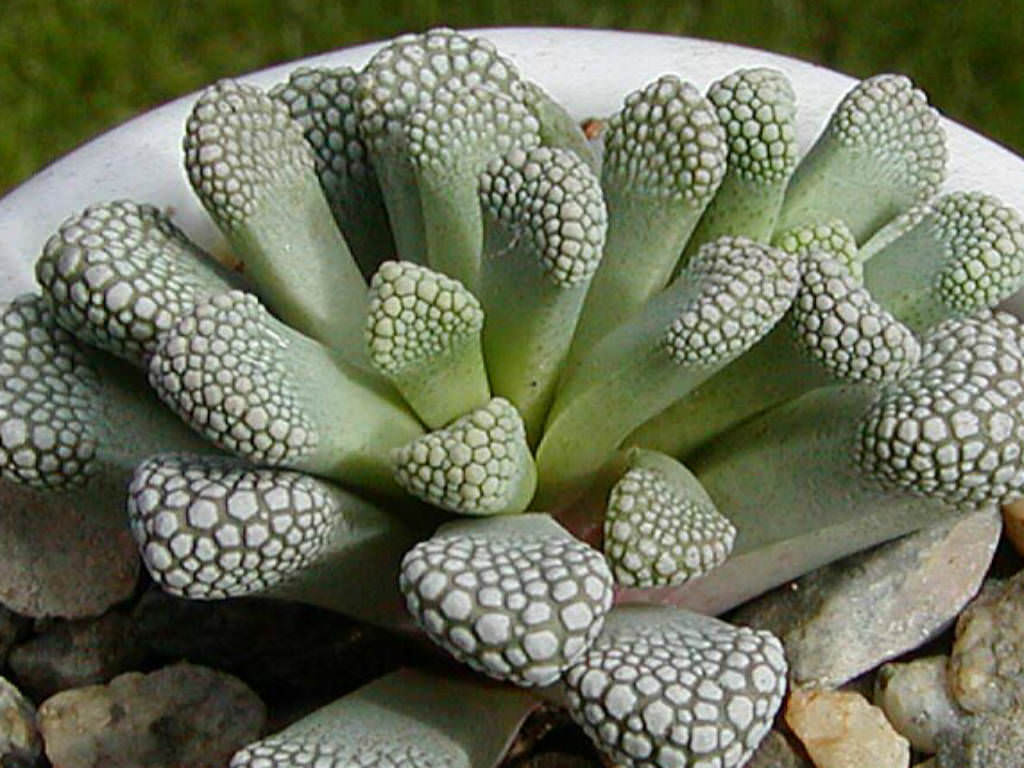
Titanopsis luderitzii is a small succulent that forms a mat of rosettes with dark yellowish-green leaves tinged with brown, a characteristic that distinguishes it from the typical Titanopsis schwantesii. The rosettes can grow up to 2 inches (5 cm) in diameter.
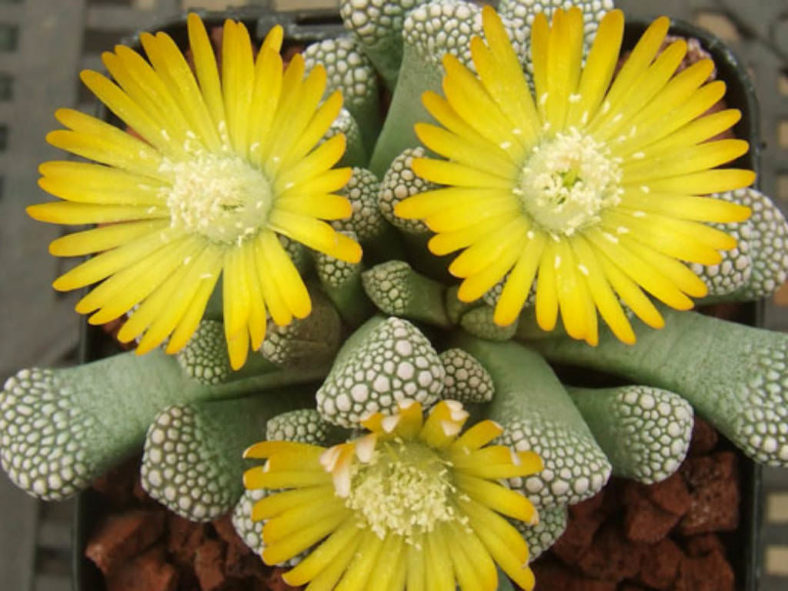
The flowers, which can reach a diameter of up to 0.8 inches (2 cm), are solitary, bright yellow with pinkish or orangish tips, and appear in the afternoon in early spring.
How to Grow and Care for Titanopsis luderitzii
Hardiness: USDA hardiness zones 9b to 11b: from 25°F (-3.9°C) to 50°F (10°C).
Titanopsis is easy to grow and clumps readily, forming a beautiful succulent mat. The clumps can be divided to propagate the plant further. These plants need moderate water during late fall and early spring. Keep the rest of the time somewhat dry.
Maintaining these attractive succulents is not difficult. They require a sandy substrate with minimal organic matter. Titanopsis are winter growers and should be kept relatively dry in summer. These plants should also be kept dry when temperatures are below 45°F (7°C).
The best place to grow Titanopsis is a sunny spot, with bright sunlight in summer and direct sun in winter.
In some cases, division of larger clumps is possible; however, as most species have tuberous rootstocks and offsets slowly, seed production is the most common propagation method. Sow it in spring, and it should start flowering after two years.
See more at How to Grow and Care for Titanopsis.
Links
- Back to genus Titanopsis
- Succupedia: Browse succulents by Scientific Name, Common Name, Genus, Family, USDA Hardiness Zone, Origin, or cacti by Genus
Photo Gallery
Click on a photo to see a larger version.