Scientific Name
Sedum suaveolens Kimnach
Synonym(s)
Graptopetalum suaveolens
Common Name(s)
Sweet Smelling Sedum
Scientific Classification
Family: Crassulaceae
Subfamily: Sempervivoideae
Tribe: Sedeae
Genus: Sedum
Etymology
The specific epithet "suaveolens" (pronounced "swah-vee-OH-lens") means "fragrant; sweet-smelling" and refers to flowers that have a sweet, pleasant smell.
Description
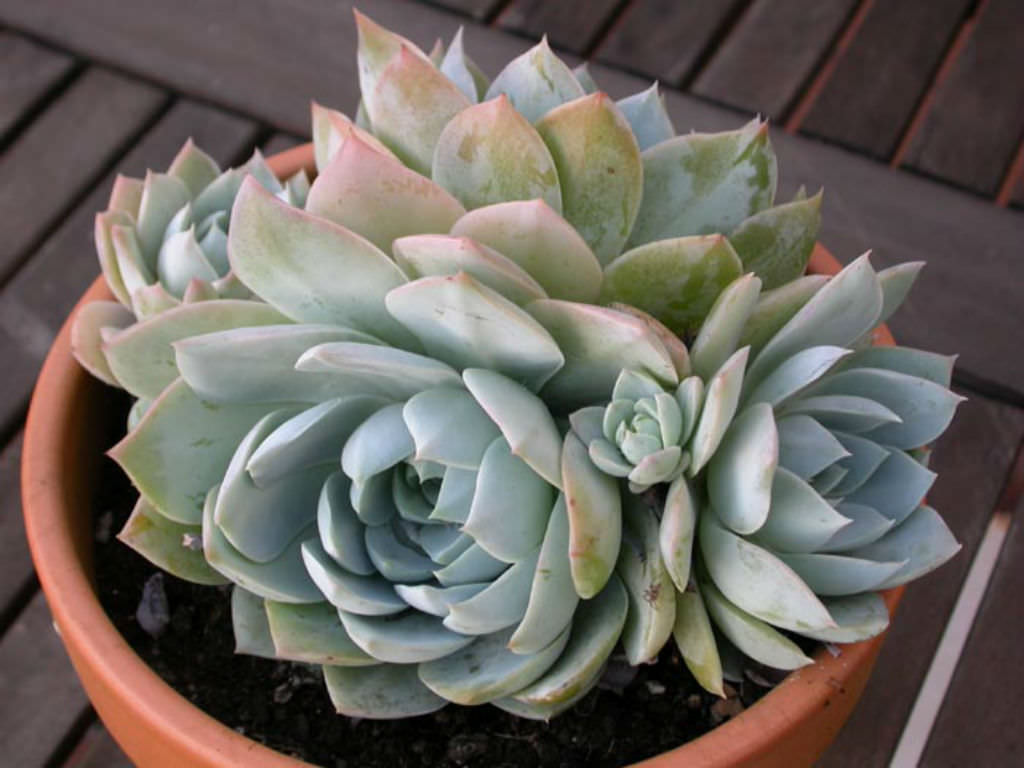
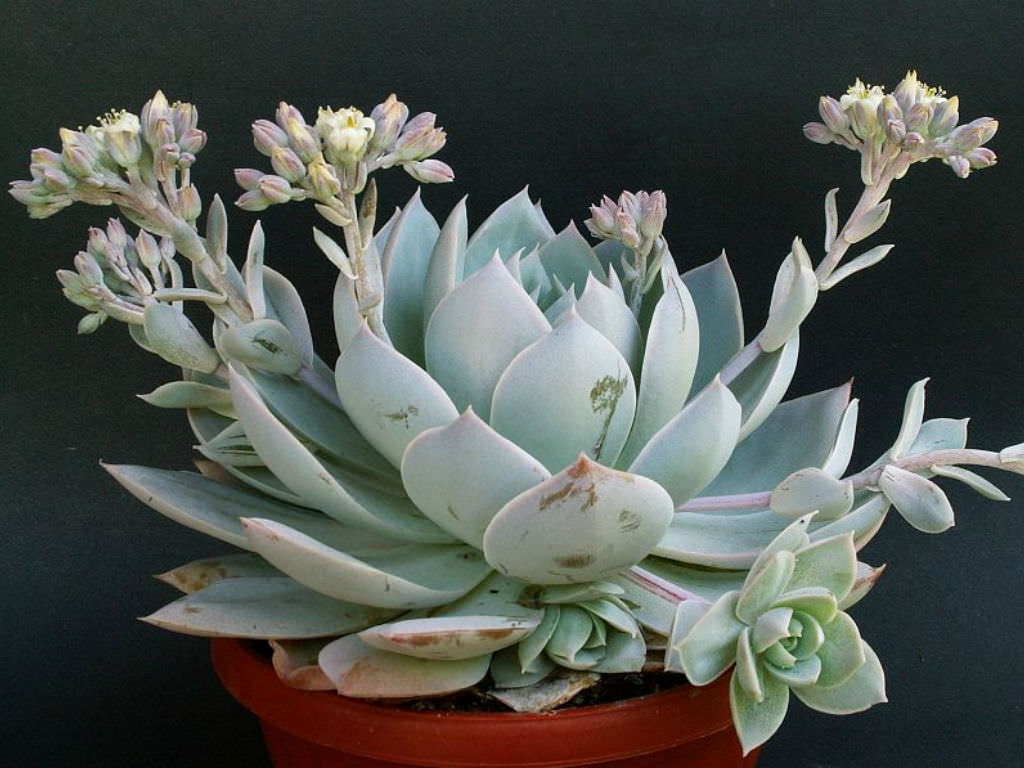
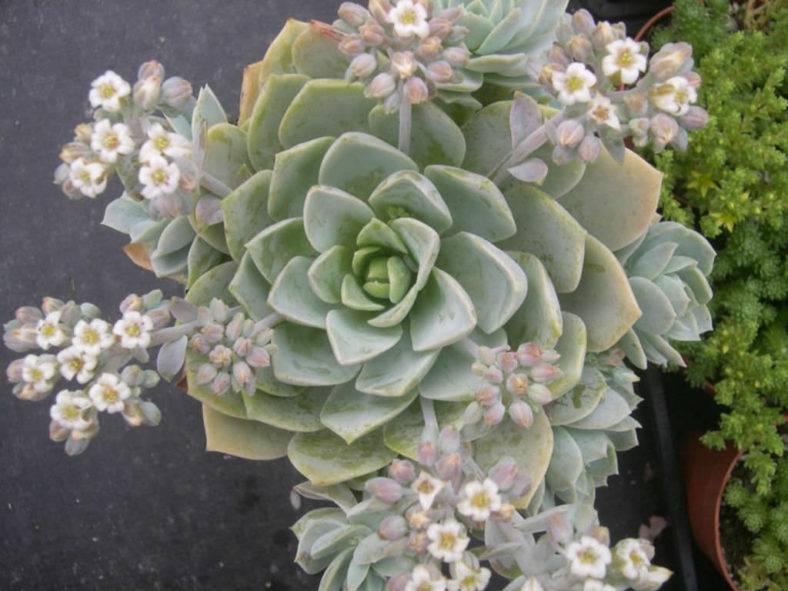
Sedum suaveolens is a cute, clump-forming succulent with short-stemmed rosettes of thick, fleshy, blue-green leaves heavily covered with a fine, waxy bloom and often tinged pink. The stems can grow up to 1.2 inches (3 cm) long and 0.6 inches (1.5 cm) in diameter. The rosettes can reach 8 inches (20 cm) in diameter and produce offsets on short stolons, forming a clump up to 20 inches (50 cm) in diameter. The leaves are obovate, taper to a sharp point, and can measure up to 2.4 inches (6 cm) long and 1.6 inches (4 cm) wide. They are flattened on the upper surface, keeled below, and curve slightly toward the tip.
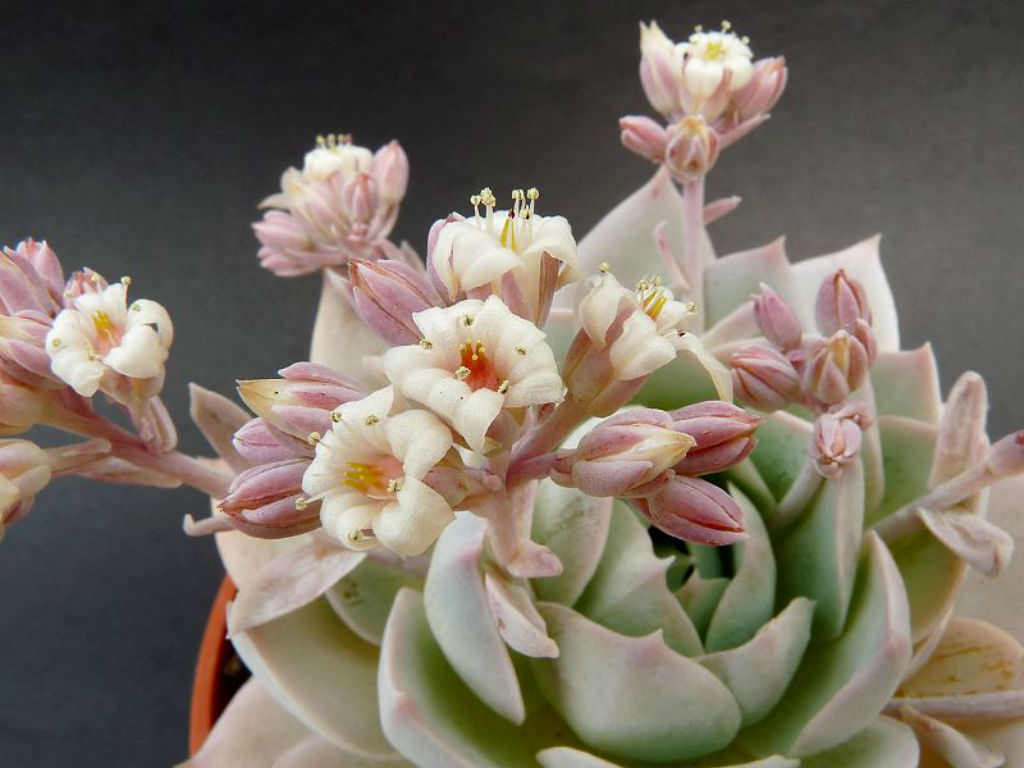
Like the stolons, short inflorescences barely reach beyond the edge of the leaves; in summer, they appear from within the rosette and bear urn-shaped, 5-merous, sweet-scented flowers. The petals are white with a greenish-yellow midstripe near the tips.
Origin
Sedum suaveolens is native to Mexico (Durango). It grows on shaded cliff faces at about 3,770 feet (1,150 m) elevation.
Hybrids of Sedum suaveolens
How to Grow and Care for Sedum suaveolens
Hardiness: USDA hardiness zones 9b to 11b: from 25°F (-3.9°C) to 50°F (10°C).
When growing Sedums, keep in mind that these plants need very little attention. They thrive in conditions where many other plants do, but they do just as well in less hospitable areas. They are ideal for parts of your yard that get too much sun or too little water to grow anything else. Sedum is commonly called Stonecrop because many gardeners joke that only stones need less care and live longer.
Sedum is easily planted. For shorter varieties, laying the plant on the ground where you want it to grow is usually enough to start it there. Roots will grow from wherever the stem touches the ground. To ensure the plant starts there, add a very thin layer of soil.
You can break off a stem from taller varieties and push it into the ground where you want it to grow. The stem will root easily, and a new plant will establish in a season or two.
Learn more at How to Grow and Care for Sedum.
Links
- Back to genus Sedum
- Succupedia: Browse succulents by Scientific Name, Common Name, Genus, Family, USDA Hardiness Zone, Origin, or cacti by Genus
Photo Gallery
Click on a photo to see a larger version.