Scientific Name
Sedum praealtum f. cristatum
Accepted Scientific Name
Sedum praealtum A.DC.
Synonym(s)
Sedum dendroideum subsp. praealtum f. cristatum
Scientific Classification
Family: Crassulaceae
Subfamily: Sempervivoideae
Tribe: Sedeae
Genus: Sedum
Etymology
The specific epithet "praealtum" (pronounced "pray-AL-tum") means "very high". It refers to the unusually tall growth of this species compared to most other Sedum species, which are typically low-growing.
The formal epithet "cristatum" (pronounced "kris-TAY-tum") means "crested" or "tufted" and refers to the mutated growth of this plant.
Origin
Sedum praealtum f. cristatum is a crested form of Sedum praealtum.
Description
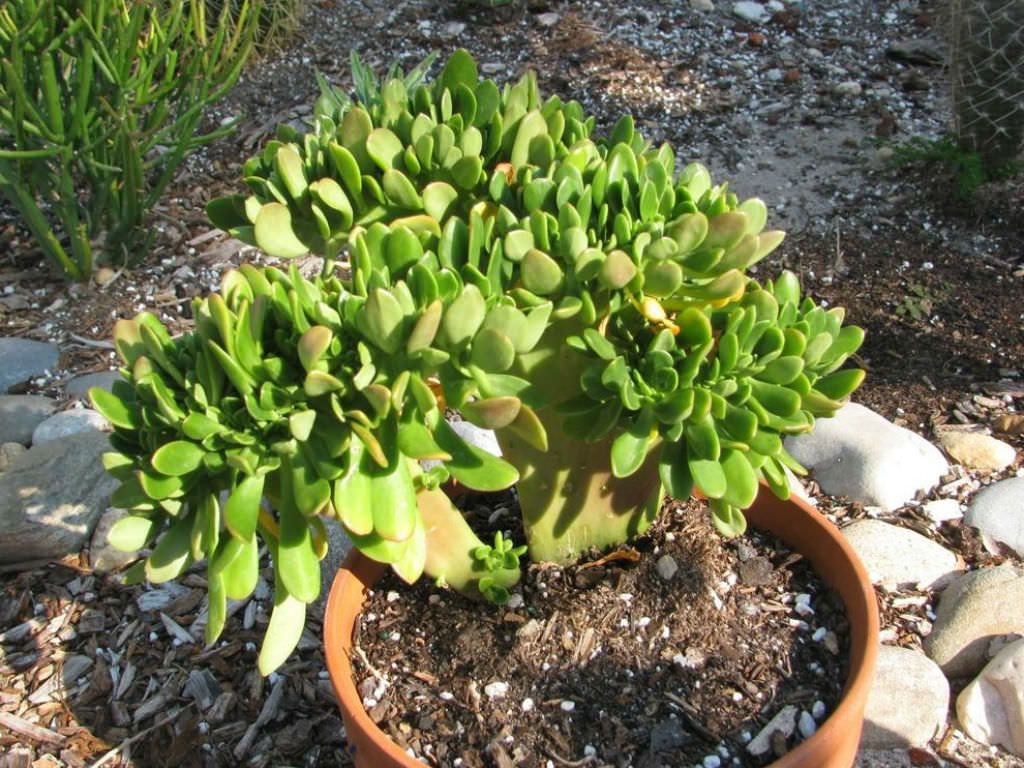
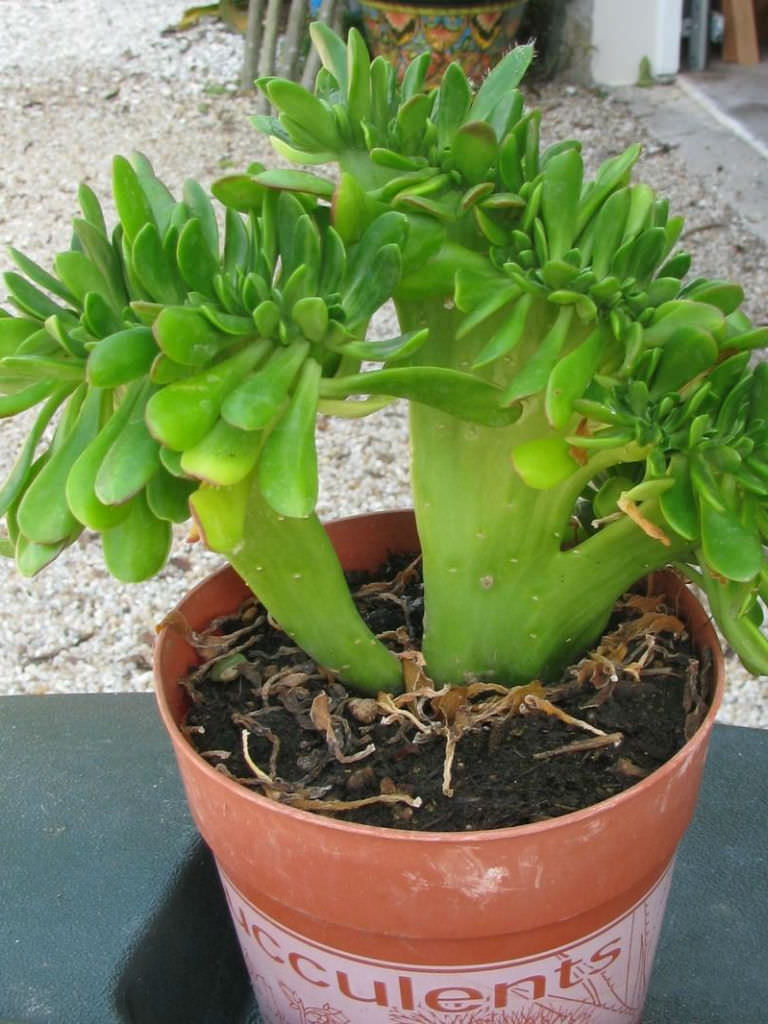
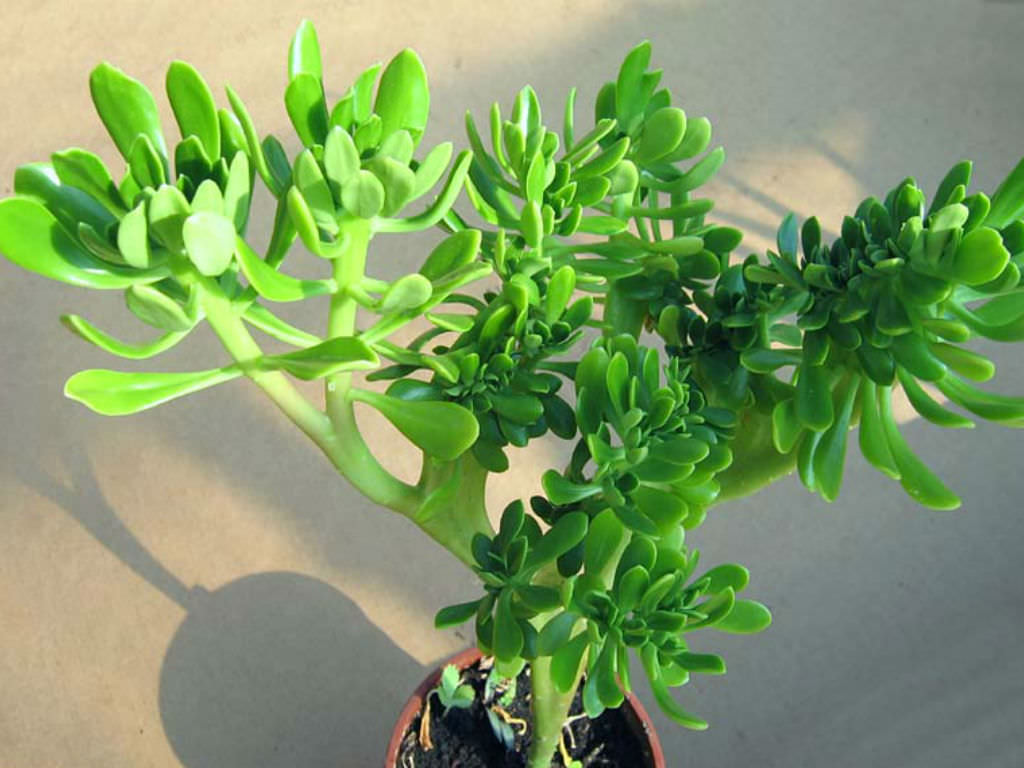
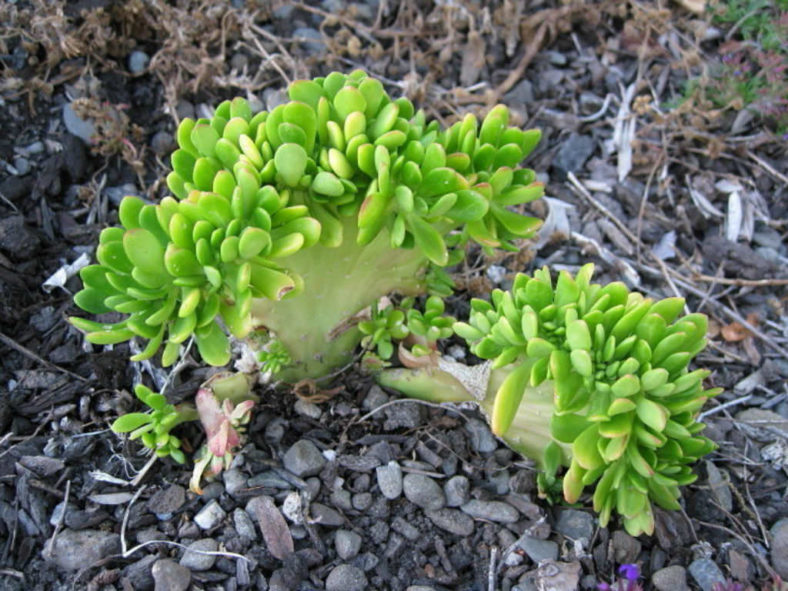
Sedum praealtum f. cristatum is a shrubby succulent with glossy green leaves densely packed along flattened branches. It is smaller but more interesting than the normal Sedum praealtum. The leaves are also smaller than in the normal form and often tinged with red. The branches lose the lower leaves as they age. Each specimen has a unique shape. The crested development is sometimes found in all branches, but some specimens are not strongly crested and are partly normal.
How to Grow and Care for Sedum praealtum f. cristatum
Hardiness: USDA hardiness zone 7a to 11b: from 0°F (-17.8°C) to 50°F (10°C).
When growing Sedum, keep in mind that Sedum plants need very little attention or care. They will thrive in conditions in which many other plants thrive, but do just as well in less hospitable areas. They are ideal for that part of your yard that gets too much sun or too little water to grow anything else. A common name for Sedum is Stonecrop because many gardeners joke that only stones need less care and live longer.
Sedum is easily planted. Simply laying the plant on the ground for shorter varieties, where you want it to grow, is usually enough to get the Sedum plant started there. They will send out roots from wherever the stem touches the ground and the root itself. If you would like to ensure the plant starts there, you can add a very thin layer of soil over the plant. You can break off one of the stems for taller Sedum varieties and push it into the ground where you want to grow it. The stem will root very easily, and a new plant will be established in a season or two.
See more at How to Grow and Care for Sedum.
Links
- Back to genus Sedum
- Succupedia: Browse succulents by Scientific Name, Common Name, Genus, Family, USDA Hardiness Zone, Origin, or cacti by Genus
Photo Gallery
Click on a photo to see a larger version.