

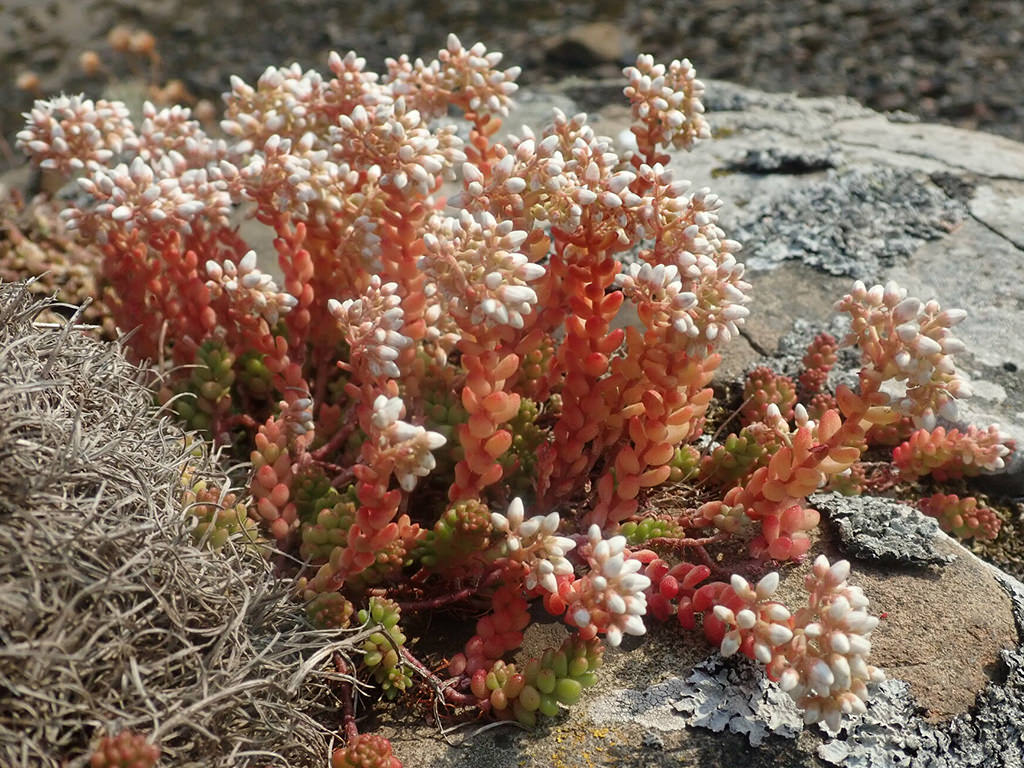
Sedum album, commonly known as White Stonecrop, is a low-growing succulent native to Europe. It is highly valued for its extreme durability and ability to thrive in harsh, rocky conditions. This species can often be found growing on walls, dry banks, seashore rocks, and in rocky meadows.
Taxonomy of Sedum album
Scientific Name
Sedum album L.
Synonym(s)
Leucosedum album, Oreosedum album, Sedum teretifolium
Common Name(s)
White Stonecrop
Scientific Classification
Family: Crassulaceae
Subfamily: Sempervivoideae
Tribe: Sedeae
Genus: Sedum
Etymology
The generic name "Sedum" (pronounced "SEE-dum") means "sitting" or "low-growing" and refers to the low-growing habit of the plants of this genus, which appear to "sit" and spread over rocks, slopes, and ground surfaces.
The specific epithet "album" (pronounced "AL-bum") means "white" and refers to the color of the flowers.
Subspecies of Sedum album
- Sedum album subsp. album
- Sedum album subsp. rupimelitense
- Sedum album subsp. serpentini
Cultivars of Sedum album
Origin of Sedum album
Sedum album is native to Europe. Because it is widely cultivated, populations have escaped from gardens and naturalized in other regions, including Canada, the United States, and New Zealand. It usually grows in crevices or free-draining rocky soil.
Description of Sedum album
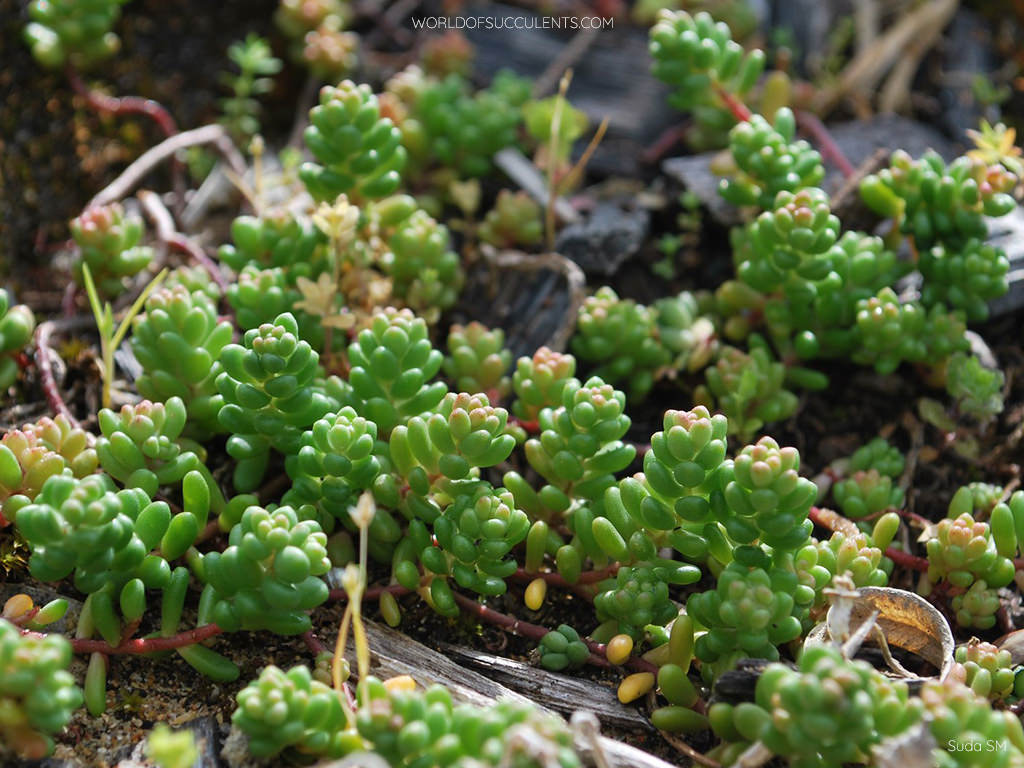
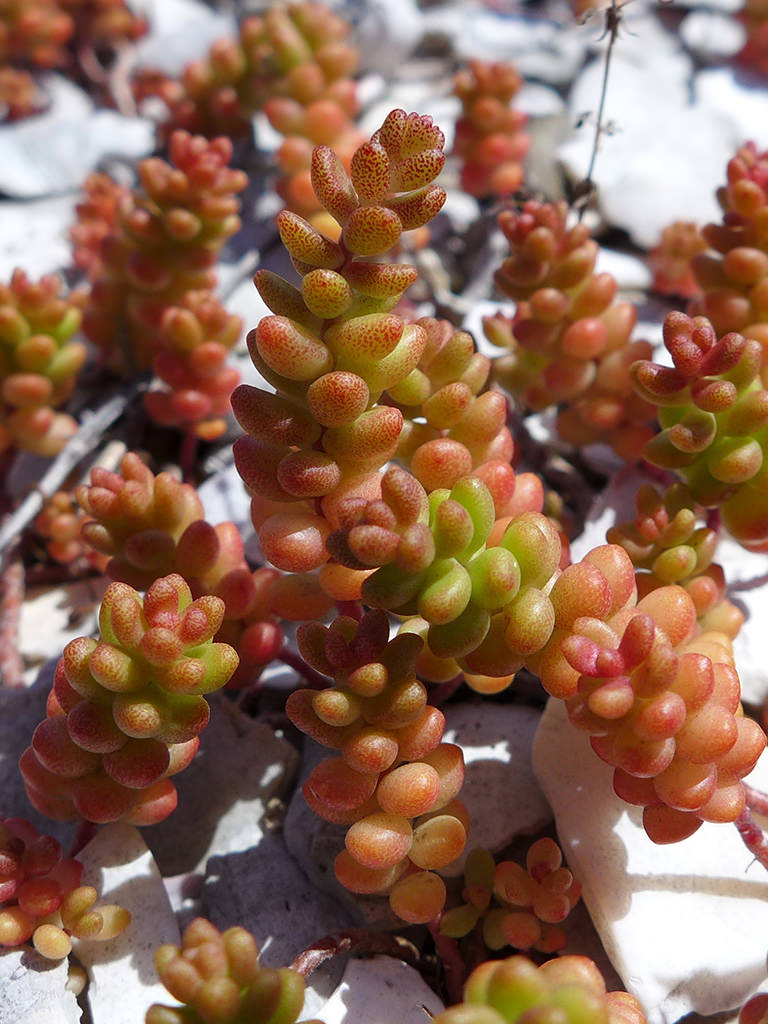
Sedum album is a lovely, low-growing succulent with creeping stems and numerous short, ascending branches that bear green or often reddish leaves, forming a dense mat. The leaves are fleshy, vary in shape from linear to ovate, and are either smooth or sparsely hairy. They can grow up to 1 inch (2.5 cm) long and 0.8 inches (2 cm) wide.
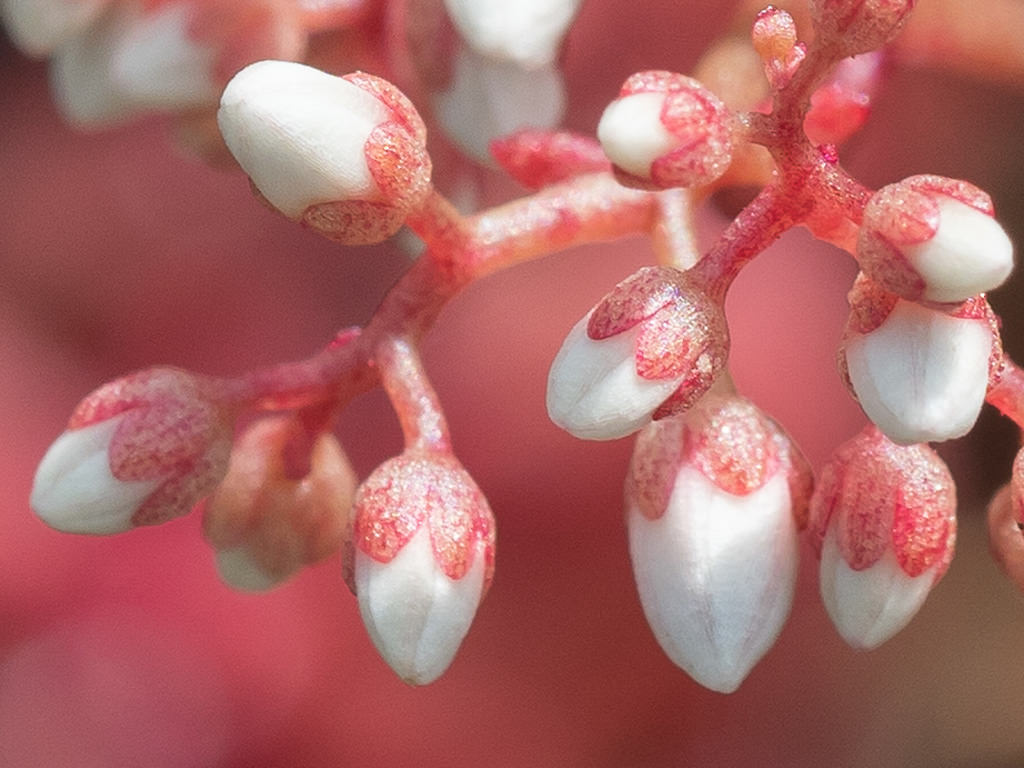
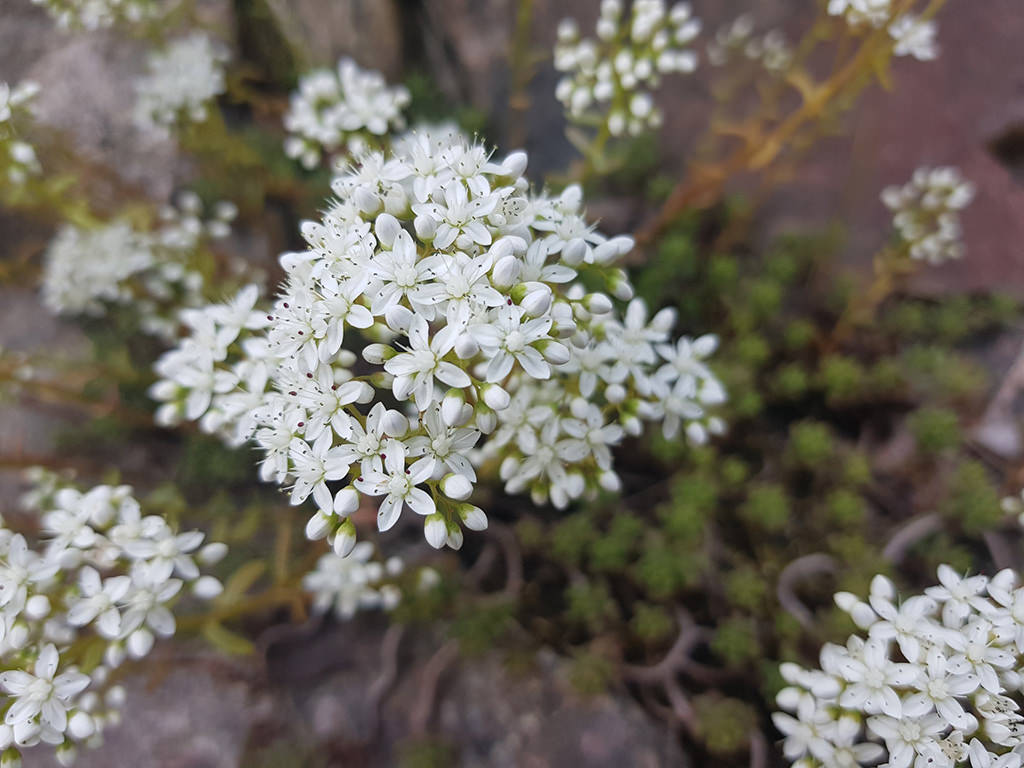
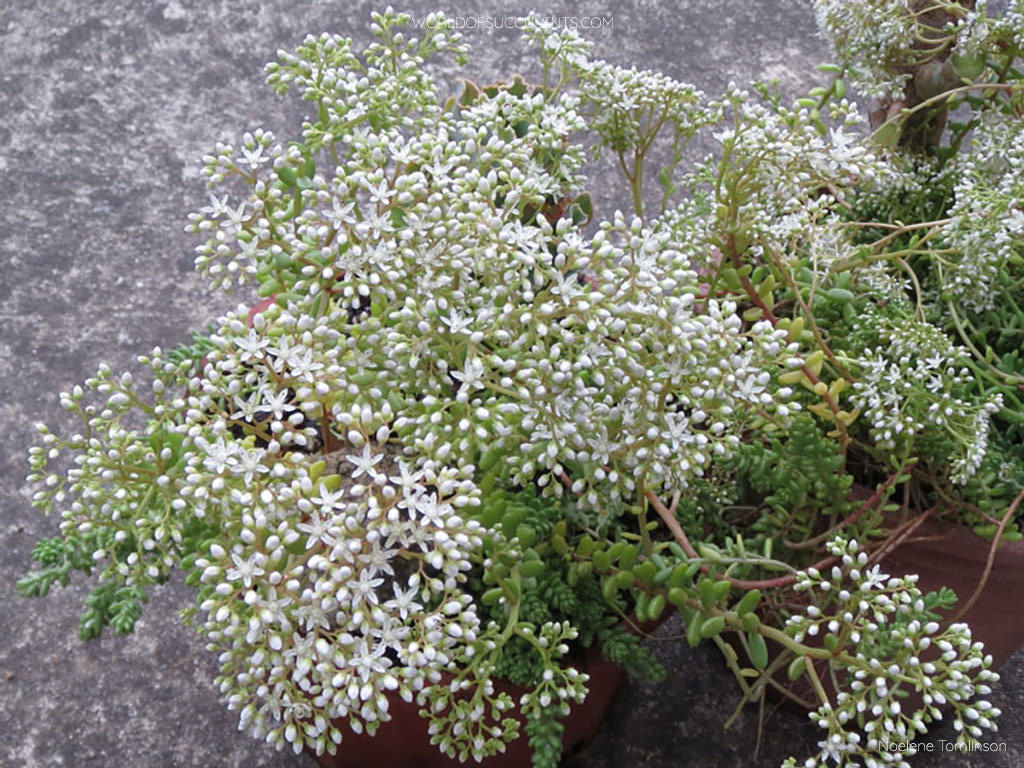
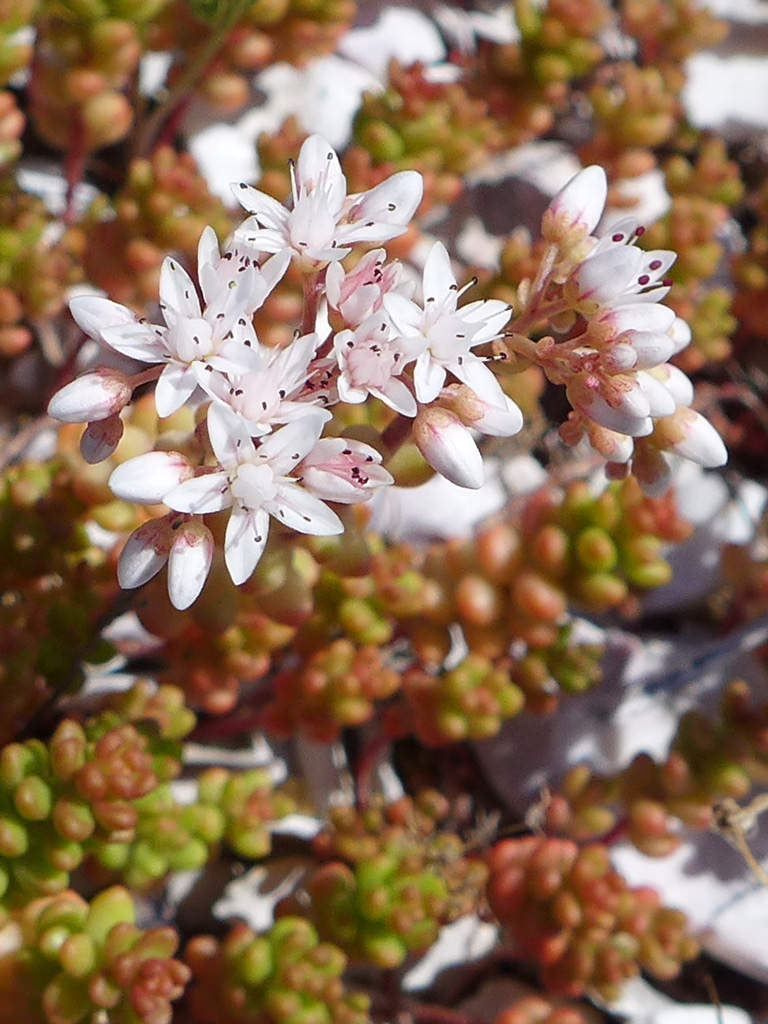
In the summer, the plant produces dense clusters of small, star-shaped flowers with five white or rarely pink, lance-shaped petals. The flowering branches are erect, simple or branched, have bracts similar to leaves, and grow up to 12 inches (30 cm) long. The fruits are five united, many-seeded follicles that contain yellowish-brown seeds.
How to Grow and Care for Sedum album
Light: Sufficient light is most important for growing a healthy plant. Sedum album grows best in locations that receive full sun for at least 6 hours daily, but it can tolerate some shade. Place the plant near a sunny window or use artificial lights when growing indoors.
Soil: This plant does not like to sit in waterlogged soil, so drainage is essential to prevent root rot. Use a commercially available potting mix for succulents, or create your own.
Temperature: Sedum album has a good tolerance to heat and low temperatures. It grows best in USDA Plant Hardiness Zones 3a to 8b, with average minimum winter temperatures ranging from -40 to 20 °F (-40 to -6.7 °C).
Watering: From spring through fall, water thoroughly and wait for the soil to dry out before watering again. During the winter, water the plant just enough to keep it from shriveling. When watering, avoid wetting the leaves, stems, and flowers.
Fertilizing: Feed a water-soluble fertilizer diluted to half-strength during the growing season. However, feeding is unnecessary if you provide the plant with fresh soil annually.
Repotting: When Sedum album outgrows its current pot, repot it into a larger pot in spring. Make sure the soil is dry before you begin repotting.
Propagation: Once you have one Sedum album, it is easy to make more by taking leaves or stem cuttings and dividing the plant. It is also easy to start from seeds in spring or summer. Take cuttings in spring and divide the plant after it has finished flowering.
Learn more at How to Grow and Care for Sedum.
Toxicity of Sedum album
Sedum album is not considered toxic to humans but can be mildly toxic to pets and children.
Photo Gallery
Click on a photo to see a larger version.
Internal Links
- Explore all plants within the genus Sedum.
- Explore all plants within the family Crassulaceae.