Scientific Name
Rebutia heliosa subsp. teresae Kníže, Říha & Šeda
Accepted Scientific Name
Aylostera heliosa (Rausch) Mosti & Papini
Synonym(s)
Rebutia teresae Kníže nom. nud. (collector numbers KK 1724, KK 1925); in 2006, validly published as Rebutia heliosa subsp. teresae Kníže, Říha & Šeda.
Scientific Classification
Family: Cactaceae
Subfamily: Cactoideae
Tribe: Trichocereeae
Genus: Rebutia
Etymology
The specific epithet "heliosa" (pronounced "hee-lee-OH-suh") means "having a mass of suns". It refers to the sun-like appearance of the flowers of the species formerly known as Rebutia heliosa, which is now classified as Aylostera heliosa.
The subspecific epithet "teresae" (pronounced "teh-REH-say") honors Teresa Ramírez from La Paz, Bolivia, the mother of Karel Kníže's former wife.
Origin of Rebutia heliosa subsp. teresae
Rebutia heliosa subsp. teresae is native to Bolivia. It is not accepted as a separate subspecies and is treated as a synonym of Aylostera heliosa, which was formerly classified as Rebutia heliosa, or by some authors, of Aylostera deminuta.
Description of Rebutia heliosa subsp. teresae
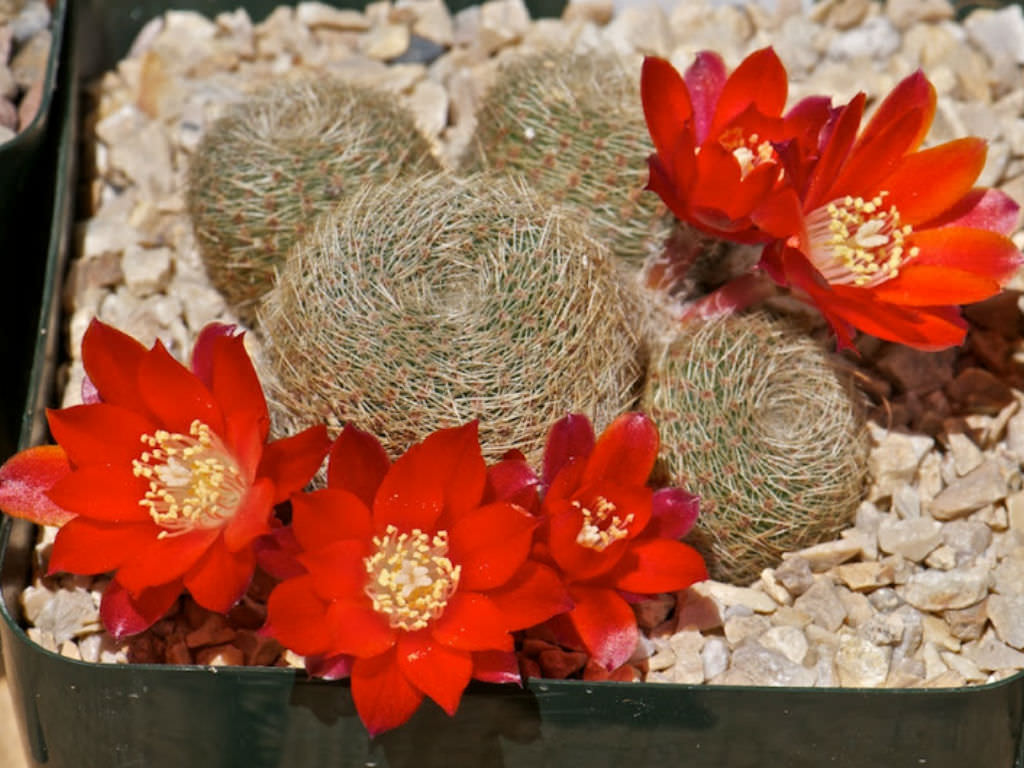
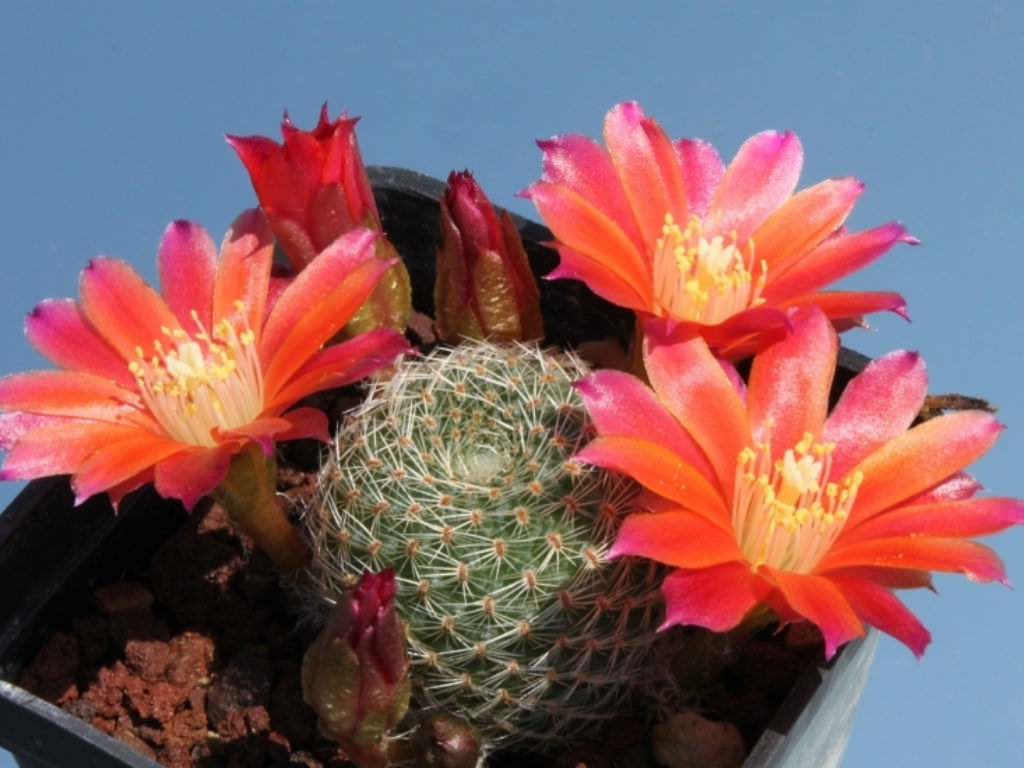
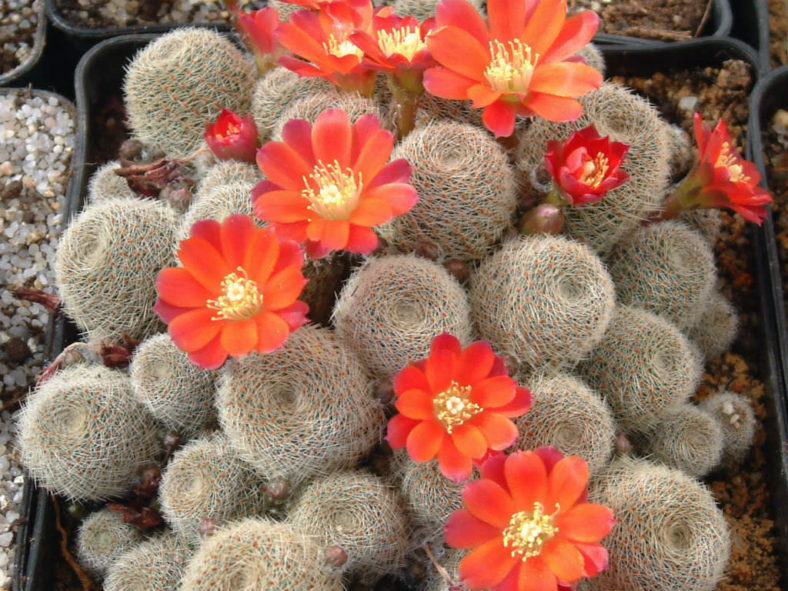
Rebutia heliosa subsp. teresae is a dwarf cactus with stems densely covered in brown areoles with white, pectinate spines, giving them a silvery appearance. Solitary at first, it later produces offsets profusely, forming a dense clump over time. Unlike the typical Aylostera heliosa, this cactus has longer and less appressed spines, and its areoles are not as elongated.
The flowers appear in profusion in spring and last about ten days. They are intensely red-orange with a pinkish blush on the outer tepals.
How to Grow and Care for Rebutia heliosa subsp. teresae
Hardiness: USDA hardiness zone 9a to 11b: from 20°F (-6.7°C) to 50°F (10°C).
If you can grow cacti and succulents successfully, you can likely grow the popular Rebutia without too much trouble. Their water and light requirements are fairly typical for many cacti species, including a winter cooling period to promote better blooming. Watering should be done carefully, allowing the plant to dry out between waterings. The cactus mustn't be exposed to prolonged dampness and standing water. Never let your cactus sit in a dish of water. For the best viewing, instead of propagating your offsets, let the plant form a large cluster. When it blooms, this will make a truly beautiful display. Lastly, make sure to fertilize during the growing season for the best results.
Repot as needed, preferably during the warm season. To repot a cactus, make sure the soil is dry before repotting, then gently remove the pot.
See more at How to Grow and Care for Rebutia.
Links
- Back to genus Rebutia
- Succupedia: Browse succulents by Scientific Name, Common Name, Genus, Family, USDA Hardiness Zone, Origin, or cacti by Genus
Photo Gallery
Click on a photo to see a larger version.