Scientific Name
Orbea wissmannii var. eremastrum (O.Schwartz) P.V.Bruyns
Synonym(s)
Angolluma eremastrum, Caralluma eremastrum, Orbea wissmannii subsp. eremastrum, Pachycymbium eremastrum
Scientific Classification
Family: Apocynaceae
Subfamily: Asclepiadoideae
Tribe: Ceropegieae
Subtribe: Stapeliinae
Genus: Orbea
Etymology
The generic name "Orbea" (pronounced "ORB-ee-uh") means "ringed; having a ring" and refers to the conspicuous ring-shaped structure, known as annulus, found in the flowers of this genus.
The specific epithet "wissmannii" (pronounced "wiss-MAHN-nee-eye") honors Hermann Wilhelm Leopold Ludwig Wissmann, after 1890 Hermann von Wissmann🡕 (1853–1905), a German explorer and colonial administrator in Africa.
The specific epithet "eremastrum" (pronounced "eh-reh-MAS-trum") is interpreted to mean "desert-like" and likely refers to the occurrence of this variety in arid desert habitats.
Origin of Orbea wissmannii var. eremastrum
Orbea wissmannii var. eremastrum is native to Saudi Arabia, Oman, and Yemen.
Description of Orbea wissmannii var. eremastrum
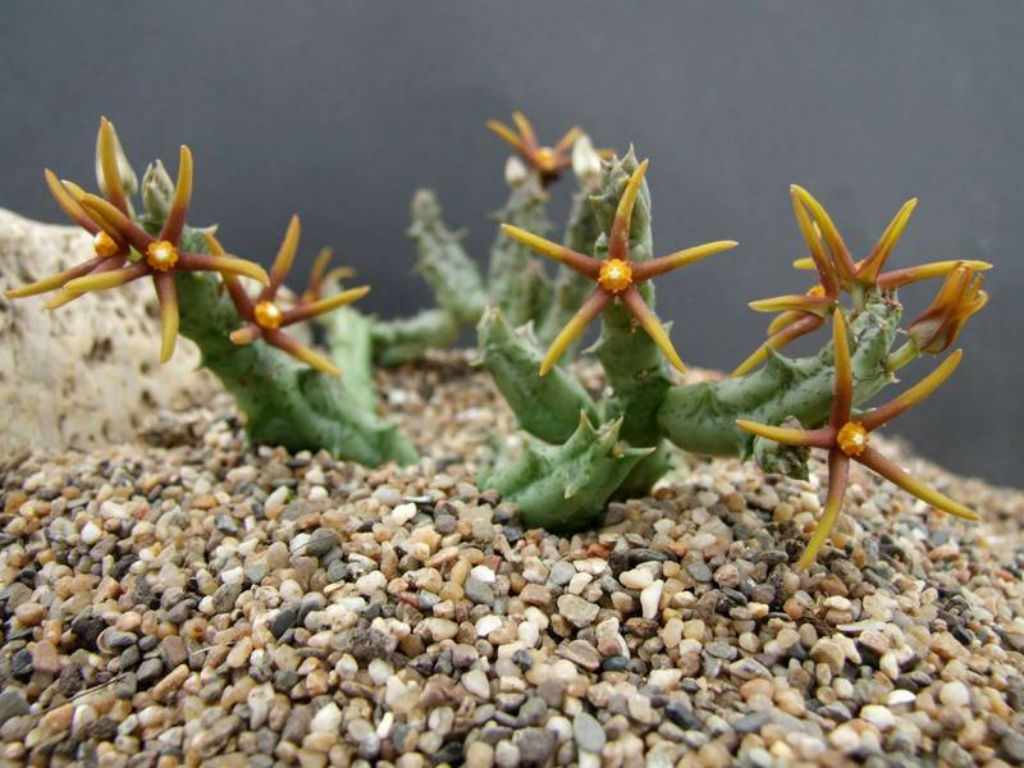
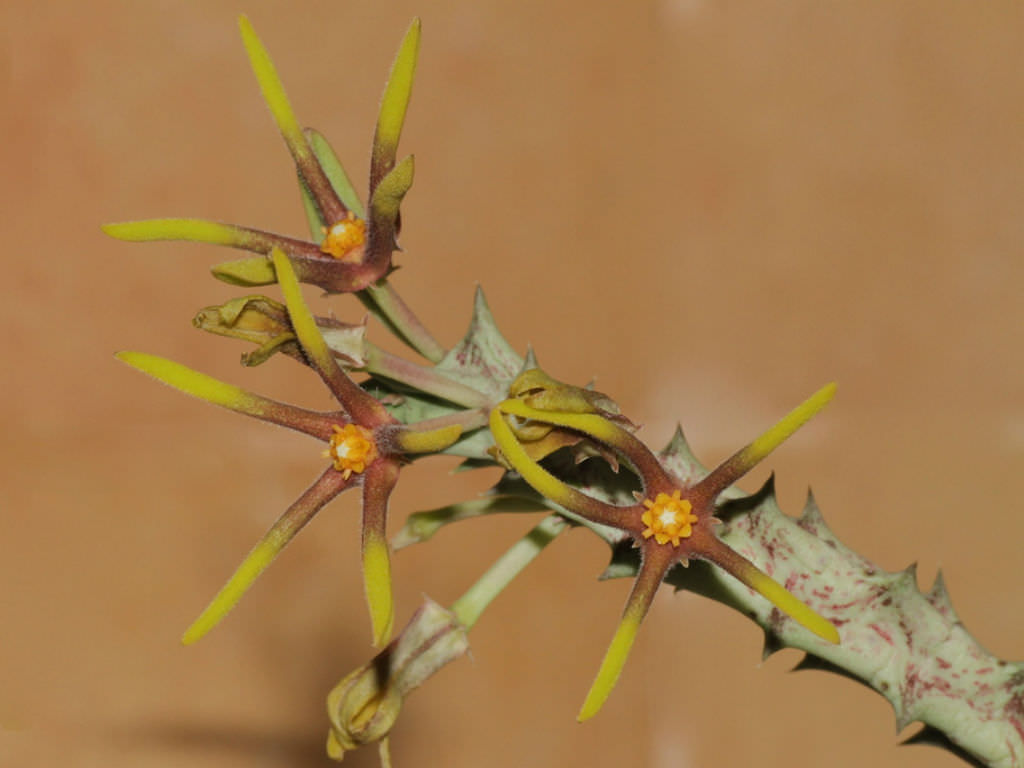
Orbea wissmannii var. eremastrum is a low-growing succulent with erect to ascending, 4-angled stems crowded in cushion-like masses. It can grow up to 3 inches (7.5 cm) tall and 3.3 feet (1 m) in diameter. The stems are gray-green, often mottled with brown or purple. The angles of the stems are lined with prominent conical tubercles.
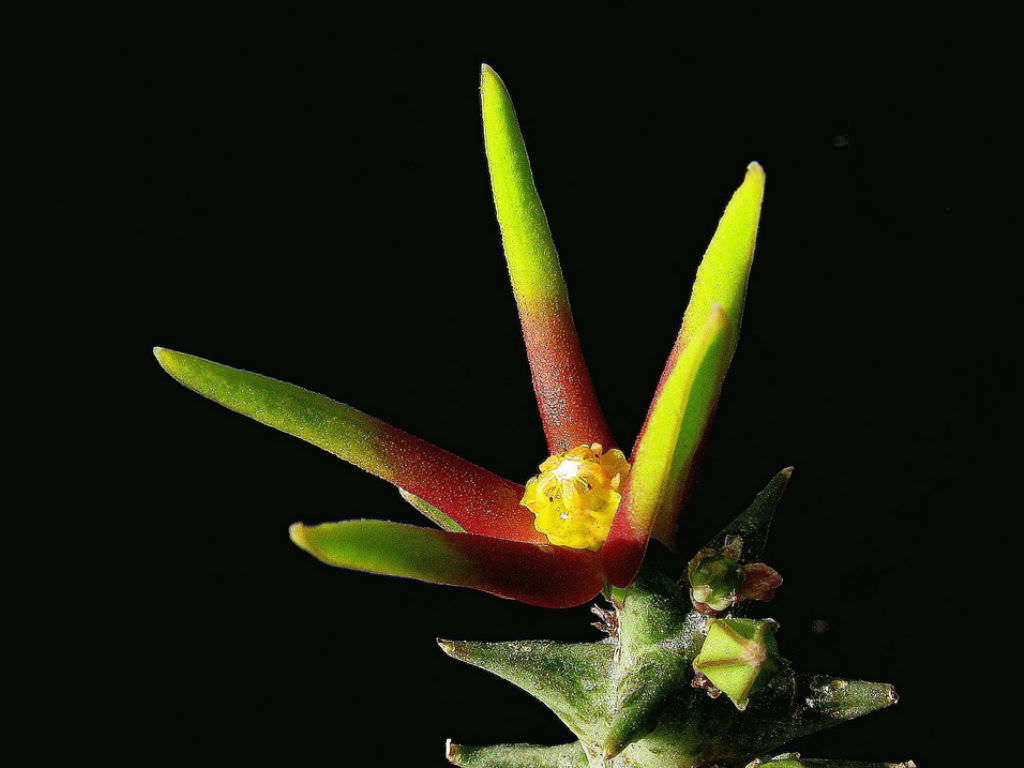
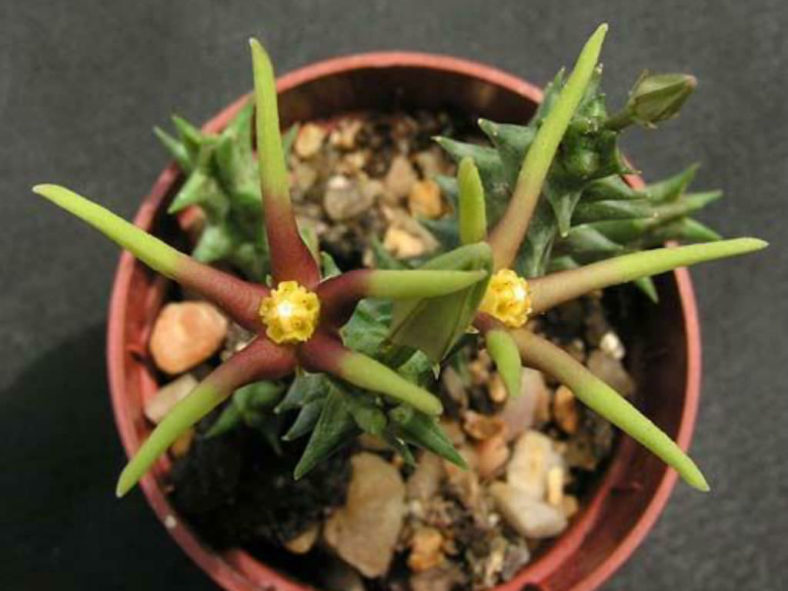
The flowers, which can reach a diameter of up to 10 inches (25 cm), are star-shaped, deeply and narrowly lobed, and appear in late summer or fall. The five corolla lobes are mostly reddish, sometimes flesh-colored at the base, and greenish-yellow to yellow towards the tip.
How to Grow and Care for Orbea wissmannii var. eremastrum
Hardiness: USDA hardiness zone 9b to 11b: from 25°F (-3.9°C) to 50°F (10°C).
Several species are fairly easy to grow. Others, often those with slightly hairy stems and the more unusual flowers, are more challenging and require careful watering (with some fertilizer) during the growing season and complete withdrawal of water during the winter months. A minimum winter temperature of 50°F (10°C) is acceptable, provided plants are kept absolutely dry. A heated growing bench or incubator may help delicate plants to get through the colder months. However, many species live under shrubs in their habitat and prefer light shade rather than full sun.
A gritty compost is essential, and clay pots are advisable for the more delicate species. Some growers prefer mineral-only compost to minimize the risk of fungal attack on roots. A layer of grit on the compost surface prevents moisture from accumulating around the base of the stems.
Keeping Stapelias and their roots free of pests such as mealybugs is the real key to success, as fungal attacks often result from insect damage to stems.
See more at How to Grow and Care for Stapelia.
Links
- Back to genus Orbea
- Succupedia: Browse succulents by Scientific Name, Common Name, Genus, Family, USDA Hardiness Zone, Origin, or cacti by Genus
Photo Gallery
Click on a photo to see a larger version.