Scientific Name
+Myrtillocalycium 'Polyp'
Scientific Classification
Family: Cactaceae
Subfamily: Cactoideae
Graft-chimeral Genus: +Myrtillocalycium
Origin
+Myrtillocactus 'Polyp' is a graft chimera resulting from the fusion between Myrtillocactus cochal and Gymnocalycium 'Red Hibotan'. It is not a true hybrid produced by pollination, but rather a "monster" plant created through grafting, in which cells from two different cacti coexist, resulting in a single, unstable organism with both genotypes present.
Description
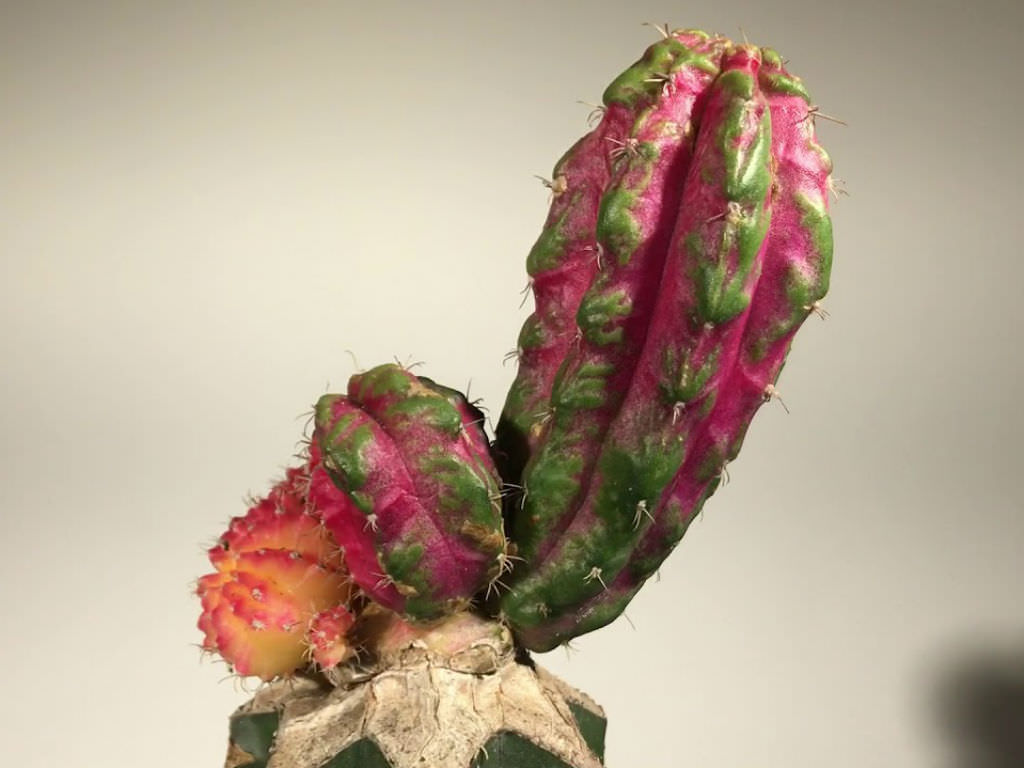
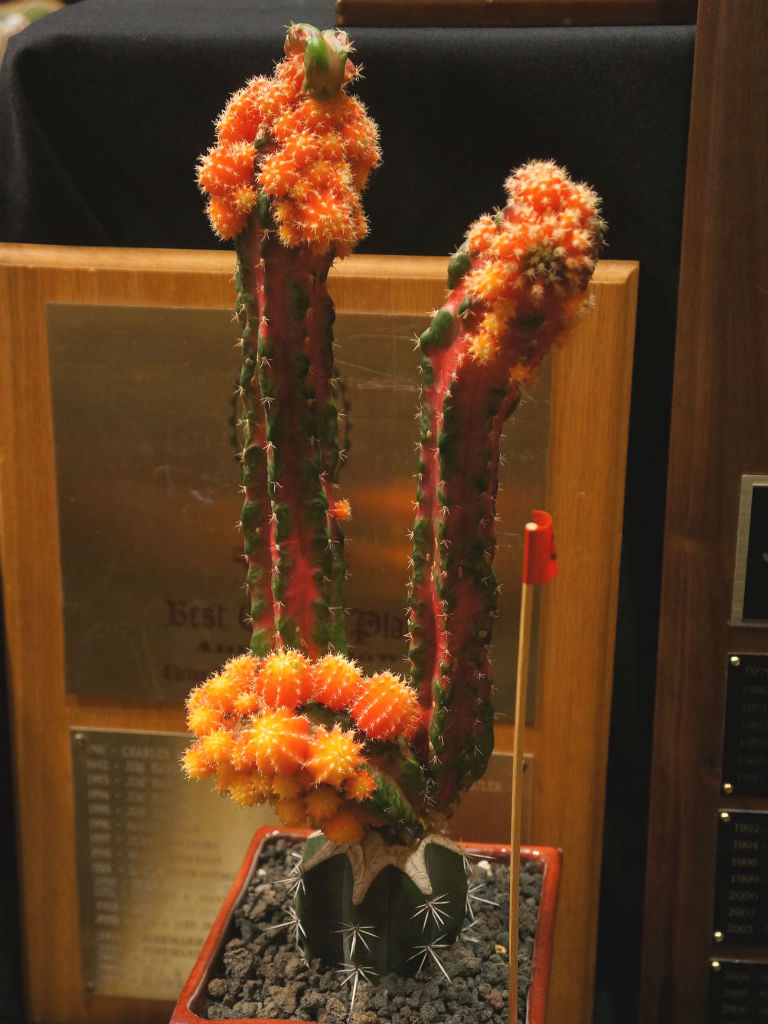
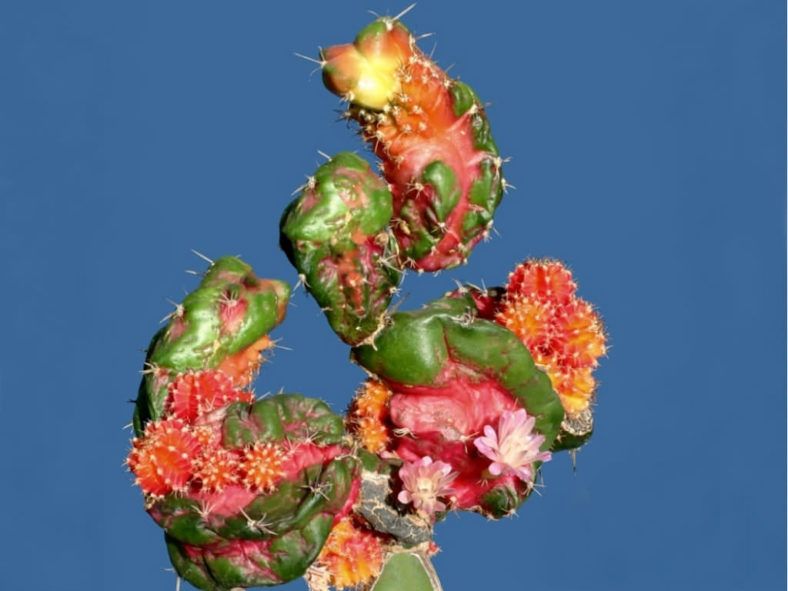
+Myrtillocalycium 'Polyp' is a spectacular example of a graft chimera. It is a rare, colorful cactus with unusual stems in shades of green, yellow, pink, and red. As a chimera, this plant is quite unstable and tends to revert, often producing red Gymnocalycium shoots. Because it results from a random grafting mutation, each specimen of +Myrtillocalycium 'Polyp' is unique.
How to Grow and Care for +Myrtillocalycium 'Polyp'
Hardiness: USDA hardiness zone 10a to 11b: from 30°F (-1.1°C) to 50°F (10°C).
In the summer, place Myrtillocactus in the sunshine (indoors or outdoors). In the winter, find a cooler, light spot. That will allow it to go into next spring well-rested, making it more likely to flower.
This easy-care plant doesn't need much water. Allow the soil to dry out before you give it another drink. Keep the soil completely dry in winter. They need a well-drained soil mix with small gravel added to ensure drainage.
They are semi-hardy. Make sure that your Myrtillocactus are not exposed to temperatures below 25°F (-4°C), or they may die. Nevertheless, it is good never to let nighttime temperatures fall below 50°F (10°C).
Treat it to special cactus food monthly in the spring and summer.
Since they are large plants that need ample space for their roots, repotting should be done every other year or when the plant has outgrown its pot. If the plant needs repotting, use fairly impoverished soil specially designed for cacti.
Because Myrtillocalycium 'Polyp' is often sterile due to its chimeric nature, it is propagated solely through asexual methods like cuttings or re-grafting
See more at How to Grow and Care for Myrtillocactus.
Links
- Back to graft-chimeral genus +Myrtillocalycium
- Succupedia: Browse succulents by Scientific Name, Common Name, Genus, Family, USDA Hardiness Zone, Origin, or cacti by Genus
Photo Gallery
Click on a photo to see a larger version.