Scientific Name
Aloe 'Blue Sky'
Scientific Classification
Family: Asphodelaceae
Subfamily: Asphodeloideae
Genus: Aloe
Origin
Aloe 'Blue Sky' is a hybrid that results from a cross between Aloe sinkatana and Aloe suprafoliata.
Description
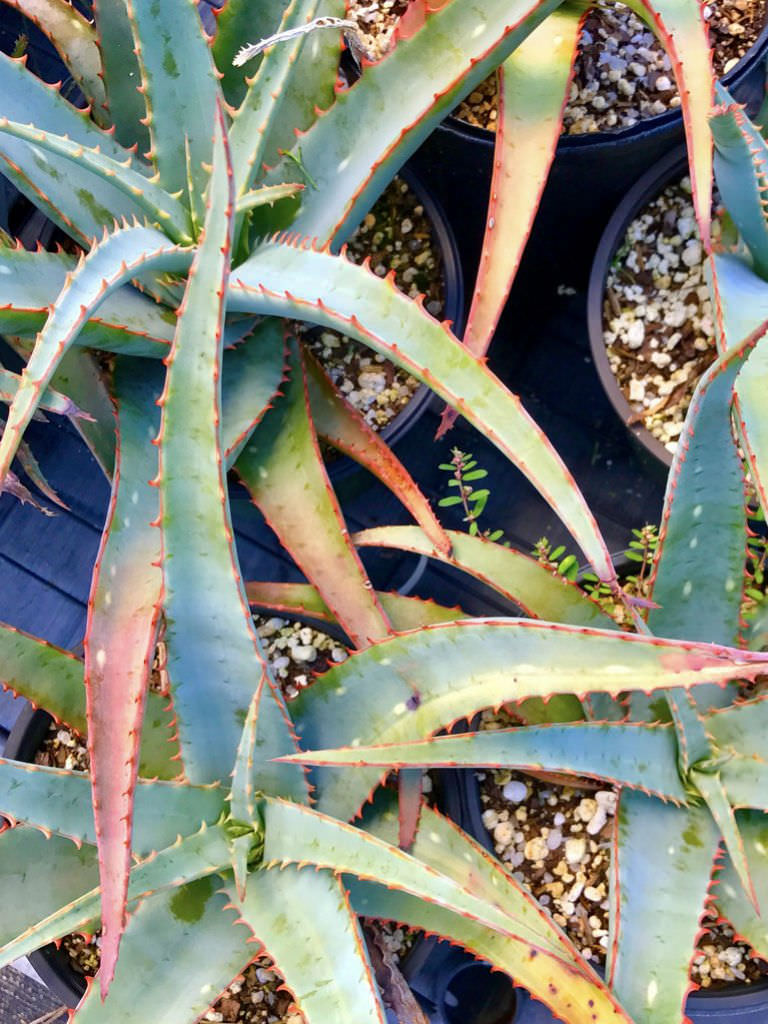
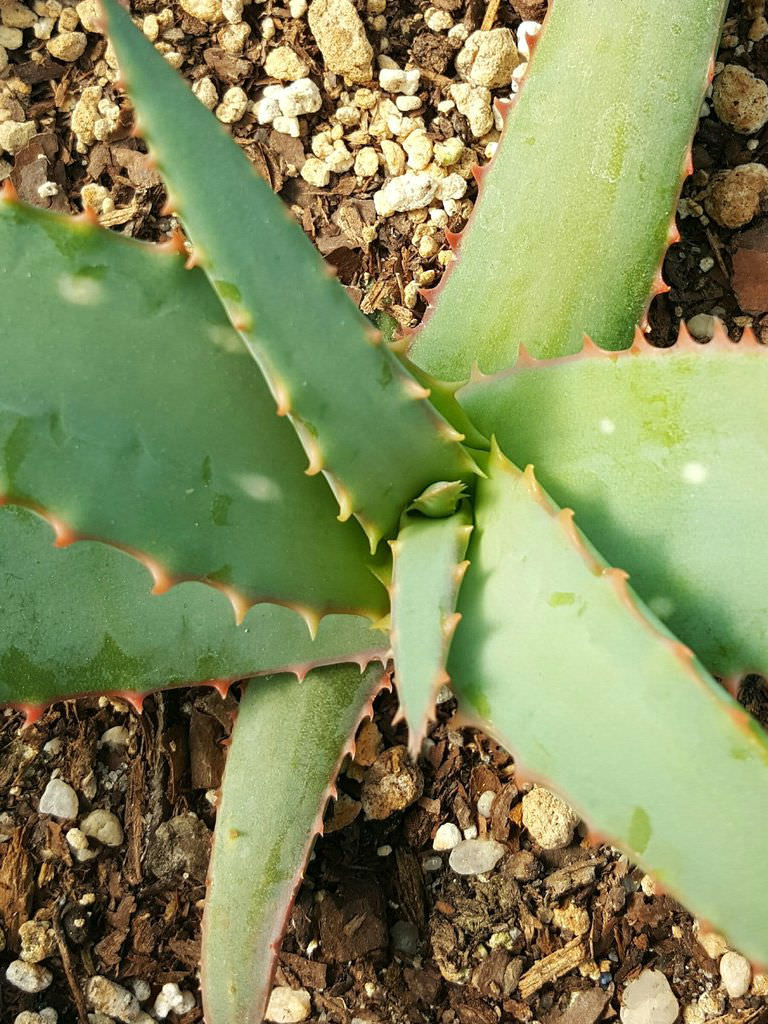
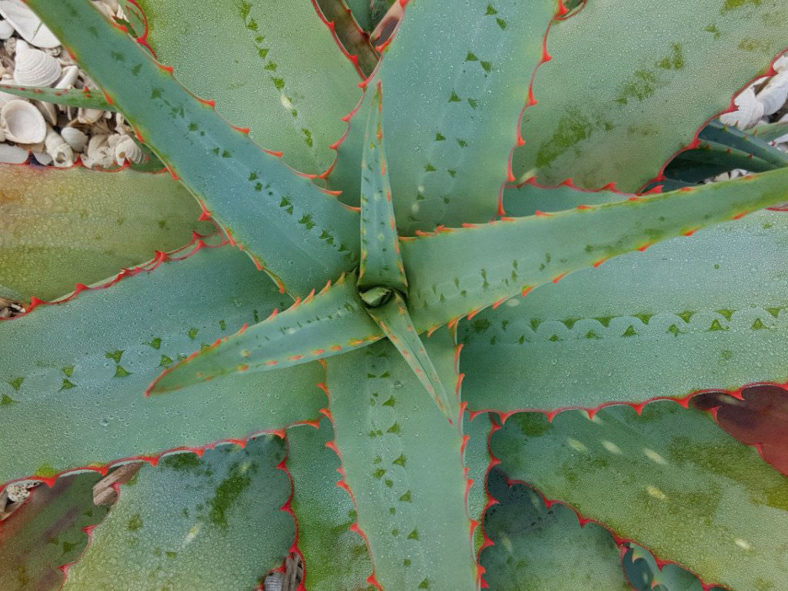
Aloe 'Blue Sky' is a magnificent succulent that forms rosettes of greenish-blue leaves with striking orange teeth, reminiscent of a Florida sunrise. The rosettes can grow up to 16 inches (40 cm) in diameter and freely produce offsets. The young plants start off showing distichous growth, like Aloe suprafoliata.
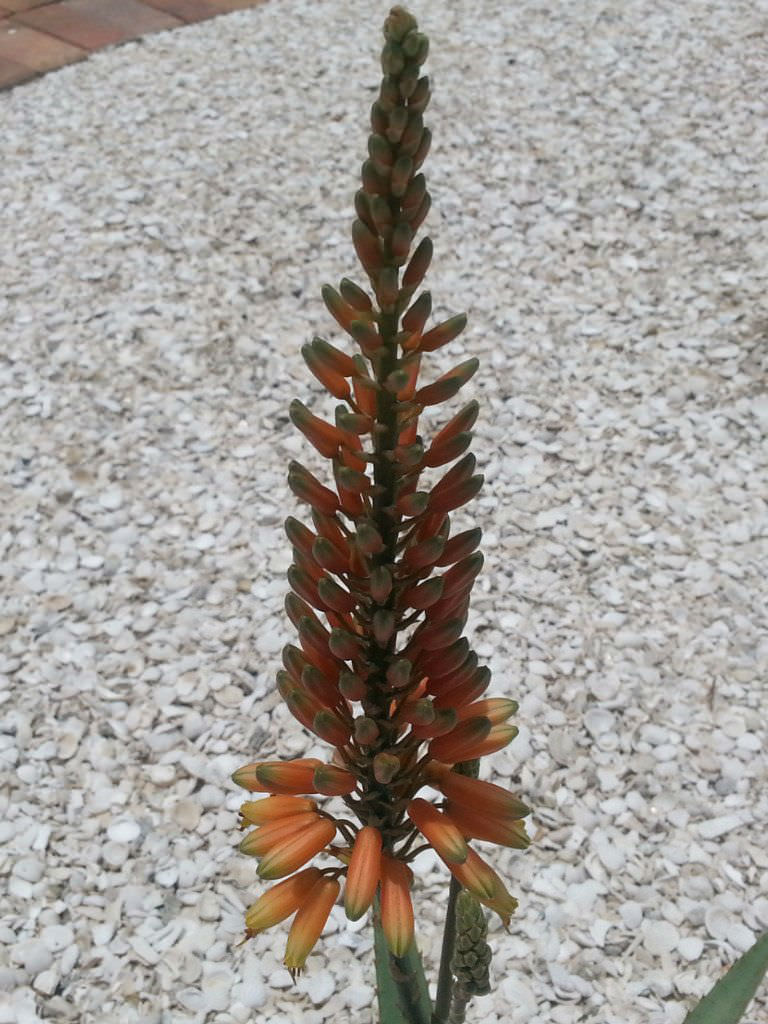
The plant blooms prolifically throughout spring, summer, and even fall. The flowers are tubular, orange with greenish tips, and appear on erect spikes.
How to Grow and Care for Aloe 'Blue Sky'
Hardiness: USDA hardiness zone 9a to 11b: from 20°F (-6.7°C) to 50°F (10°C).
Aloes are very forgiving plants. As with all succulents, Aloe must never be allowed to sit in stagnant water, and the plant should be carefully monitored to watch for signs of overwatering.
Aloes are not particularly fast-growing and will only rarely need repotting. Repot plants in the spring that are tipping over their pots or have ceased growing. Use a fast-draining potting mix with one-third sand or pebbles. When repotting a larger plant, dividing the root ball carefully is possible. Some kinds of Aloe will send off offsets that can be potted independently.
It needs bright light. They can withstand full summer sunlight once acclimated. In the winter, provide bright light. It prefers warmer temperatures of 70°F to 80°F (21°C to 27°C) but will survive down to 40°F (4.5°C). Feed with cactus fertilizer only in the summer. Suspend feeding in the winter as the plant goes dormant.
See more at How to Grow and Care for Aloe.
Links
- Back to genus Aloe
- Succupedia: Browse succulents by Scientific Name, Common Name, Genus, Family, USDA Hardiness Zone, Origin, or cacti by Genus
Photo Gallery
Click on a photo to see a larger version.