Scientific Name
Myrtillocactus geometrizans (Mart. ex Pfeiff.) Console
Synonym(s)
Cereus geometrizans
Common Name(s)
Bilberry Cactus, Blue Candle, Blue Flame, Blue Myrtle Cactus, Our Father, Whortleberry Cactus
Scientific Classification
Family: Cactaceae
Subfamily: Cactoideae
Tribe: Echinocereeae
Genus: Myrtillocactus
Etymology
The specific epithet "geometrizans" (pronounced "jee-oh-MET-rih-zans") means "geometrizing; having geometric form" and refers to the geometric patterns of this species created by its distinctive ribs and overall symmetrical structure.
Origin of Myrtillocactus geometrizans
Myrtillocactus geometrizans is native to central Mexico. Known from at least 267 localities, it grows in tropical deciduous forest, xerophilous scrub, and, less frequently, in grassland, in some areas of the southern Chihuahuan Desert at elevations from 3,000 to 7,000 feet (910 to 2,130 m).
Description of Myrtillocactus geometrizans
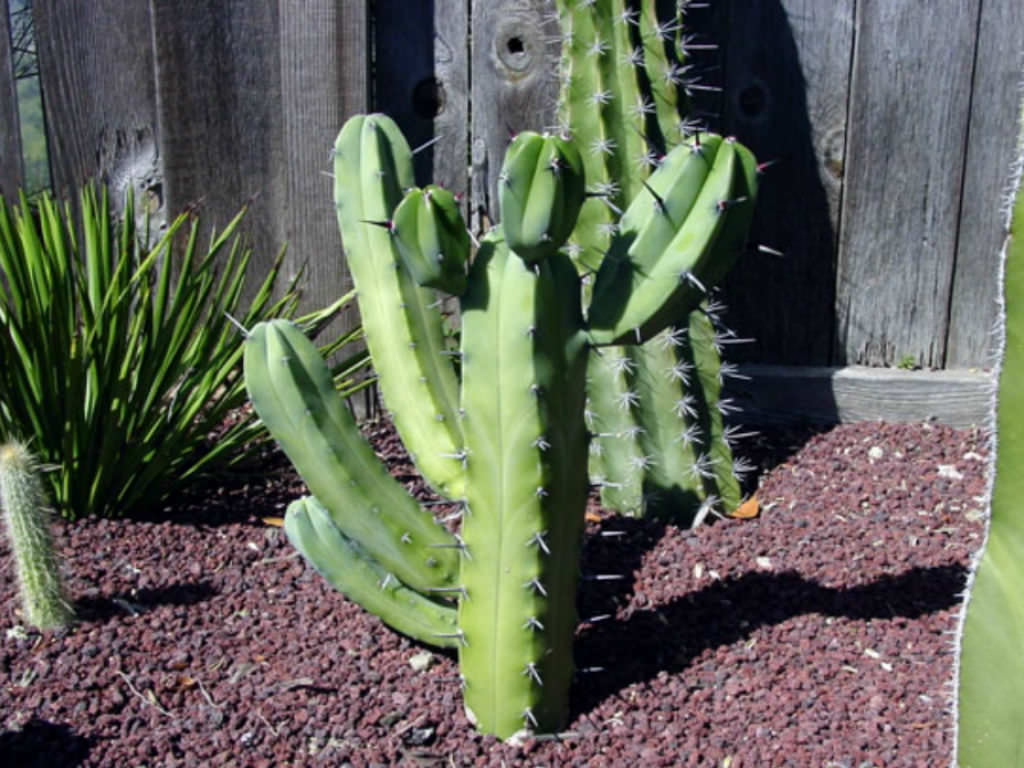
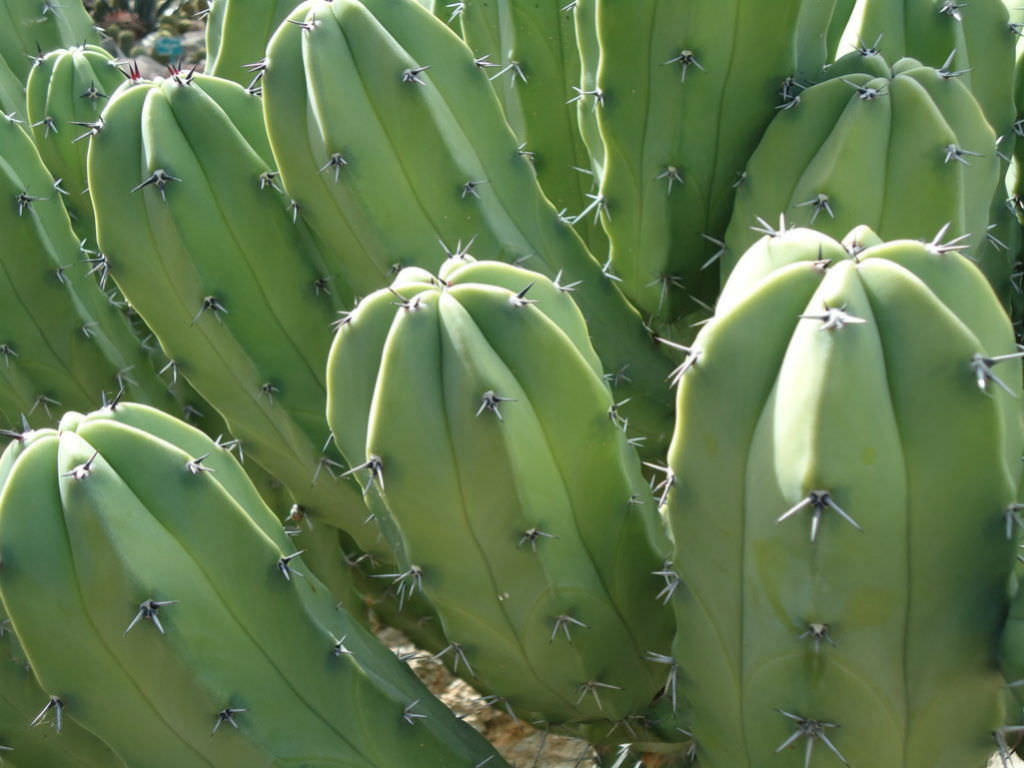
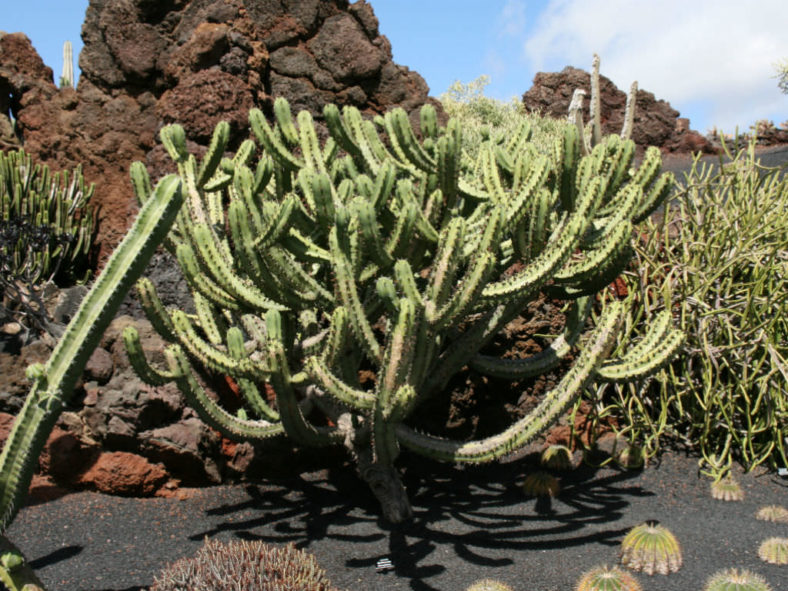
Myrtillocactus geometrizans is a large, highly branched cactus with glaucous blue-green stems with 5 to 8 ribs lined with areoles, each bearing 3 to 9 very short spines. It can grow up to 14.8 feet (4.5 m) tall, columnar at first, but it becomes tree-like with age, resembling a candelabra. The crown can reach 16.4 feet (5 m) in width. The stems can measure up to 4 inches (10 cm) in diameter, with the ribs approximately 1 inch (2.5 cm) in depth and the areoles about 1 inch (2.5 cm) apart. The spines can grow up to 0.5 inches (1.3 cm) long.
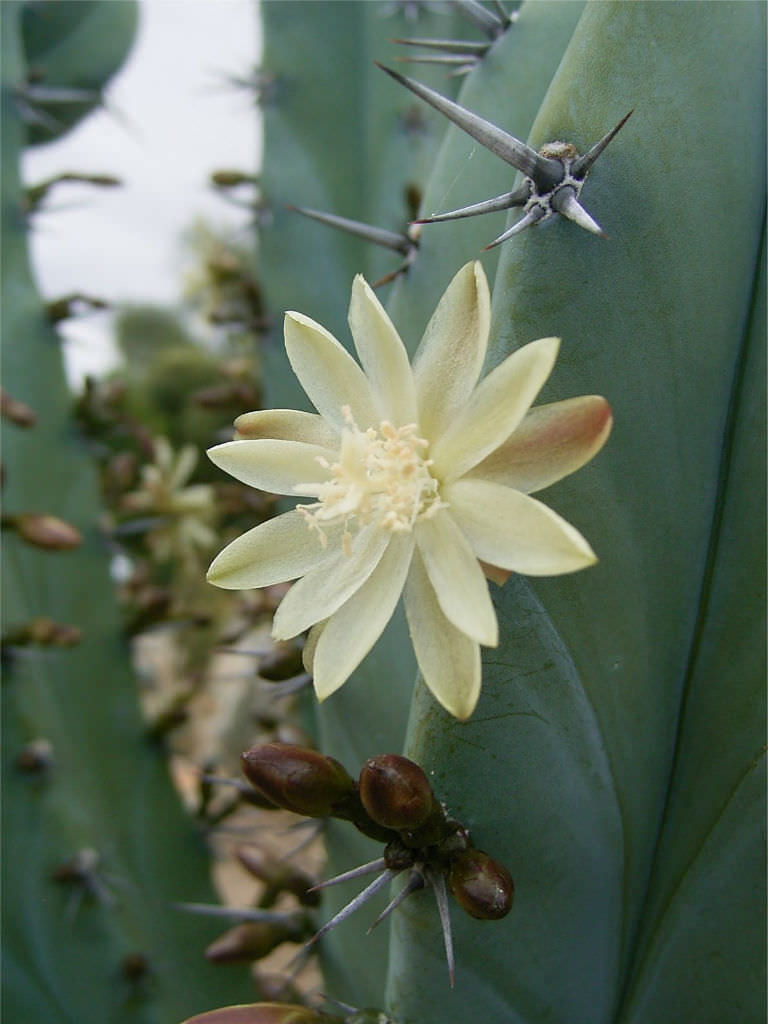
The nocturnal flowers are greenish-white and appear from the areoles in spring only on large, mature plants, about 2 feet (60 cm) tall. They are funnel-shaped and can reach a diameter of 1.4 inches (3.5 cm). The edible fruits are dark red or blue when ripe, oblong, measuring up to 0.8 inches (2 cm) in diameter.
Forms of Myrtillocactus geometrizans
Cultivars of Myrtillocactus geometrizans
How to Grow and Care for Myrtillocactus geometrizans
Hardiness: USDA hardiness zones 9a to 11b: from 20°F (-6.7°C) to 50°F (10°C).
In summer, place Myrtillocactus in direct sunlight. In winter, find a cooler, light spot. That will allow it to go into next spring well-rested, making it more likely to flower.
This easy-care plant doesn't need much water. Allow the soil to dry out before you give it another drink. Keep the soil completely dry in winter. These cacti need a well-drained soil mix with small gravel added to ensure drainage.
Myrtillocactus are semi-hardy. Ensure your cactus is not exposed to temperatures below 25°F (-4°C, or it may die. Nevertheless, it is good advice never to let the nighttime temperatures fall below 50°F (10°C).
Feed your Myrtillocactus monthly in spring and summer using special cactus food.
Since they are big plants, they need plenty of space for their roots. Repotting should be done every other year or when the plant has outgrown its pot.
Learn more at How to Grow and Care for Myrtillocactus.
Links
- Back to genus Myrtillocactus
- Succupedia: Browse succulents by Scientific Name, Common Name, Genus, Family, USDA Hardiness Zone, Origin, or cacti by Genus
Photo Gallery
Click on a photo to see a larger version.