

+Myrtigymnocalycium 'Polyp', better known as +Myrtillocalycium 'Polyp', is a rare, highly sought-after graft-chimera cactus. It is prized for its striking mosaic pattern, which features deep green alongside vivid shades of red, pink, or yellow tissue. Unlike standard hybrids, this cactus is an unstable bigeneric organism created through cellular fusion during an extensive grafting process.
Taxonomy of +Myrtigymnocalycium 'Polyp'
Scientific Name
+Myrtigymnocalycium 'Polyp'
Scientific Name
+Myrtillocalycium 'Polyp'
Scientific Classification
Family: Cactaceae
Subfamily: Cactoideae
Graft-chimeric Genus: +Myrtigymnocalycium
Etymology
The graft-chimeric generic name "+Myrtigymnocalycium" (pronounced "mur-tee-jim-noh-kal-ISS-ee-um") means "a Myrtillocactus–Gymnocalycium chimera". It refers to a graft chimera combining tissues from the two genera.
The cultivar epithet 'Polyp' possibly alludes to the unusual, irregular growth and distorted, protuberant appearance of the graft chimera.
Description
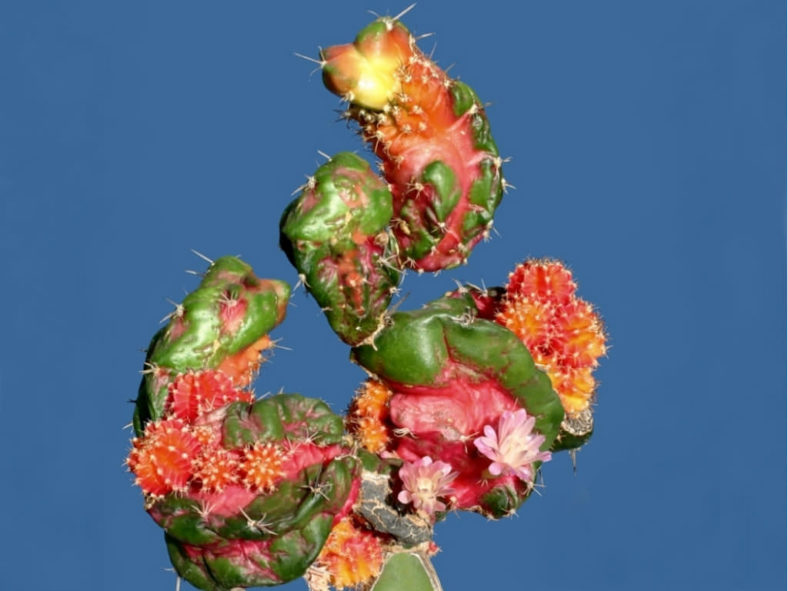
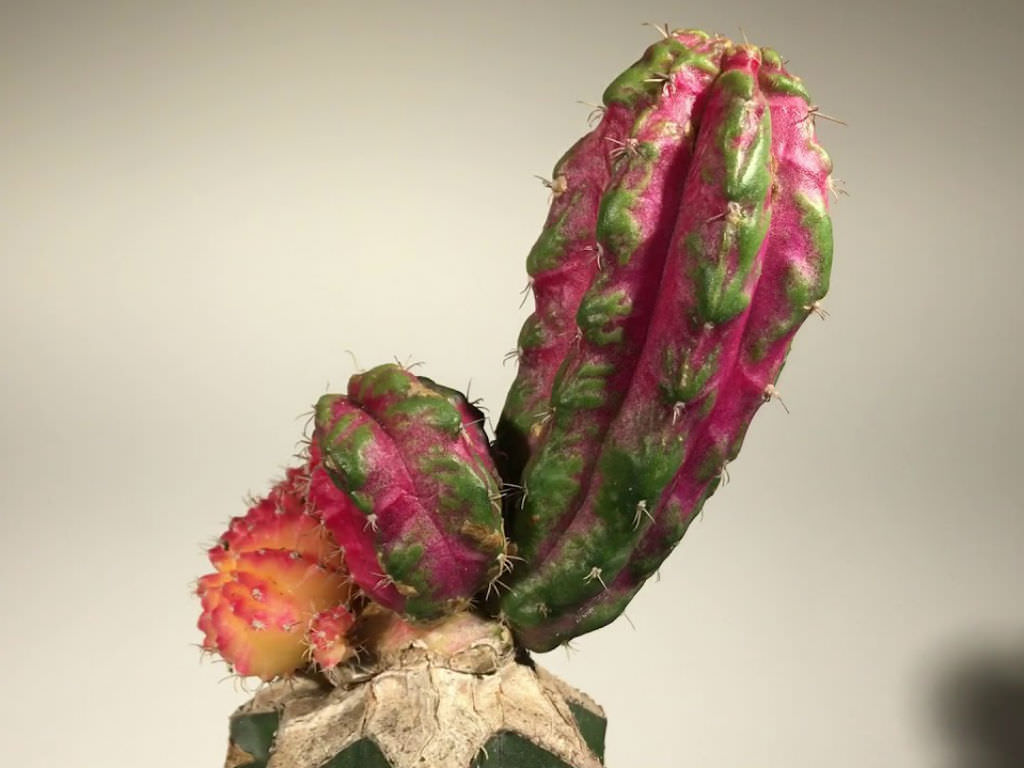
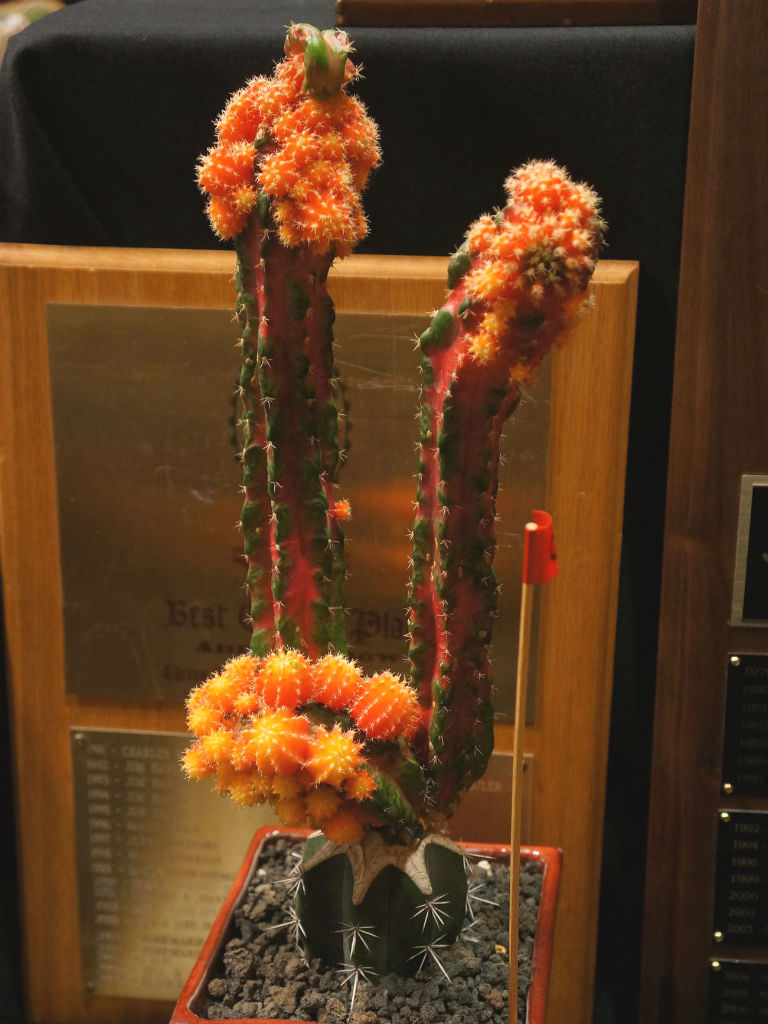
+Myrtigymnocalycium 'Polyp', also known as +Myrtillocalycium 'Polyp', is a spectacular example of a graft chimera. This rare, colorful cactus has unusual stems in shades of green, yellow, pink, and red. As a chimera, this plant is quite unstable and tends to revert, often producing red Gymnocalycium shoots. Because it results from a random grafting mutation, each specimen of +Myrtigymnocalycium 'Polyp' is unique.
Origin
+Myrtigymnocalycium 'Polyp' is a graft chimera resulting from the fusion between Myrtillocactus cochal and Gymnocalycium 'Red Hibotan'. It is not a true hybrid produced by pollination, but rather a "monster" plant created through grafting, in which cells from two different cacti coexist, resulting in a single, unstable organism with both genotypes present.
How to Grow and Care for +Myrtigymnocalycium 'Polyp'
Light: +Myrtigymnocalycium 'Polyp' grows best in bright light or partial shade. It benefits from several hours of gentle direct sunlight, particularly in the morning, but should be protected from intense midday and afternoon sun to prevent scorching. Keep young plants in light shade and gradually introduce them to brighter conditions as they mature. When grown indoors, place it near a bright window with good natural light.
Soil: This cactus requires a porous, well-draining potting mix to prevent water from accumulating around its roots. A commercial cactus mix amended with pumice, perlite, lava rock, or coarse sand is suitable. The substrate should retain a small amount of moisture without becoming waterlogged.
Temperature: +Myrtigymnocalycium 'Polyp' prefers warm temperatures throughout the growing season and mild winter conditions. Although it may tolerate brief exposure to temperatures around -4°C (25°F) under completely dry conditions, it is sensitive to prolonged cold and frost. For safer cultivation, keep temperatures above 10°C (50°F) and protect the plant from cold drafts and sudden temperature fluctuations. This cactus is suitable for USDA hardiness zones 9a–11b, where the average annual extreme minimum temperatures range from 25°F to 50°F (-3.9°C to 10°C).
Watering: Water regularly in spring and summer, letting the soil dry out completely between waterings. Gradually reduce watering in fall as temperatures decrease. During winter, keep the plant mostly dry, and water only occasionally if the stems begin to shrivel noticeably. Avoid excessive moisture, especially in cool conditions, as it can cause root rot.
Fertilizing: +Myrtigymnocalycium 'Polyp' has relatively modest nutritional requirements. In spring and summer, apply a diluted, balanced cactus fertilizer about once every four to six weeks, if needed. Avoid excessive nitrogen, which can encourage weak growth. Stop fertilizing during fall and winter.
Repotting: Repot +Myrtigymnocalycium 'Polyp' approximately every two years, or when it outgrows its pot or the potting mix deteriorates. Spring is generally the best time for repotting. Choose a pot with drainage holes and handle the plant carefully to avoid damaging its unusual stems and grafted tissues.
Propagation: +Myrtigymnocalycium 'Polyp' can be propagated vegetatively through stem cuttings or grafting. Seed propagation is not suitable because this plant is a graft chimera rather than a conventional sexual hybrid, and it is considered sterile. Take stem cuttings during warm summer weather, when rooting conditions are favorable. Allow the cut surfaces to dry and form a callus before planting. Grafting onto a compatible rootstock is another propagation method. Keep in mind that preserving the original chimeric characteristics through propagation can be challenging.
See more at How to Grow and Care for Myrtillocactus.
Toxicity of +Myrtigymnocalycium 'Polyp'
+Myrtigymnocalycium 'Polyp' has no widely documented toxic effects on humans, cats, or dogs. However, species-specific toxicological information is limited, so it cannot be definitively classified as non-toxic. Its spines can cause physical injuries if touched or handled improperly. Keep the plant away from children and pets as a precaution.
Photo Gallery
Click on a photo to see a larger version.

Internal Links
- Explore all plants within the genus +Myrtigymnocalycium.
- Explore all plants within the family Cactaceae.