Scientific Name
Monanthes laxiflora (DC.) Bolle ex Bornmuller
Synonym(s)
Sedum laxiflorum
Scientific Classification
Family: Crassulaceae
Subfamily: Sedoideae
Tribe: Sedeae
Subtribe: Sedinae
Genus: Monanthes
Etymology
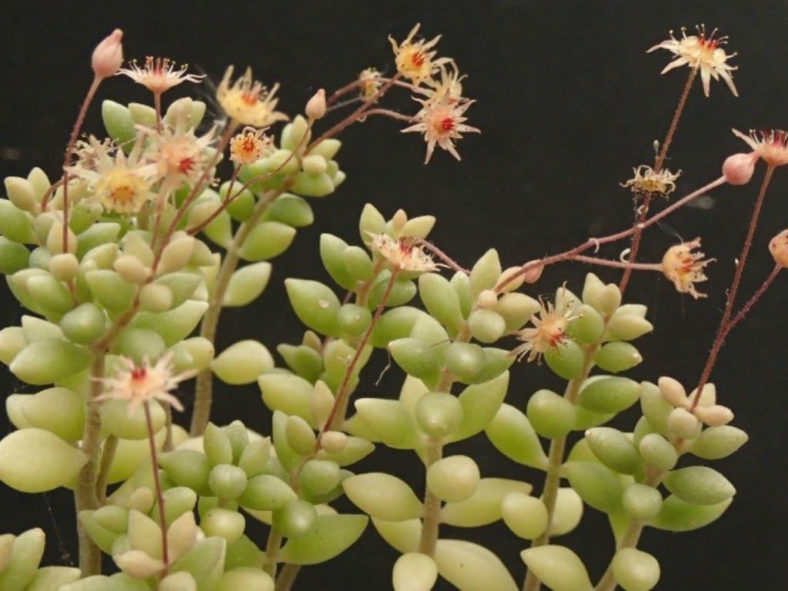
The specific epithet "laxiflora" (pronounced "laks-ih-FLO-ruh") means "loose-flowered; having loosely-spaced flowers." It refers to the inflorescences of this species, which are not compact but instead have flowers arranged in a loose and open manner.
Origin of Monanthes laxiflora
Monanthes laxiflora is native to the rocky walls of five of the seven Canary Islands (La Gomera, Tenerife, Gran Canaria, Lanzarote, and Fuerteventura).
Description of Monanthes laxiflora
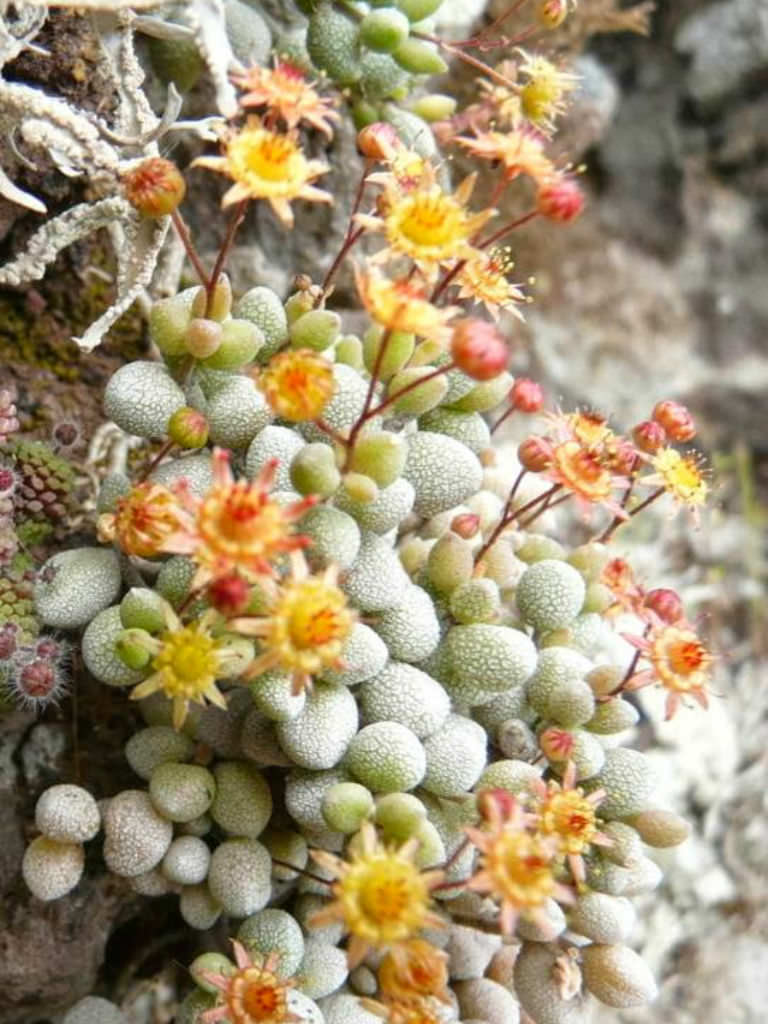
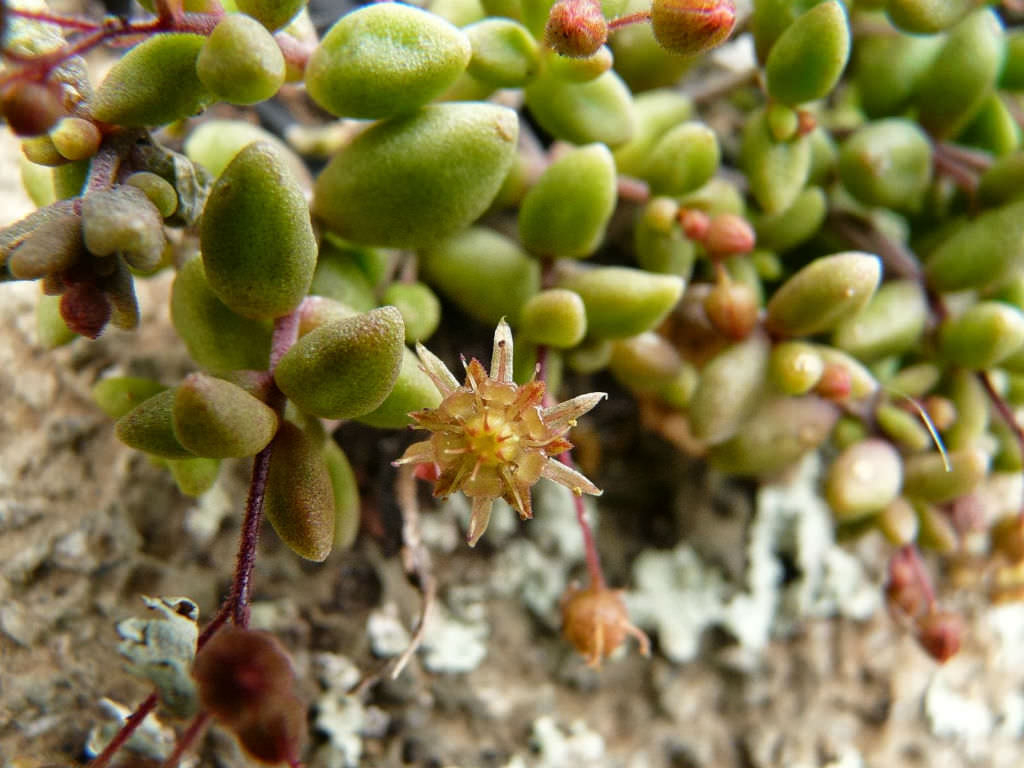
Monanthes laxiflora is a diffusely to densely branched succulent shrublet with almost spherical to lance-shaped leaves on slender, decumbent or ascending, often later pendulous stems. It can grow up to 8 inches (20 cm ) tall. The stems are slightly woody and somewhat tortuous. The thick, fleshy leaves can measure up to 1 inch (2.5 cm) long, 0.6 inches (1.5 cm) wide, and 0.4 inches (1 cm) thick. They are deep green to purple-red, or nearly white to silvery, in drought or heavy sun exposure.
The inflorescences vary from tall and multiple-flowered to very small and few-flowered. The flowers, which apear appear in spring, also vary in size and range in color from greenish-yellow to greenish-purple and brown-red.
How to Grow and Care for Monanthes laxiflora
Hardiness: USDA hardiness zones 11a to 11b: from 40°F (4.4°C) to 50°F (10°C).
Monanthes are easy to grow, even in very small pots. They all like hot, sunny spots and well-drained soil to thrive.
The only things that can kill these plants are cold, intense sunlight, and overwatering. They prefer a winter rest period, during which watering should be reduced to a bare minimum. The plants will begin to grow in early spring, and watering should be increased gradually until late spring, when the plants should be in full growth. Rater regularly during the growing period, as long as the plant pot is allowed to drain and not sit in a water tray.
Monanthes may attract various insects, but plants in good condition should be nearly pest-free. Repot it every 2 or 3 years to evaluate the plant's health and provide a larger growing space, careful not to damage the sensitive roots.
Learn more in "How to Grow and Care for Monanthes."
Links
- Back to genus Monanthes
- Succupedia: Browse succulents by Scientific Name, Common Name, Genus, Family, USDA Hardiness Zone, Origin, or cacti by Genus
Photo Gallery
Click on a photo to see a larger version.