Scientific Name
Kalanchoe × houghtonii D. B. Ward
Synonym(s)
Bryophyllum × houghtonii, Bryophyllum tubimontanum, Kalanchoe hybrida, Kalanchoe 'Hybrida', Kalanchoe 'Houghtonii'
Common Name(s)
Alligator Plant, Houghton's Hybrid, Mother of Millions Hybrid, Mother of Thousands, Mother of Thousands 'Houghtonii', Mexican Hat Plant, Good Luck Plant, Devil's Backbone
Scientific Classification
Family: Crassulaceae
Subfamily: Sedoideae
Tribe: Kalanchoeae
Genus: Kalanchoe
Etymology
The nothospecific epithet "houghtonii" (pronounced "ho-TON-ee-eye") honors Arthur Duvernoix Houghton🡕 (1870–1938), a medical doctor and a botanist specializing in cacti.
Description
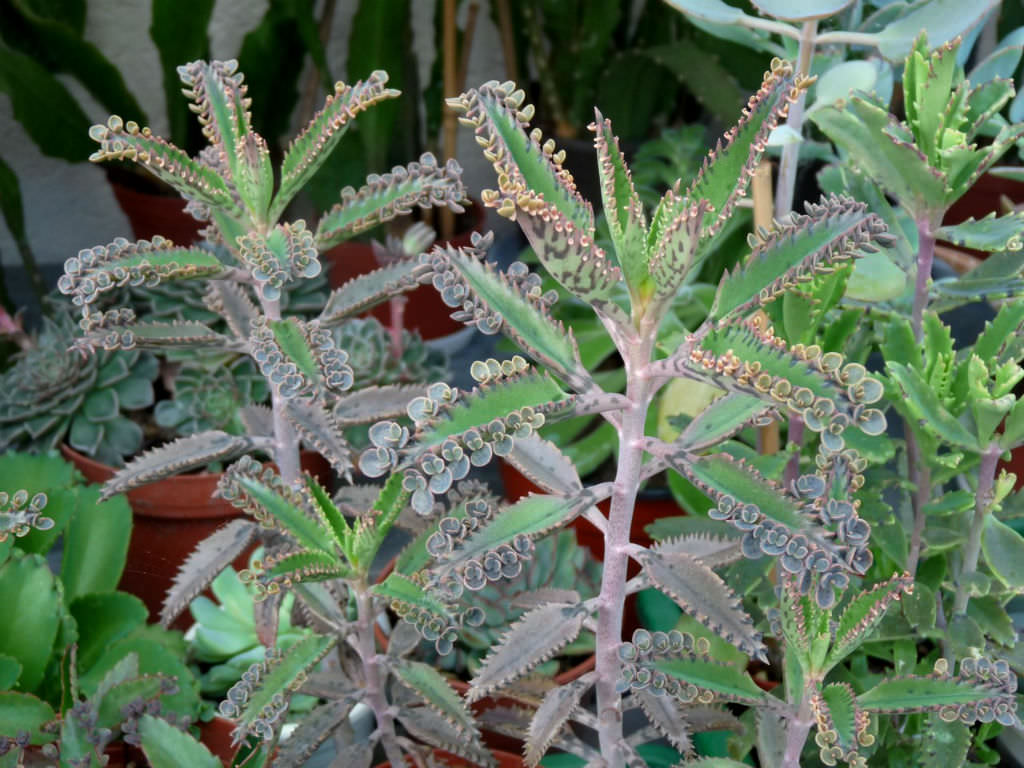
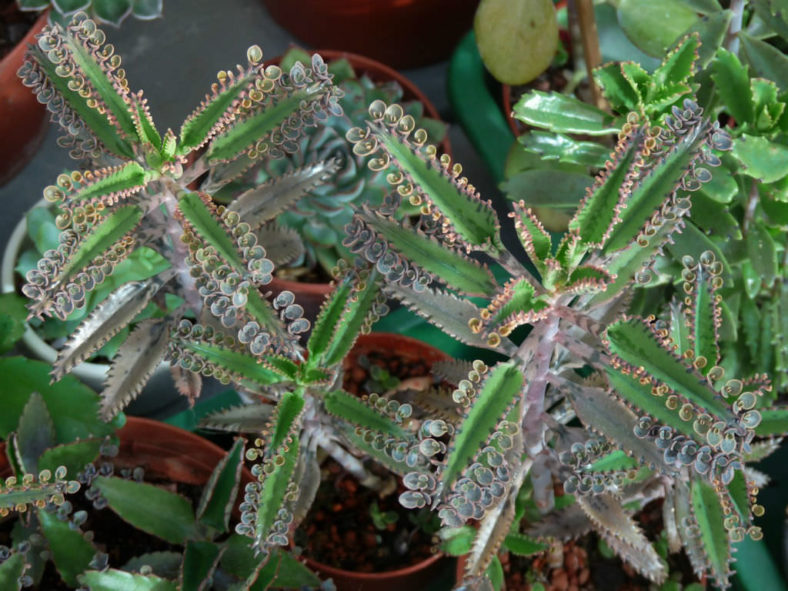
Kalanchoe × houghtonii is a monocarpic succulent with an erect, unbranched stem that bears boat-shaped leaves with serrated margins, along which it produces small plantlets. The stem can grow up to 30 inches (75 cm) tall. The leaves are succulent, emerald green to brownish-green, usually with purple splotches beneath.
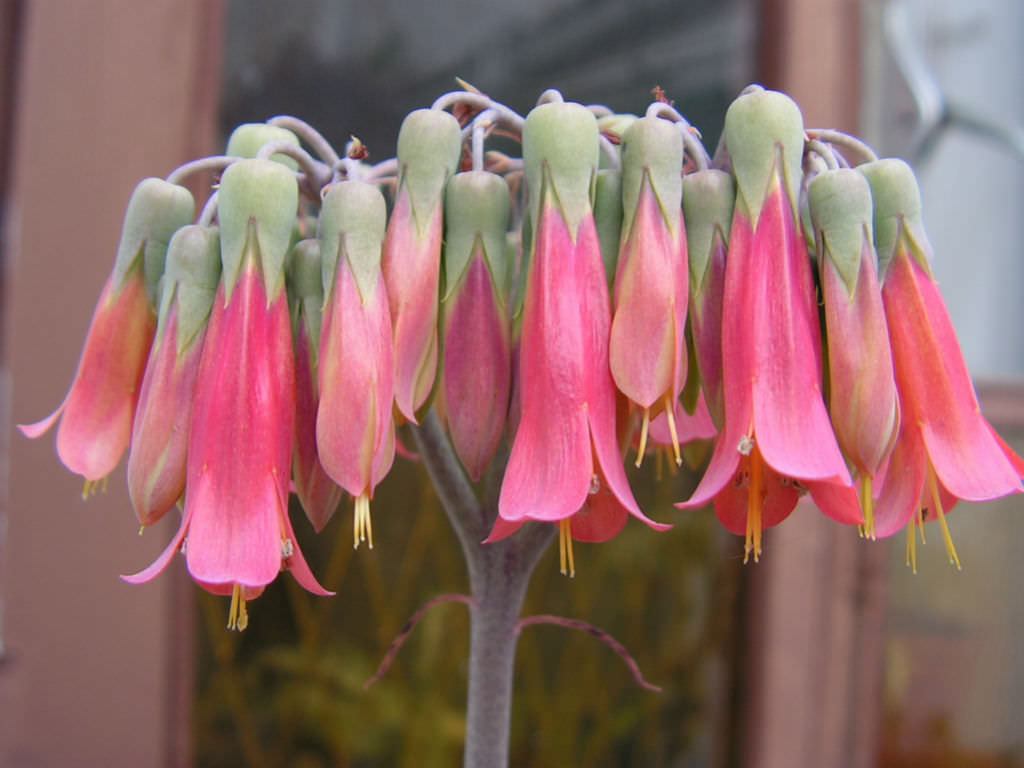
The flowers are pendulous, typically dark red, sometimes pinkish-orange or pinkish-yellow, and appear in winter. The inflorescence is a dense cyme with 100 or more flowers and can reach up to 3.3 feet (1 m) in height. The flowers can measure up to 1.2 inches (3 cm) long.
Many succulent enthusiasts do not realize that this hybrid differs from its variegated form, Kalanchoe 'Pink Butterflies', in which the plantlets lack the chlorophyll needed to survive on their own.
Kalanchoe × houghtonii is often confused with Kalanchoe daigremontiana.
Origin
This succulent is a hybrid created in the United States in the 1930s, resulting from experimental crosses between Kalanchoe daigremontiana and Kalanchoe delagoensis (formerly known as Kalanchoe tubiflora), two species endemic to Madagascar. Because it colonizes so readily, primarily through asexual plantlet production, this hybrid quickly escaped cultivation and spread to various parts of the world.
Forms of Kalanchoe × houghtonii
How to Grow and Care for Kalanchoe × houghtonii
Hardiness: USDA hardiness zones 10a to 11b: from 30°F (-1.1°C) to 50°F (10°C).
Kalanchoe care is minimal, but watch light levels. Intense sunlight can burn leaf tips. Place pots in partial sun to light shade areas when growing Kalanchoes.
The flowering varieties are highly rewarding for their colorful, long-lasting blooms. They prefer bright, sunny locations, especially in the growing season. Water moderately from fall to winter when the growth is most active. Reduce watering during the hottest summer months, when the plants are mostly dormant, and in winter, when growth slows significantly. Let the soil surface dry out between waterings. Watch the fleshy leaves for signs of water distress. A standard potting mix is fine. Feed bi-weekly during the growing season with a liquid fertilizer, or use slow-release pellets.
These small plants require repotting every few years. When repotting, handle them gently, as the leaves are somewhat brittle and can snap easily. Clay pots work exceptionally well for planting Kalanchoes. Make sure pots drain well, and saucers drain easily.
Learn more at How to Grow and Care for Kalanchoe.
Links
- Back to genus Kalanchoe
- Succupedia: Browse succulents by Scientific Name, Common Name, Genus, Family, USDA Hardiness Zone, Origin, or cacti by Genus
Photo Gallery
Click on a photo to see a larger version.