Scientific Name
Kadenicarpus pseudomacrochele (Backeb.) Doweld
Synonym(s)
Neolloydia pseudomacrochele, Pediocactus pseudomacrochele, Strombocactus pseudomacrochele, Toumeya pseudomacrochele, Turbinicarpus pseudomacrochele
Scientific Classification
Family: Cactaceae
Subfamily: Cactoideae
Tribe: Cacteae
Genus: Kadenicarpus
Etymology
The specific epithet "pseudomacrochele" (pronounced "sue-doh-MACK-roh-KEE-lee") means "false macrochele," indicating that this species looks like another species with the epithet "macrochele" but is distinct from it. The epithet refers to Turbinicarpus macrochele, which is now classified as Turbinicarpus schmiedickeanus subsp. macrochele, as both were previously included in the genus Turbinicarpus.
Origin
Kadenicarpus pseudomacrochele is native to Mexico (Hidalgo and Querétaro).
Description
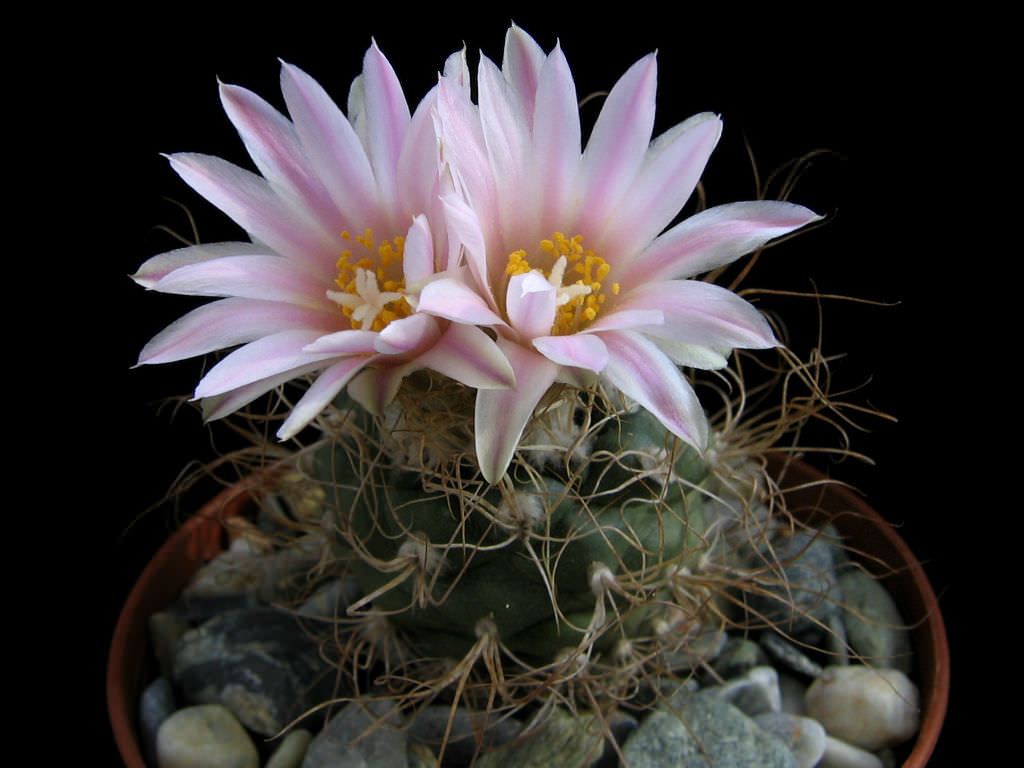
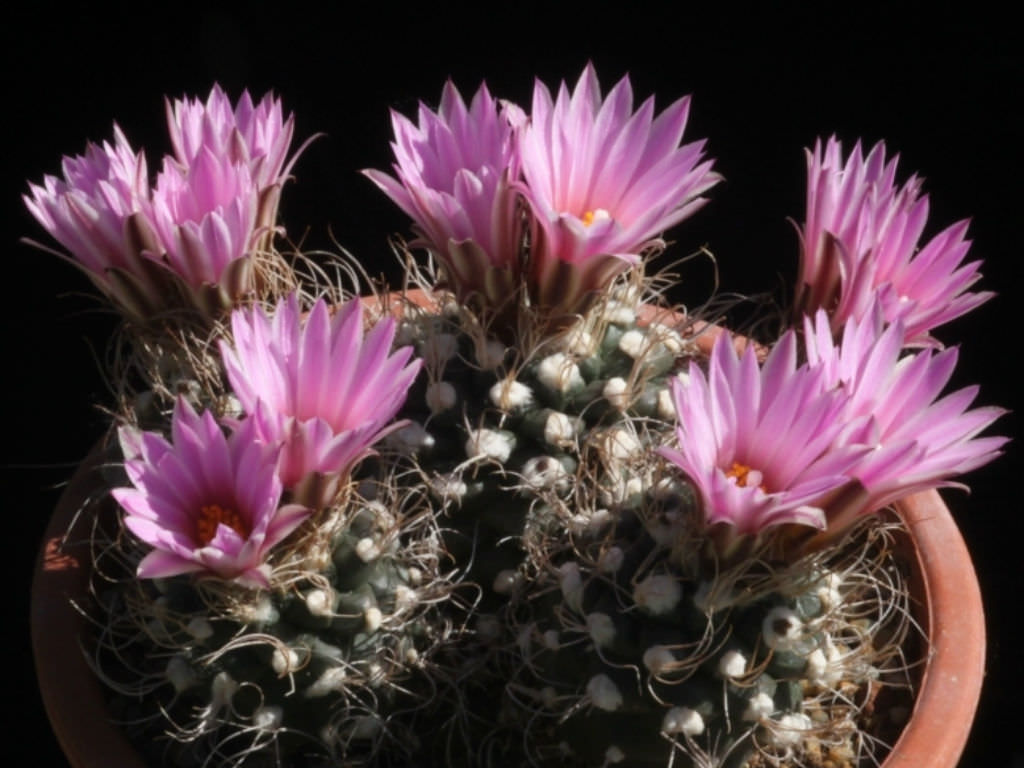
Kadenicarpus pseudomacrochele, formerly known as Turbinicarpus pseudomacrochele, is a small cactus with green, spherical stems covered with low, conical tubercles. It can grow either solitary or slowly clumping, and the stems can reach a diameter of up to 1.6 inches (4 cm). The areoles at the tips of the tubercles are white, and each bears 6 to 8 twisted white to brownish-yellow spines that can grow up to 1.2 inches (3 cm) long.
The flowers are diurnal, pale pink, yellowish-green to purple, and have a darker mid-stripe. They can reach up to 0.8 inches (2 cm) in length and 1.4 inches (3.5 cm) in diameter. The fruits are green, nearly round, and can grow up to 0.25 inches (0.6 cm) in diameter.
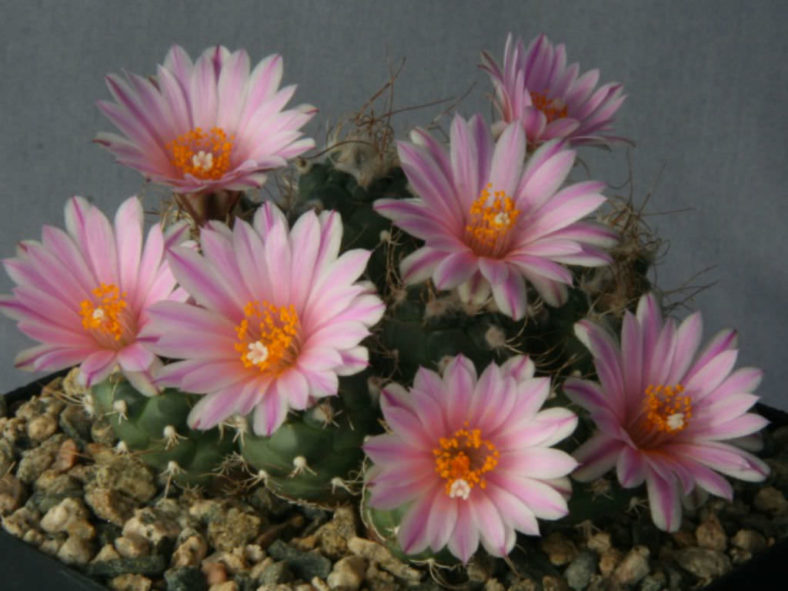
Subspecies of Kadenicarpus pseudomacrochele
- Kadenicarpus pseudomacrochele subsp. krainzianus
- Kadenicarpus pseudomacrochele subsp. minimus
- Kadenicarpus pseudomacrochele subsp. pseudomacrochele
How to Grow and Care for Kadenicarpus pseudomacrochele
Hardiness: USDA hardiness zones 9b to 11b: from 25°F (-3.9°C) to 50°F (10°C).
Turbinicarpus prefers a well-ventilated position in full sun to maintain good body color and spinal development. When watering, the golden rule is "never water when the soil is still damp." Overwatering is the one error that will certainly kill any plant. Watering should commence in the spring, depending on the weather conditions. The plants should initially be given a light spray to encourage gentle growth.
These cacti can withstand high summer temperatures and benefit from good ventilation. Do not be tempted to overcrowd the plants; they will be far happier with a bit of space to allow the air to circulate. Winter temperatures can be set to 44°F to 46°F (7°C to 8°C). Indeed, the plants need these low temperatures to ensure a sustained dormant period, resulting in good growth and flowering the following growing season.
Learn more at How to Grow and Care for Turbinicarpus.
Links
- Back to genus Kadenicarpus
- Succupedia: Browse succulents by Scientific Name, Common Name, Genus, Family, USDA Hardiness Zone, Origin, or cacti by Genus
Photo Gallery