Scientific Name
Hoya pachyclada Kerr
Common Name(s)
Porcelain Flower, Wax Plant
Scientific Classification
Family: Apocynaceae
Subfamily: Asclepiadoideae
Tribe: Marsdenieae
Genus: Hoya
Etymology
The specific epithet "pachyclada" (pronounced "pak-ee-KLAD-uh") means "thick-branched; having thick branches" and refers to the thick, succulent stems of this species, which distinguish it from more slender-stemmed Hoya species.
Description
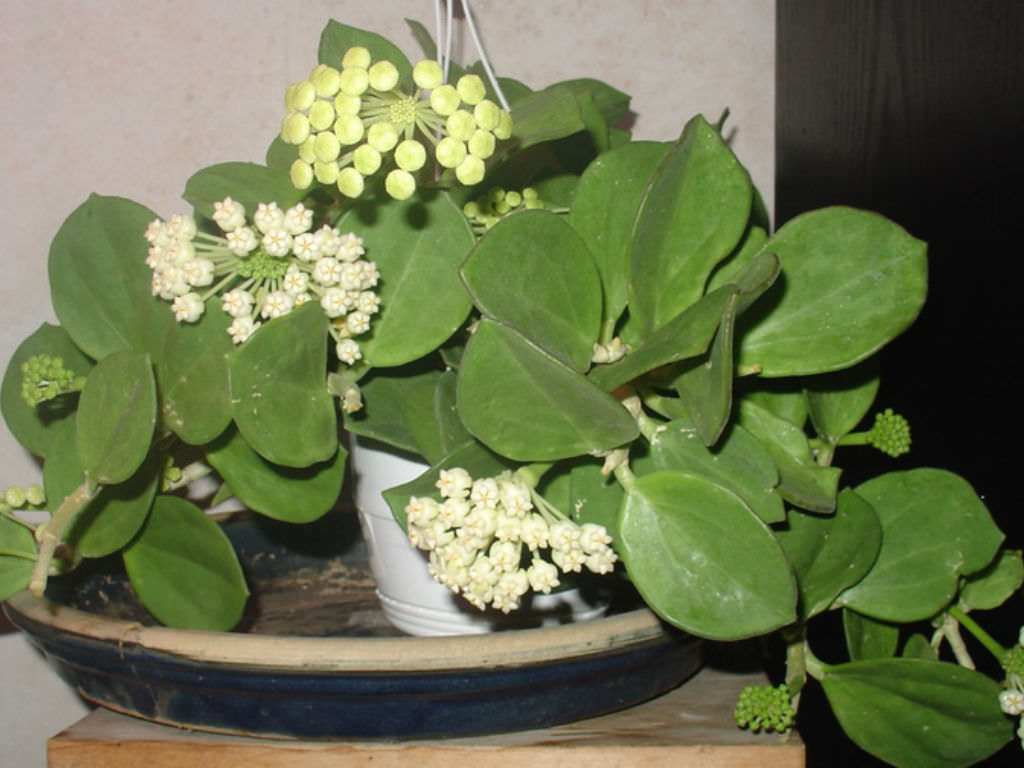
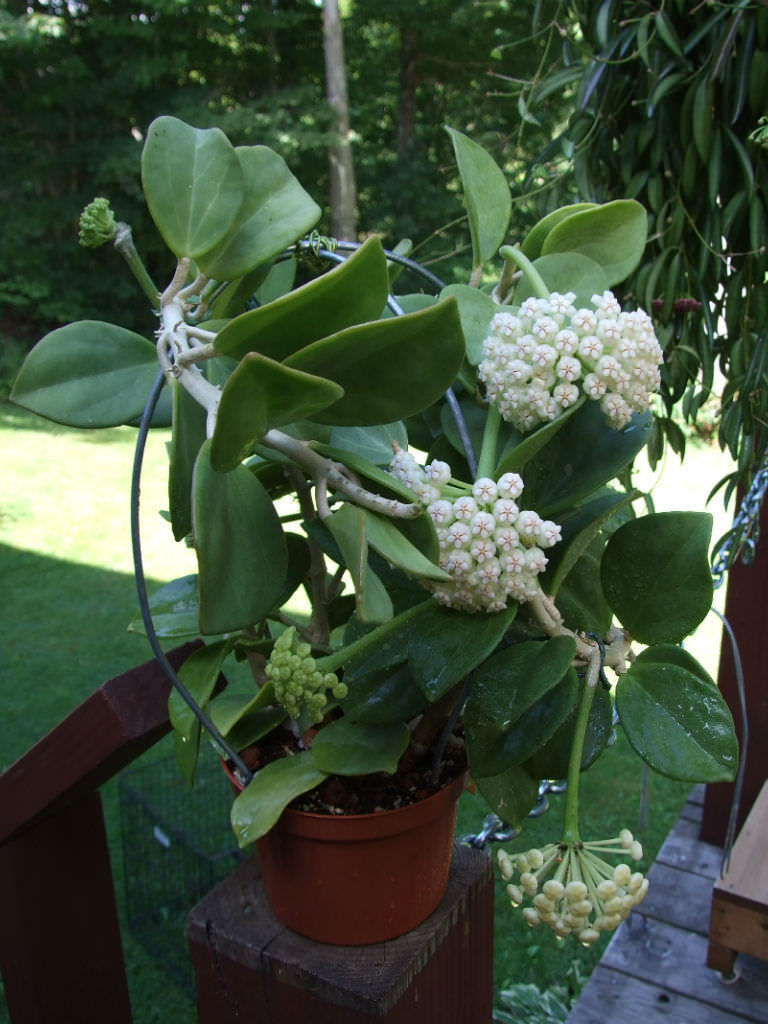
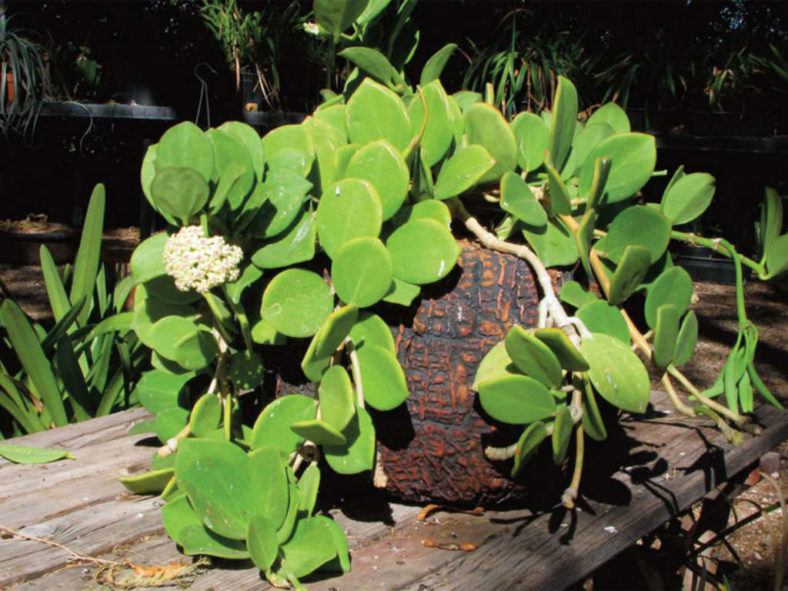
Hoya pachyclada is a beautiful plant with typically short, thick, succulent stems densely clothed with green, succulent leaves that have red edges and visible veins. Unlike most other Hoyas, this species is much slower-growing. The leaves are obovate, measuring up to 4.8 inches (12 cm) in length and 3.2 inches (8 cm) in width, with older leaves sometimes exceeding 0.25 inches (0.6 cm) in thickness. The apex of the leaves is blunt, while the base is wedge-shaped or rounded.
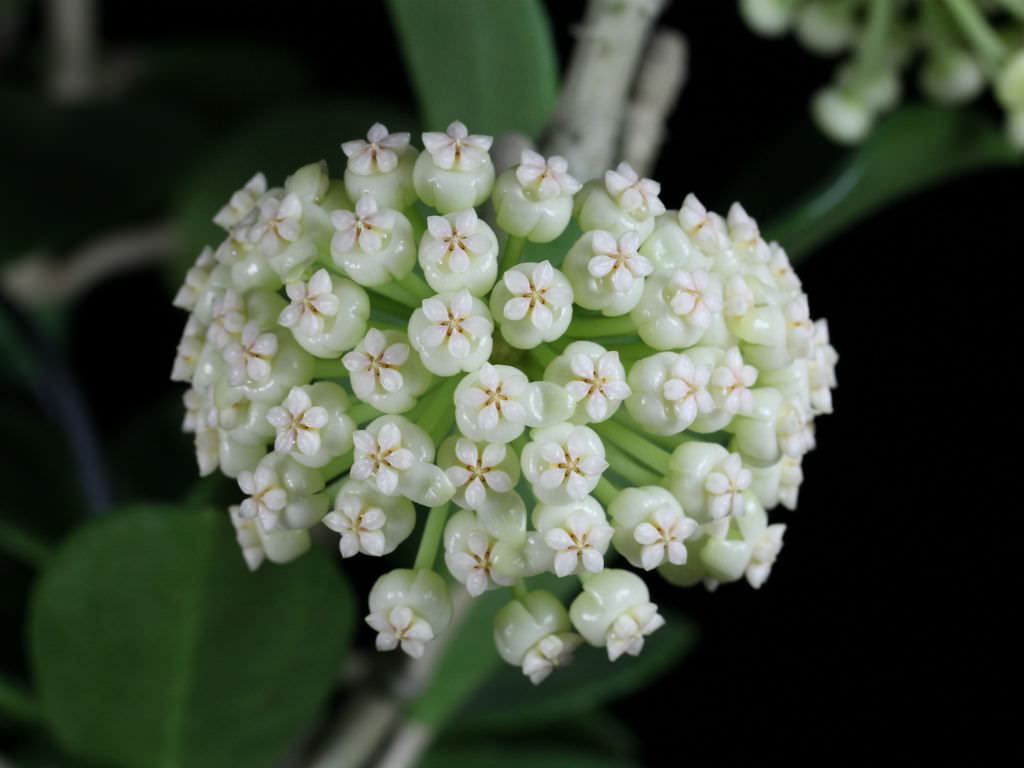
In spring and summer, Hoya pachyclada produces gorgeous, fragrant flowers that usually appear in perfect, ball-shaped clusters of 20 to 25 blooms on stalks up to 1.2 inches (3 cm) long. The waxy corolla can reach a diameter of 0.7 inches (1.8 cm) and varies in color from cream or very pale greenish-white to yellowish. The corona is white or pale cream and usually reddish at the center.
Origin
Hoya pachyclada is native to Thailand, Laos, Cambodia, and Vietnam. It grows epiphytically on trees in bright locations in lowland forests at elevations from 65 to 660 feet (20 to 200 m).
Cultivars
How to Grow and Care for Hoya pachyclada
Hardiness: USDA hardiness zones 11a to 11b: from 40°F (4.4°C) to 50°F (10°C).
Hoyas don't ask for much beyond well-draining soil and the warm, humid conditions that many tropical flowers crave. They don't like wet feet or heavy soil, and many grow as epiphytes in nature. Give them at least a half-day of sunshine and bring them indoors when temperatures drop below 50°F (10°C).
Hoya finishes blooming and leaves the flower stalk, as it may produce new flowers. Removing the stalk forces the plant to produce a new one, delaying blooming and wasting energy. They are light feeders, and a monthly drink of compost tea or dilute fish emulsion provides all the nutrition these tropicals need. Hoyas like the security of a snug pot, and plants that are a bit root-bound will flower more prolifically than those swimming around in a giant pot.
Propagate Hoyas by cuttings of top growth or by leaf cuttings. The average cutting or leaf start will produce a blooming plant in 2 years or less. The easiest method of propagation is by layering.
See more at How to Grow and Care for Hoya.
Links
- Back to genus Hoya
- Succupedia: Browse succulents by Scientific Name, Common Name, Genus, Family, USDA Hardiness Zone, Origin, or cacti by Genus
Photo Gallery
Click on a photo to see a larger version.