Scientific Name
Anacampseros papyracea E.Mey. ex Fenzl
Synonym(s)
Avonia papyracea
Scientific Classification
Family: Anacampserotaceae
Genus: Avonia
Etymology
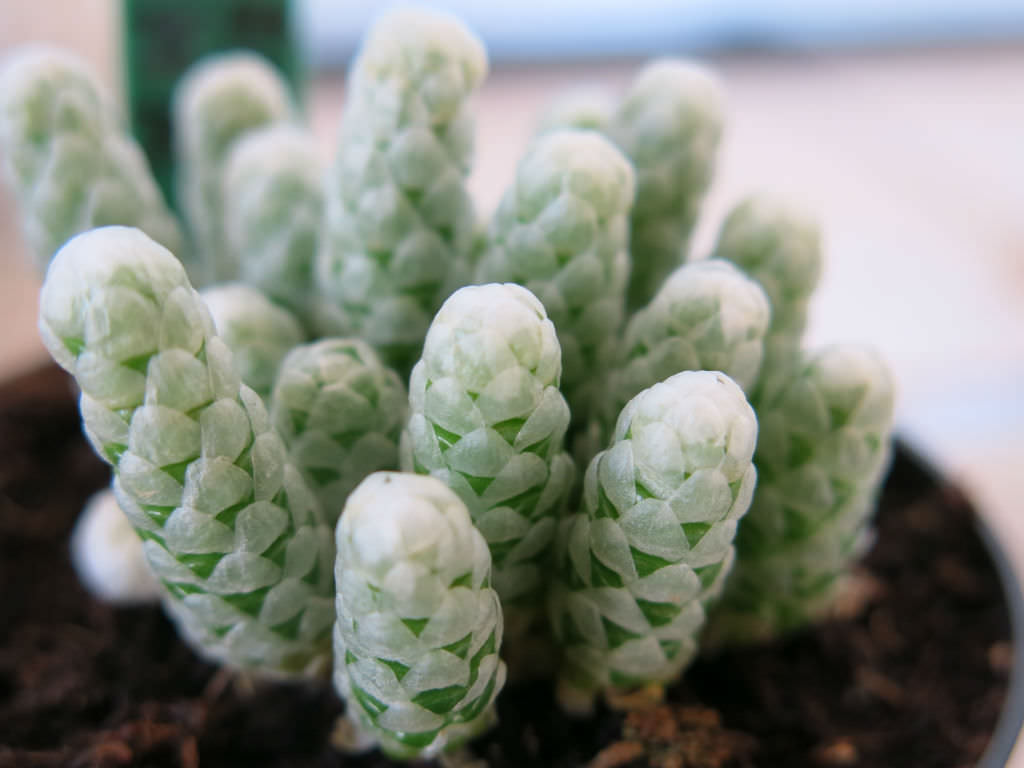
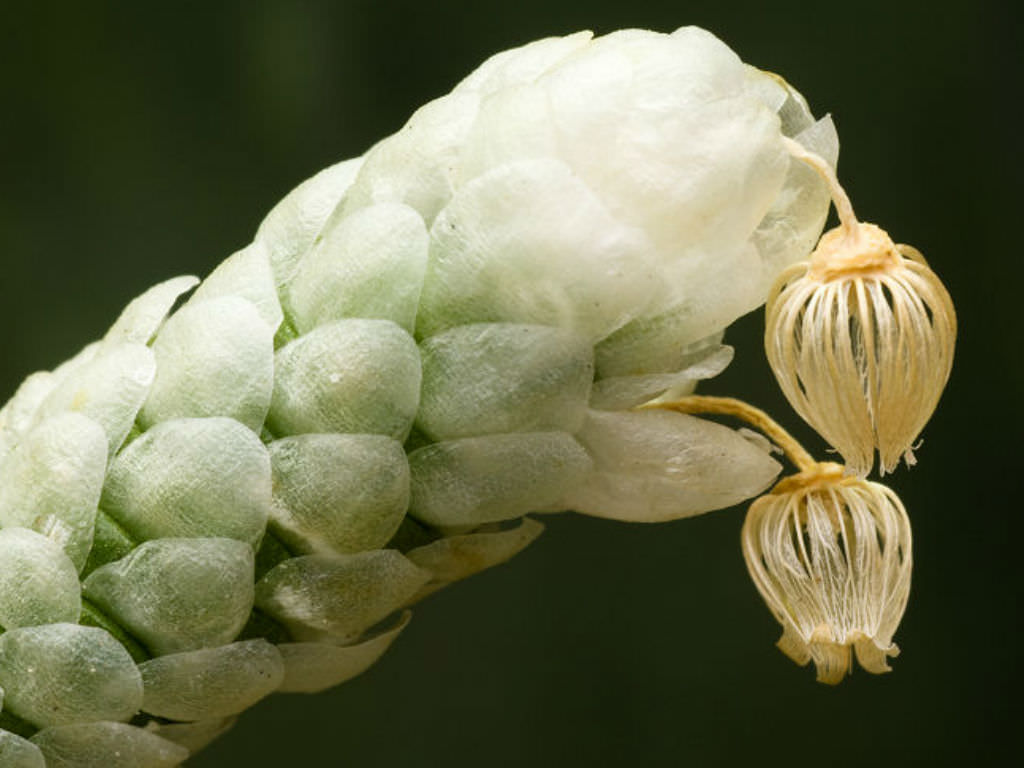
The specific epithet "papyracea" (pronounced "pap-ih-REE-see-uh") means "papery; paper-like" and refers to the white, papery, overlapping scales, which hide the leaves of this species.
Description
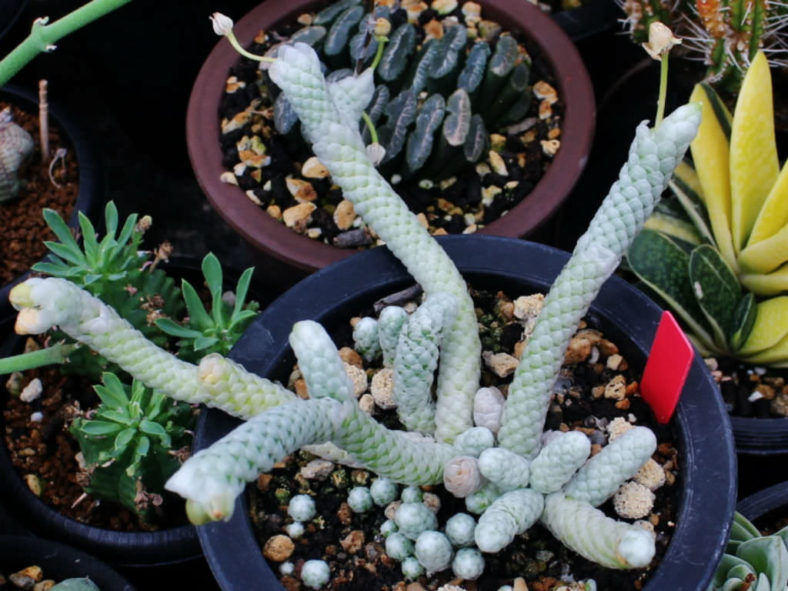
Anacampseros papyracea, also known as Avonia papyracea, is a dwarf succulent with several sprawling, stout, succulent branches that radiate from a tuberous root. It can grow up to 3.2 inches (8 cm) tall. The branches bear minute, closely packed leaves hidden by white, papery, overlapping scales. The tiny leaves are fleshy and green, measuring up to 0.3 inches (0.8 cm) in length and 0.1 inches (0.3 cm) in width.
The flowers are scented, creamy white, with five rounded petals positioned at right angles to a central ring of yellow anthers. They appear in summer on short stalks at branch tips, typically solitary, and most last only 2 to 4 hours.
Origin
Anacampseros papyracea is endemic to South Africa. It occurs in the dry semi-arid region of the Little Karoo and the Great Karoo.
Subspecies of Anacampseros papyracea
- Anacampseros papyracea subsp. namaensis
- Anacampseros papyracea subsp. papyracea
How to Grow and Care for Anacampseros papyracea
Hardiness: USDA hardiness zones 9b to 11b: from 25°F (-3.9°C) to 50°F (10°C).
Although regarded as a choice and difficult plant, it is relatively easy to grow. Avonias grow very slowly and require careful cultivation. Clustering in cultivation, if grown correctly, will reward the grower with generous displays of tiny flowers. These plants grow well in partial sun at moderate to cool temperatures. Bright light enhances leaf colors and makes for a compact plant. Depending on the species, they enjoy gritty, free-draining soil with added organic material and low to moderate watering.
The seeds germinate quickly at temperatures between 59°F and 70°F (15°C and 21°C). In cultivation, young plants develop much more quickly than in their natural surroundings, where they do not have an ample water supply. Generally, they are not easy to raise from seed because too much water kills them immediately, and so does not watering.
Learn more at How to Grow and Care for Avonia.
Links
- Back to genus Avonia
- Succupedia: Browse succulents by Scientific Name, Common Name, Genus, Family, USDA Hardiness Zone, Origin, or cacti by Genus
Photo Gallery
Click on a photo to see a larger version.