

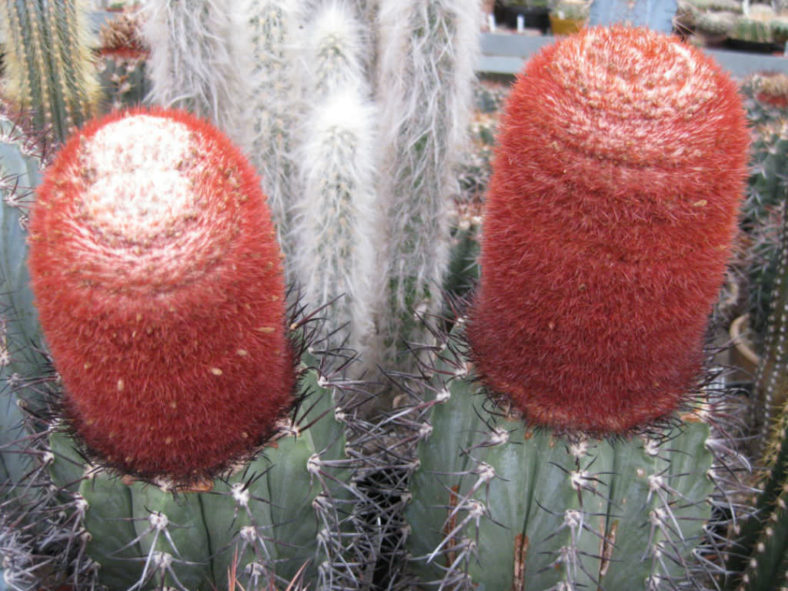
Melocactus is a genus of especially attractive cacti, distinguished by an odd cephalium that protrudes from the top. The cephalium (plural: cephalia), a bristly collection of areoles, produces flowers and fruit and can grow up to 3 feet (90 cm) tall in some species. Cephalia are red or white and bear small pink flowers within their mass, and their fruits are waxy and tube-shaped.
Because of their appearance, Melocactus species are popular cacti in cultivation. They are native to warm climates and cannot tolerate frost. Melocactus are found in various parts of the Caribbean, South America (especially Brazil), and Mexico. Notably, Melocactus develops its distinctive appearance only after it reaches maturity.
At the beginning of their lives, they look like most cacti. They are spherical and covered in ribs with areoles. Plants develop the cephalium once they are fully developed; once it begins growing, it will not stop until the plant dies. So they can be hard to identify before they have reached maturity. Melocactus can be a bit of a challenge because of specific care requirements. These cacti suit experienced cactus growers best. They are quite beautiful and extraordinary once fully grown.
Growing Conditions
Light: Melocactus needs plenty of bright sunlight to thrive.
Water: These cacti like fairly moist environments, so water regularly, especially during the growing season. However, ensure they do not sit in water to avoid root rot.
Temperature: Warm tropical temperatures above 70°F (21°C). They cannot survive frost.
Soil: Most cactus potting mixes should work fine, ideally a well-draining mix with some organic material.
Fertilizer: Feed with a balanced, diluted fertilizer, such as 20-20-20, mixed into the water during the growing season to support growth.
Propagation
These cacti are not difficult to propagate from seed. First, sow the seeds in well-aerated, well-draining soil, and soak them in warm water before sowing. Then seal the new seeds to retain heat and moisture, which will help them root. Their root systems take a little while to develop, so don't overwater or overfeed them until you have the necessary equipment. Remember, always use fresh seeds.
Repotting
Notably, Melocactus like to be fairly packed in, so keep them in a fairly small container that slightly constricts their roots. Repotting them at the beginning of the growing season is a good idea until they form a cephalium and the body stops growing. Repot them like other cacti: lift the root ball out of the pot all at once, gently clean it, and replant. Do not replant in a container that is too large, as this can damage the plant.
Grower's Tips
Melocactus are somewhat finicky cacti with unusual requirements. Don't let the soil dry out completely, even in winter, as this can cause problems with soil composition, drainage, watering, sun, and other hard-to-control factors. Therefore, these plants suit growers who have already successfully cultivated cacti. Establish a balance: good aeration matched by ample water, good soil matched by good drainage, and these cacti should continue to grow. Their unusual tops make them among the most beautiful desert cacti.
Source: about.com
Links
- Back to genus Melocactus
- Succupedia: Browse succulents by Scientific Name, Common Name, Genus, Family, USDA Hardiness Zone, Origin, or cacti by Genus