

You are not alone if you are fighting your Aloe vera for flowers. Most people struggle to get their Aloe vera plants to bloom when growing them indoors. But its tubular flowers, produced high on long, elegant stems, are a rare sighting in households due to the inadequate sunlight they receive. Many clones available have orange flowers, but the real Aloe vera has yellow flowers.
Aloe vera is well-suited to Africa's desert climate, where it receives direct sunlight for much of the day. This large dose of bright light that Aloe vera is accustomed to does not translate smoothly to a household setting, where the house's location and the plant's placement may limit the sunlight that reaches it.
Adjusting the Indoor Placement of Your Aloe Vera Plant
Because Aloe vera thrives in its natural environment, the main trick is to give your houseplant as much light as possible. Indoor placement is key. Typically, sitting on kitchen windowsills, Aloe vera does not receive the sunlight it needs when raised indoors. You want to place your plant on a windowsill that gets a lot of direct sunlight, with nothing obstructing its line of sight to the sun or keeping it in the shade. At certain points in the day, some areas of your house also receive more light than others. Therefore, it is best to move your plant around throughout the day, allowing it to follow the sun. The more exposure to sunlight, the better. You can also move your plant outside during the summer months, as it is no longer in danger of freezing, and an outdoor environment nicely mimics the high-sunlight desert conditions it needs to bloom.
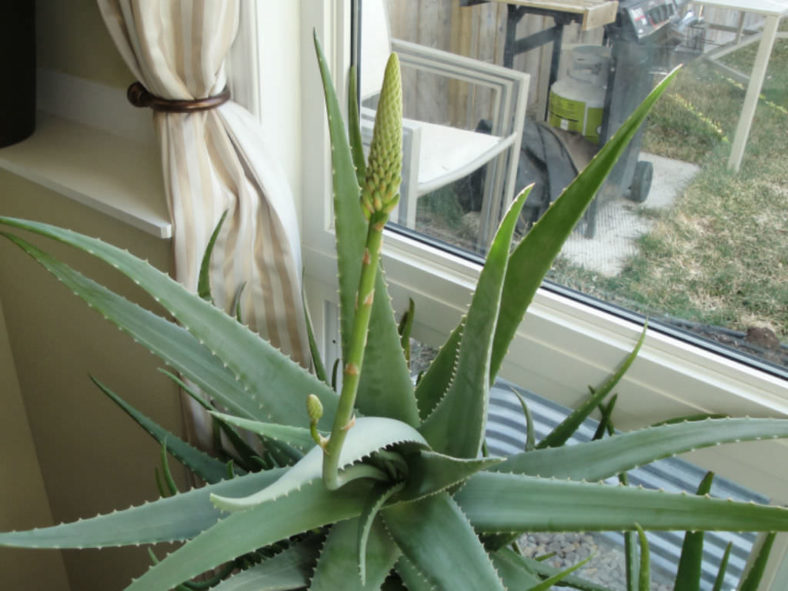
Other Tricks for Getting Your Resistant Aloe to Bloom:
1. Wait for your Aloe Vera to Mature
You may be expecting too much from your young plant. Aloe vera tends to bloom once it has reached maturity, a stage that takes approximately 4 years. It is simply not ready if you have just begun caring for your plant. So have patience, and while you are waiting, take proper care of your Aloe vera by giving it the sunlight, water, and soil it needs to reach old age and bloom.
2. Know When to Expect Aloe Vera Flowers
Aloe vera does not have flowers year-round. It usually blooms in early spring, so time your expectations accordingly. If you are concerned about why your plant has no buds in winter, it is simply because the timing is not yet right.
3. Fertilize or Repot Your Plant
A healthy Aloe vera is more likely to produce the bright flowers you are looking for. This succulent needs soil that provides adequate nutrients. You can keep your plant healthy by either fertilizing it or repotting it.
Another way to encourage Aloe vera to bloom is by propagating it. Aloe vera offsets grow from the main plant. If you want a flowering plant, you can remove it. By taking away the offsets, you give the main plant more energy to produce those tall, beautiful flowers.
Source: aloeplant.info
Links
- Back to genus Aloe
- Succupedia: Browse succulents by Scientific Name, Common Name, Genus, Family, USDA Hardiness Zone, Origin, or cacti by Genus