Scientific Name
Homalocephala texensis (Hopffer) Britton & Rose
Common Name(s)
Candy Cactus, Devil's Head, Devil's Pincushion, Horse Crippler, Horse Crippler Cactus
Synonym(s)
Echinocactus texensis
Scientific Classification
Family: Cactaceae
Subfamily: Cactoideae
Tribe: Cacteae
Genus: Homalocephala
Etymology
The specific epithet "texensis" (pronounced "teck-SEN-sis") means "of or from Texas" and refers to the occurrence of this species in Texas, United States, where it was first discovered.
Origin
Homalocephala texensis is native to Mexico (Chihuahua, Coahuila, Durango, Nuevo León, Zacatecas, and Tamaulipas) and the United States (southeastern New Mexico, Texas, and Oklahoma).
Description
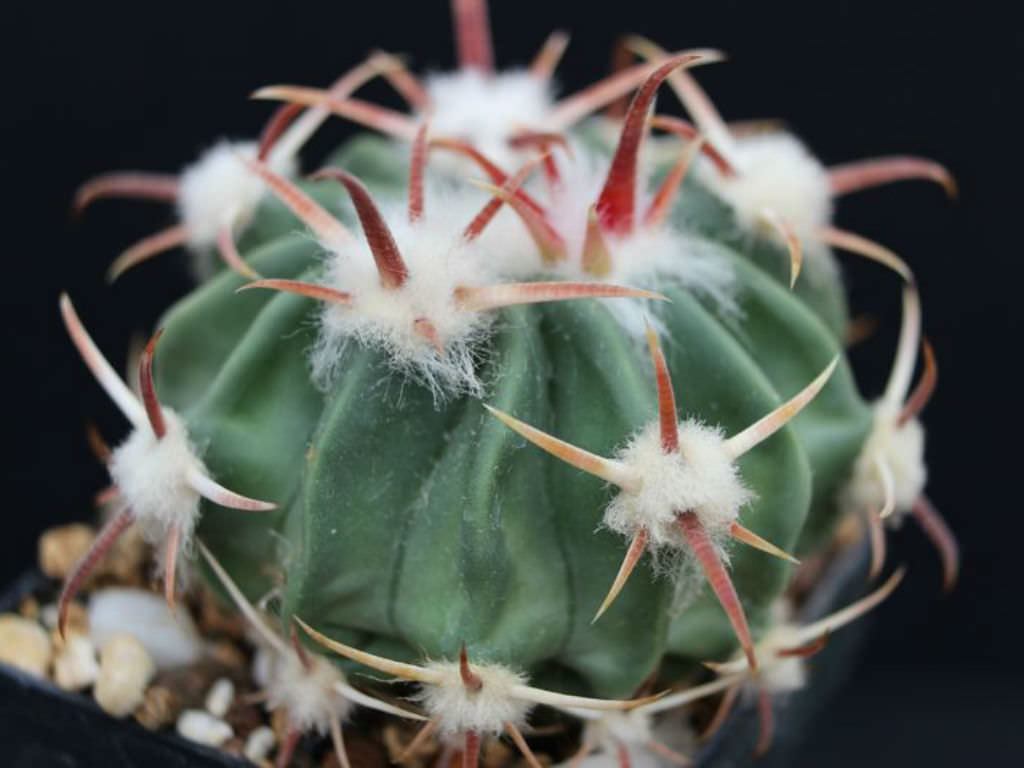
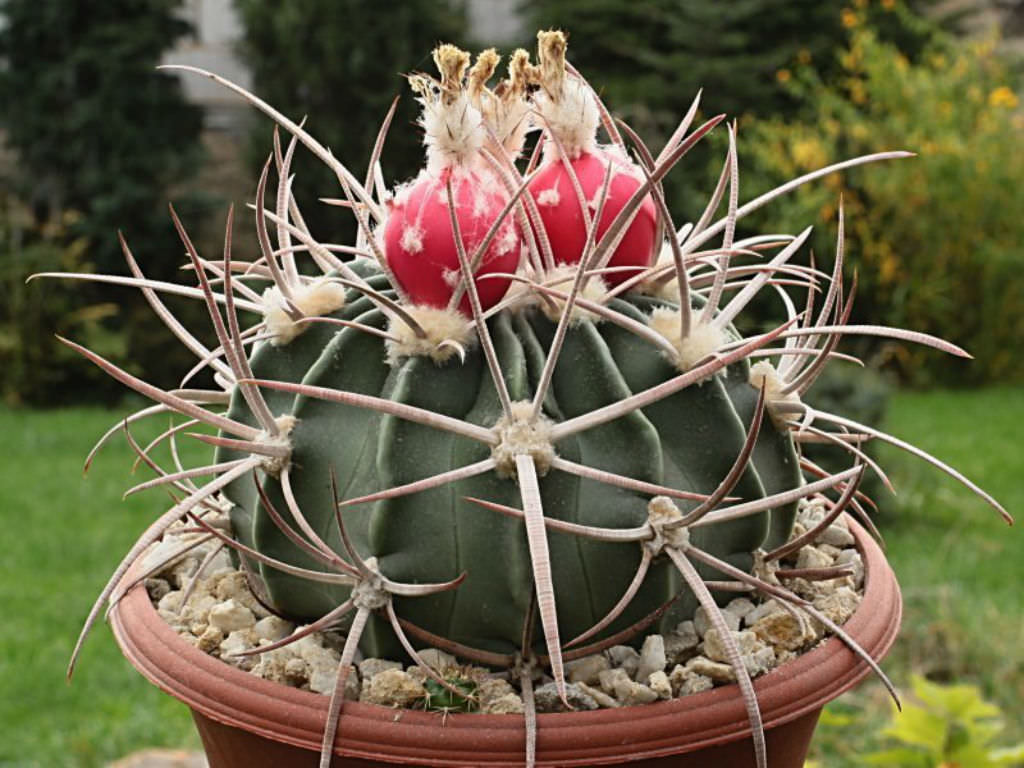
Homalocephala texensis, formerly known as Echinocactus texensis, is a small cactus that has a usually solitary stem with 13 to 27 very prominent ribs lined with woolly areoles bearing clusters of stout, mostly decurved spines. The stem is flat-topped and hemispheric when mature but usually deep-seated, reaching up to 8 inches (20 cm) in height and up to 12 inches (30 cm) in diameter. The spines are flattened to nearly cylindrical and range from pale tan, pink, and reddish to gray. Each areole bears 5 to 7 radial spines and one central spine.
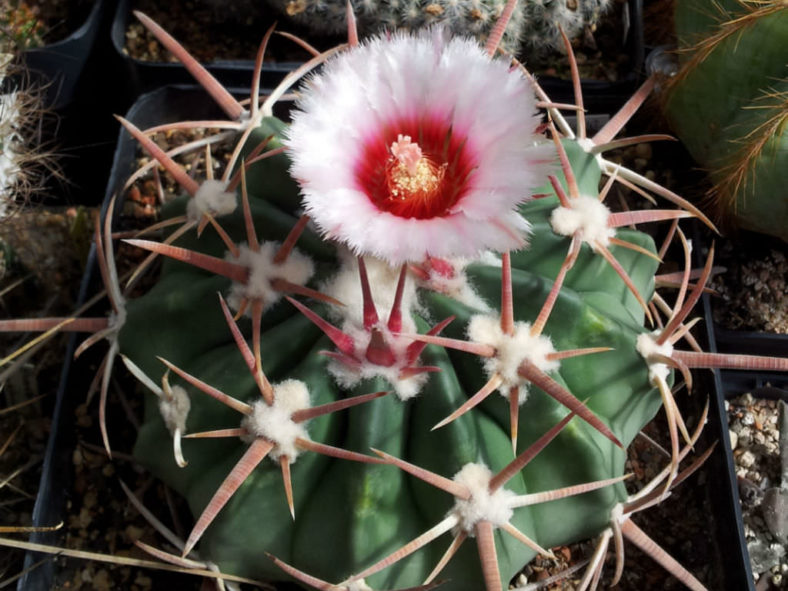
The flowers have bright rose-pink to pale silvery-pink inner tepals, orange to red near the center, and pink to pinkish-white stigma lobes. They appear in late spring and can reach up to 2.4 inches (6 cm) in length and diameter. The fruits are scarlet or crimson, spherical to ovoid, and contain tiny black seeds. They can grow up to 2 inches (5 cm) long and up to 1.6 inches (4 cm) in diameter.
How to Grow and Care for Homalocephala texensis
Hardiness: USDA hardiness zones 9a to 11b: from 20 F (-6.7°C) to 50°F (10°C).
Overall, these are beautiful cacti for dish gardens or indoor displays. Their collection is especially attractive, as they look like a collection of balls tossed upon the ground. It's critical, however, never to let these cacti be exposed to prolonged periods of water or even very high humidity. They will suffer from rot in the presence of moisture. In addition, Echinocactus are vulnerable to pests, including aphids, mealybugs, scale, and whiteflies. Identify the infestation as early as possible and treat it with the least toxic option.
It's best to repot at the beginning of the growing season or in the summer. To repot a cactus, ensure the soil is dry before repotting, then gently remove the pot. Knock away the old soil from the roots, removing any rotted or dead roots.
See more at How to Grow and Care for Echinocactus.
Links
- Back to genus Homalocephala
- Succupedia: Browse succulents by Scientific Name, Common Name, Genus, Family, USDA Hardiness Zone, Origin, or cacti by Genus
Photo Gallery
Click on a photo to see a larger version.