

Hesperaloe parviflora is quite popular in xeriscaping but is also an excellent container plant. When planted in a large pot, it makes an appealing patio accent.
Taxonomy of Hesperaloe parviflora
Scientific Name
Hesperaloe parviflora (Torr.) J.M.Coult.
Synonym(s)
Yucca parviflora
Common Name(s)
Coral Yucca, Hummingbird Yucca, Redflower False Yucca, Red-flower Hesperaloe, Red-flower Yucca, Red Yucca
Scientific Classification
Family: Asparagaceae
Subfamily: Agavoideae
Genus: Hesperaloe
Etymology
The specific epithet "parviflora" (pronounced "par-VEE-flor-uh") means "small-flowered; having small flowers" and refers to the small flowers of this species, which are scattered along the inflorescences.
Origin of Hesperaloe parviflora
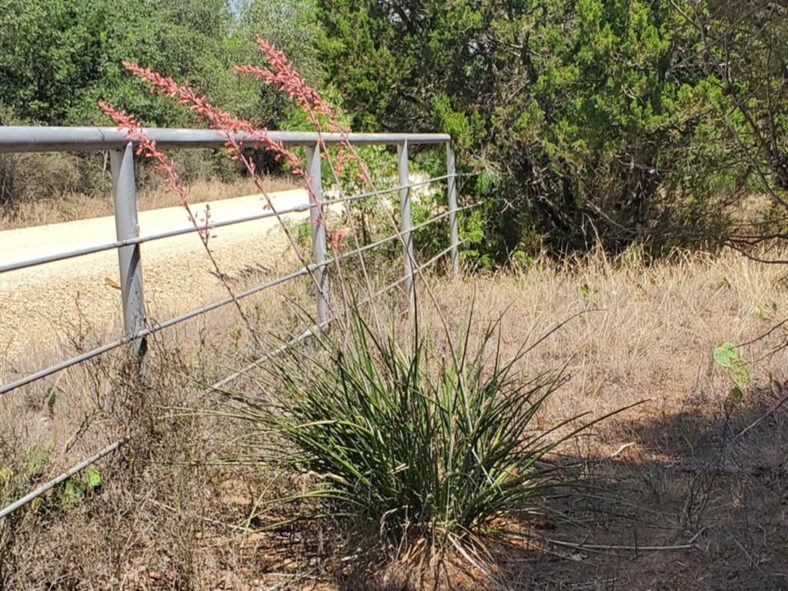
The native range of Hesperaloe parviflora extends from the Chihuahuan Desert in western Texas, United States, to northeastern Mexico around Coahuila. It typically grows in desert areas, prairies, rocky slopes, and mesquite groves.
Description of Hesperaloe parviflora
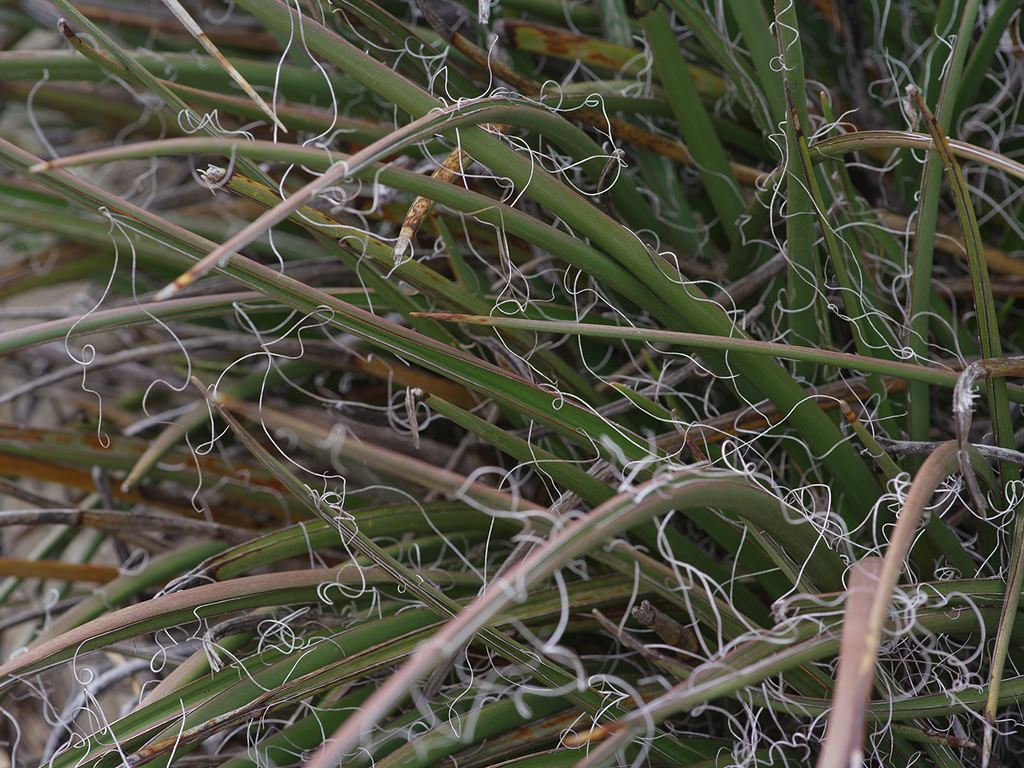
Hesperaloe parviflora is a stemless succulent that grows in a grass-like clump, consisting of closely-spaced rosettes of long, narrow, arching, blue-green leaves with numerous white threads along the margins. It can grow up to 3 feet (0.9 m) tall and slowly spread to 4 feet (1.2 m) in diameter. The leaves are leathery, deeply grooved, and can measure 4 feet (1.2 m) long and 1.2 inches (3 cm) wide at the base. During winter, they often take on purple or reddish-bronze tints. The threads can grow up to 2.4 inches (6 cm) long.
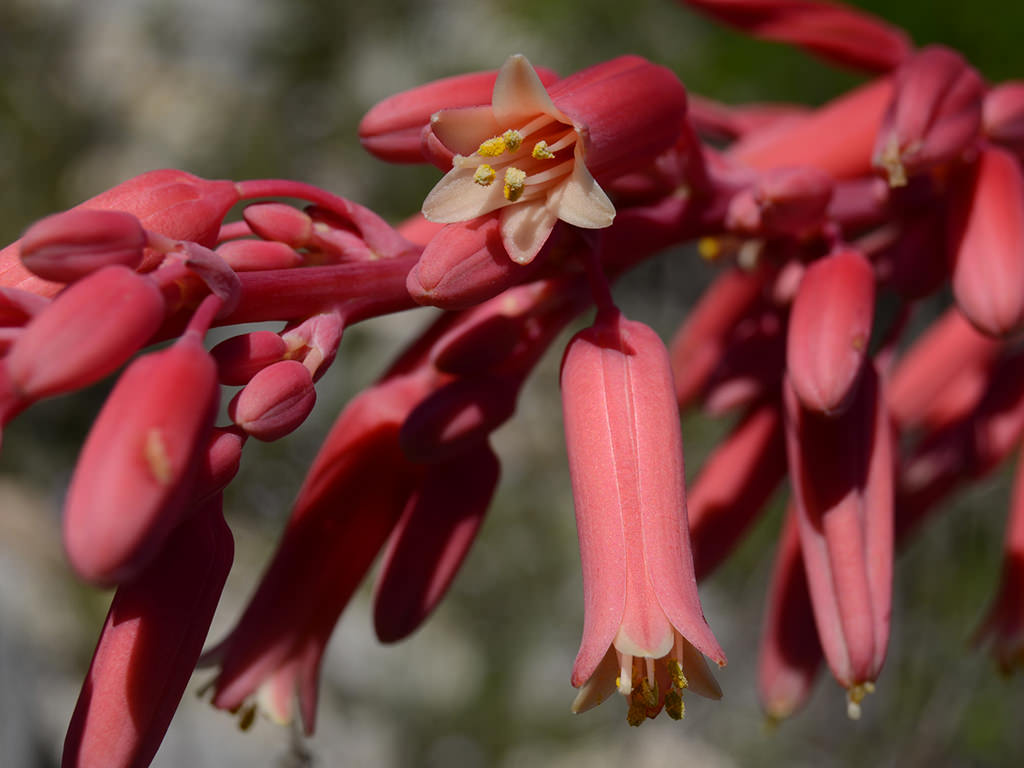
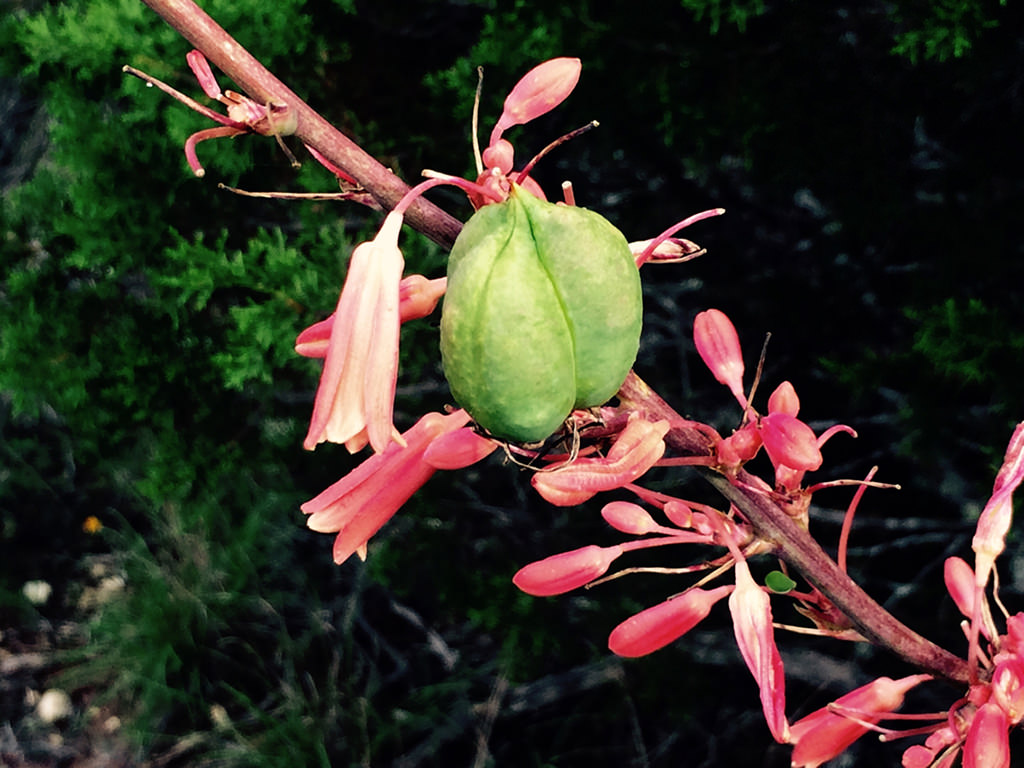
From late spring to mid-summer, and sometimes into early fall, Hesperaloe parviflora produces clusters of narrowly tubular, rosy-red to salmon flowers on red, branching stalks. The flowers open successively from the bottom up of the stalks and can reach up to 1.4 inches (3.5 cm) long. The flower stalks can grow up to 5 feet (1.5 m) long, arching up and outward. The fruits are woody capsules that are initially green, becoming brown when mature, and contain black seeds. They can measure up to 1.4 inches (3.5 cm) in diameter. The rosettes only flower once and then die, but younger ones replace them.
Subspecies of Hesperaloe parviflora
- Hesperaloe parviflora subsp. bechtoldii
- Hesperaloe parviflora subsp. parviflora
Cultivars of Hesperaloe parviflora
How to Grow and Care for Hesperaloe parviflora
Light: Hesperaloe parviflora thrives in full sun but can also tolerate light shade.
Soil: It prefers well-drained, gravelly soil.
Temperature: This plant can withstand both hot summers and below-freezing winters. It grows best in USDA Plant Hardiness Zones 5a to 10b, with average minimum winter temperatures ranging from -20°F to 40°F (-28.9°C to 4.4°C).
Watering: Once established, Hesperaloe parviflora becomes highly drought-tolerant, but occasional watering during hot summer months can help encourage growth and flowering. Regular but moderate watering during the first season of growth is recommended for newly planted plants.
Fertilizing: To promote healthy growth, feed it with a general-purpose fertilizer in the spring before new growth starts.
Repotting: Once the plant becomes potbound, repot it in the spring in a pot one or two sizes larger.
Propagation: Hesperaloe parviflora can be propagated by seed and division of mature specimens. The best time for clump division is in fall and winter, while the seeds can be sown at any time of the year.
Toxicity of Hesperaloe parviflora
The leaves and fruits of Hesperaloe parviflora are mildly toxic to humans and pets if consumed, but the flowers are edible.
Photo Gallery
Click on a photo to see a larger version.
Internal Links
- Explore all plants within the genus Hesperaloe.
- Explore all plants within the family Asparagaceae.