Scientific Name
Haworthiopsis tessellata (Haw.) G.D.Rowley
Synonym(s)
Aloe tessellata, Catevala tessellata, Haworthia tessellata, Haworthia venosa subsp. tessellata, Haworthia venosa var. tessellata
Common Name(s)
Tessellated Haworthia, Veined Haworthia, Window Haworthia
Scientific Classification
Family: Asphodelaceae
Subfamily: Asphodeloideae
Tribe: Aloeae
Genus: Haworthiopsis
Etymology
The specific epithet "tessellata" (pronounced "tess-ell-AY-tuh") means "tessellated" or "mosaic-like" and refers to the distinctive mosaic-like pattern on the leaves of this species.
Origin
Haworthiopsis tessellata is native to South Africa and Namibia. It is one of the most widespread and highly variable Haworthiopsis species, and the only one that grows in Namibia.
Description
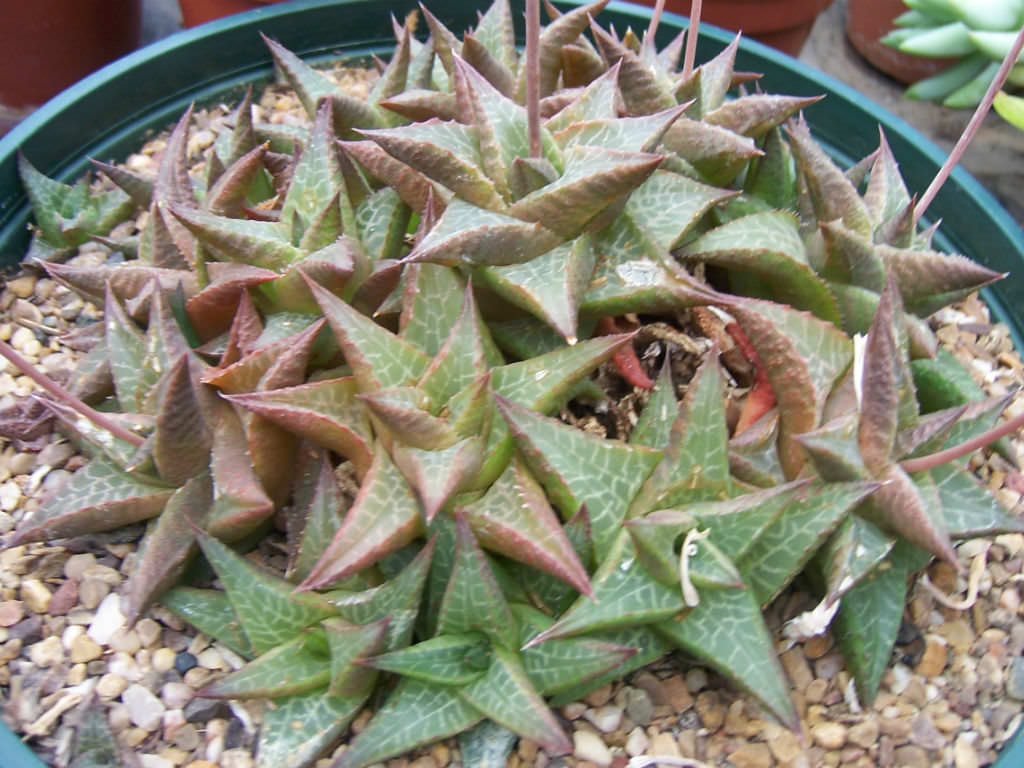
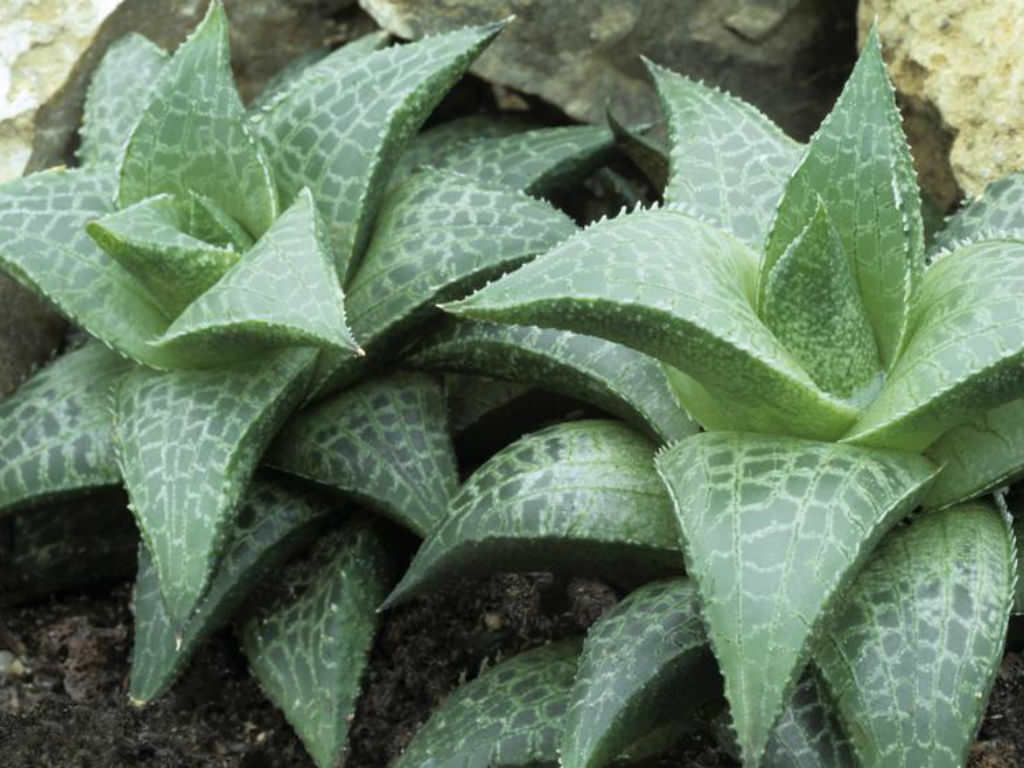
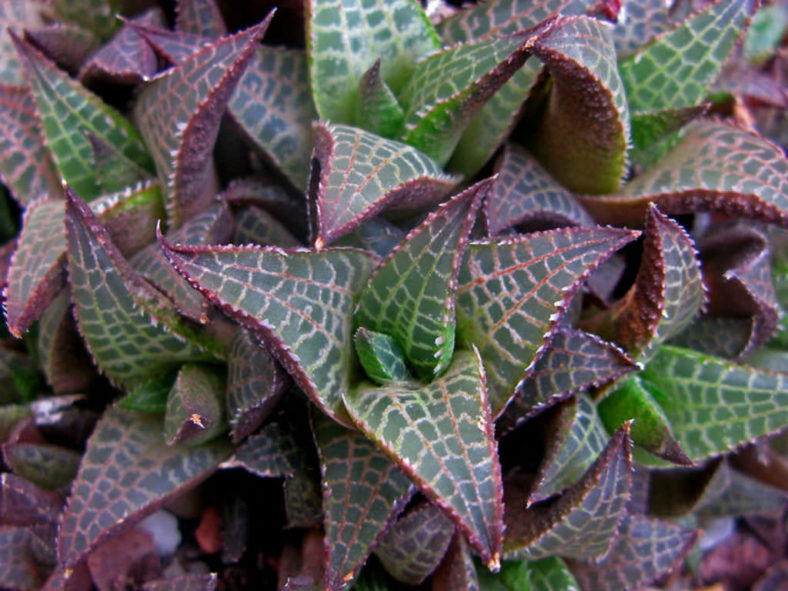
Haworthiopsis tessellata, formerly known as Haworthia tessellata or Haworthia venosa subsp. tessellata, is a small, slow-growing succulent that forms rosettes of fleshy, green to brownish leaves with a square-patterned design and windowed on the upper surface. The slowly proliferous rosettes are usually stemless and can grow up to 6 inches (15 cm) tall and 4 inches (10 cm) in diameter. The leaves are broadly triangular, strongly recurved, firm in texture, and can measure up to 2 inches (5 cm) long and 1.2 inches (3 cm) wide at the base. The upper surface of the leaves is marked with six pale green anastomosing vertical lines. The lower surface is usually rounded and slightly scabrid with raised coriaceous tubercles, especially in the upper part, where they are arranged in transverse rows. The margins of the leaves are lined with recurved, white teeth.
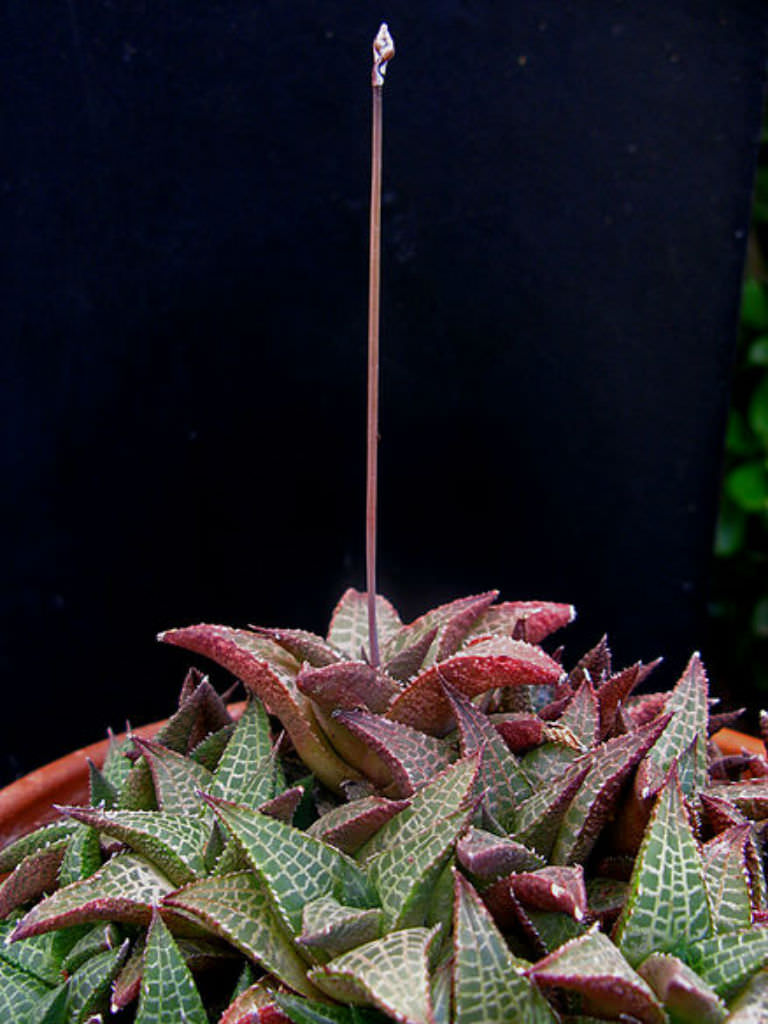
The flowers are small, tubular, white with green midribs, and appear on unbranched, slender stalks in summer. The flower stalks can grow up to 20 inches (50 cm) long.
Varieties of Haworthiopsis tessellata
- Haworthiopsis tessellata var. crousii
- Haworthiopsis tessellata var. tessellata
How to Grow and Care for Haworthiopsis tessellata
Hardiness: USDA hardiness zone 9b to 11b: from 25°F (-3.9°C) to 50°F (10°C).
These succulents are not considered difficult to grow as houseplants. If you can keep a pot of Aloe alive on a windowsill, chances are you can do the same with a dish of Haworthia. As with all succulents, the most dangerous situation is overwatering. They should never be allowed to sit in water under any circumstances. At the same time, these little decorative plants can be grown in interesting containers such as teacups and even miniature baby shoes. If you're given a Haworthia in such a container, ensure the container has adequate drainage.
Haworthias are small, usually between 3 and 5 inches (7.5 cm and 12.5 cm) in height, and relatively slow-growing. Therefore, they are often grown in small clusters in wide, shallow dishes. Over time, clusters will naturally enlarge as the mother plant sends off small plantlets. When the cluster has outgrown its container, repot it into a new, wider, shallower container filled with fresh potting soil in the spring or early summer. This is also the time to take offsets for propagation.
See more at How to Grow and Care for Haworthia.
Links
- Back to genus Haworthiopsis
- Succupedia: Browse succulents by Scientific Name, Common Name, Genus, Family, USDA Hardiness Zone, Origin, or cacti by Genus
Photo Gallery
Click on a photo to see a larger version.