Scientific Name
Haworthia emelyae var. comptoniana (G.G.Sm.) J.D.Venter & S.A.Hammer
Synonym(s)
Haworthia comptoniana, Haworthia picta var. comptoniana, Haworthia retusa var. comptoniana
Scientific Classification
Family: Asphodelaceae
Subfamily: Asphodeloideae
Tribe: Aloeae
Genus: Haworthia
Etymology
The specific epithet "emelyae" (pronounced "EM-el-ee-ay") honors Emily Pauline Reitz Ferguson (1872–1947), a plant collector in South Africa.
The varietal epithet "comptoniana" (pronounced "komp-toh-nee-AH-nuh") honors Robert Harold Compton🡕 (1886–1979), a British-born South African botanist.
Description
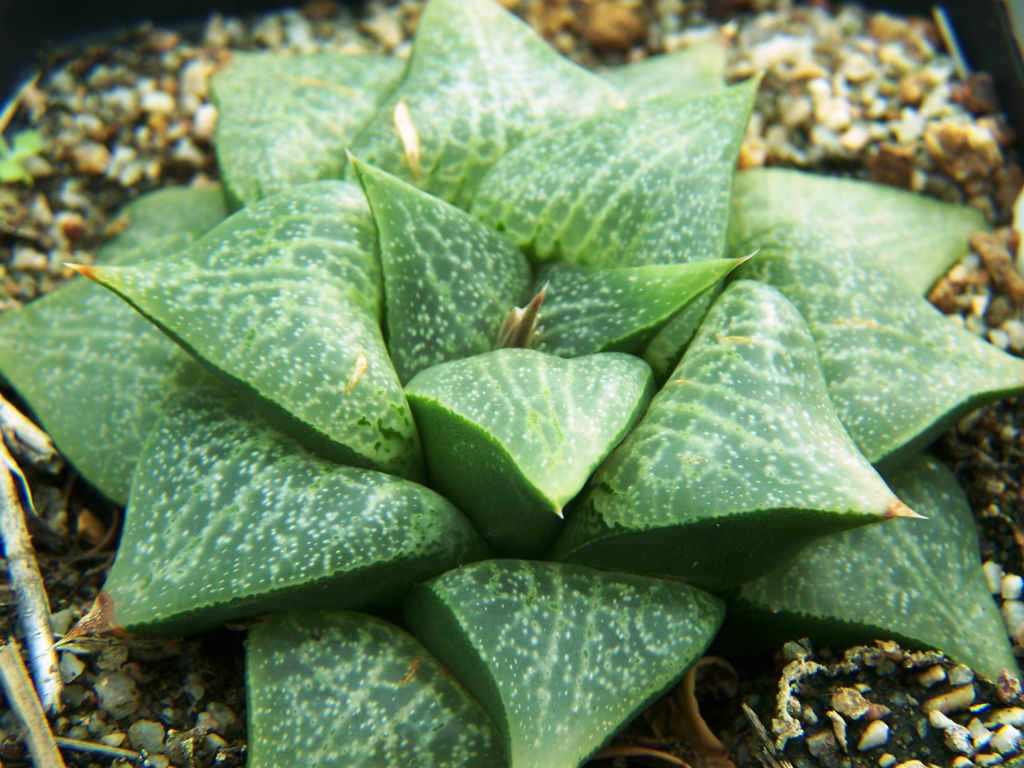
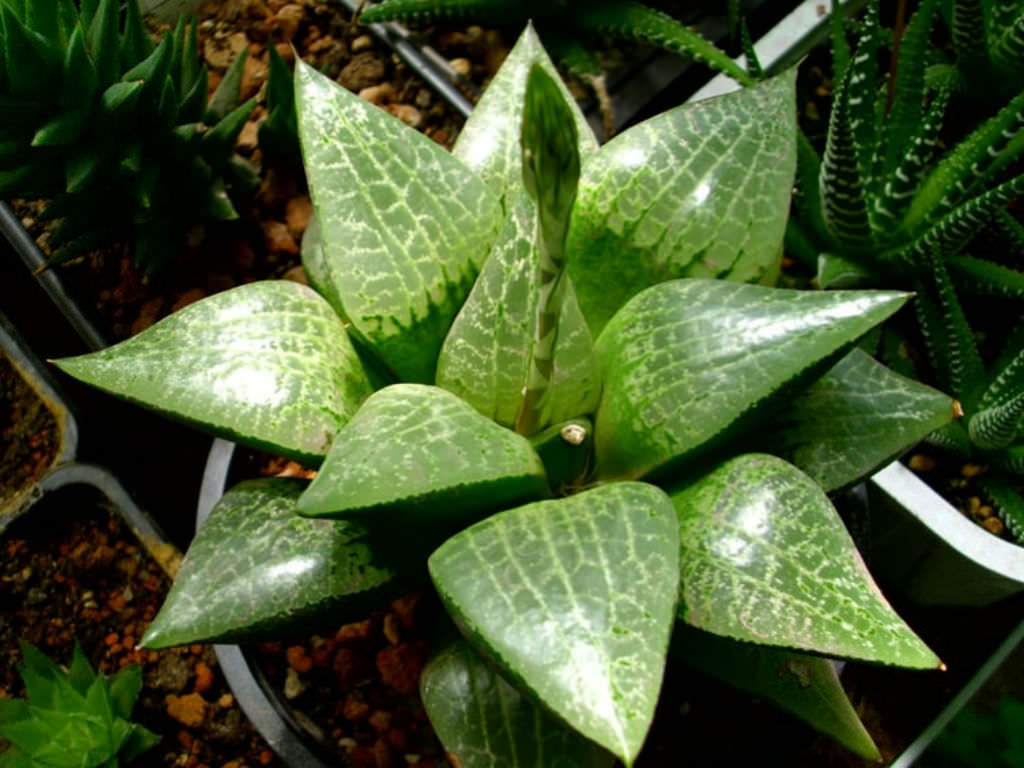
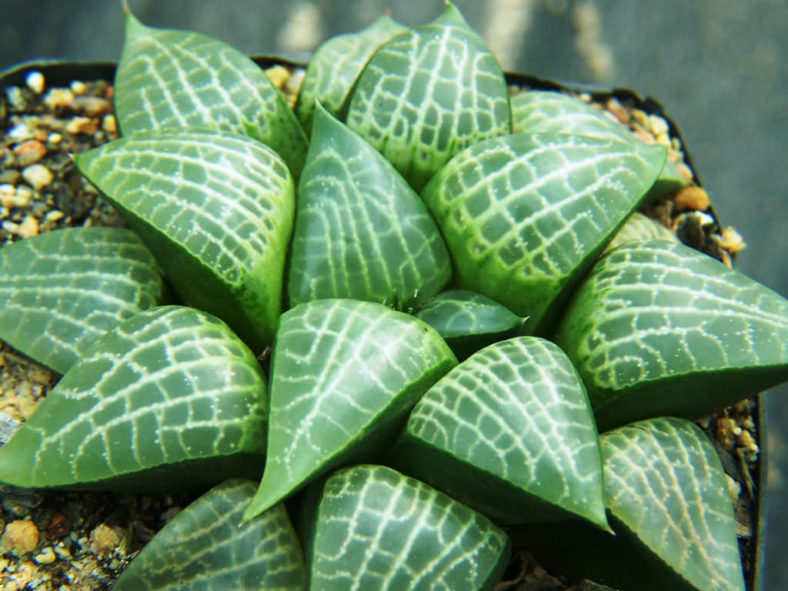
Haworthia emelyae var. comptoniana, formerly known as Haworthia comptoniana, is a beautiful small succulent that forms stemless rosettes of thick, fleshy leaves with an appealing pattern. The rosettes can grow either solitary or, occasionally, slowly proliferate from the base, reaching a diameter of 3.4 inches (8.5 cm).
The leaves are obovate, deltoid, spreading, and incurved at the tip, measuring up to 1.8 inches (4.5 cm) long, 0.8 inches (2 cm) wide, and about 0.6 inches (1.5 cm) thick. They have numerous white, oblong, longitudinally arranged flecks and 5 to 7 short and long, very reticulate lines, of which 1 to 2 nearly reach the tip. The leaves are pellucid-green, often brownish at the tip, smooth, or with a few small raised concolorous tubercles. In the plant's natural habitat, the rosettes are almost entirely underground, with only the leaf apex above ground.
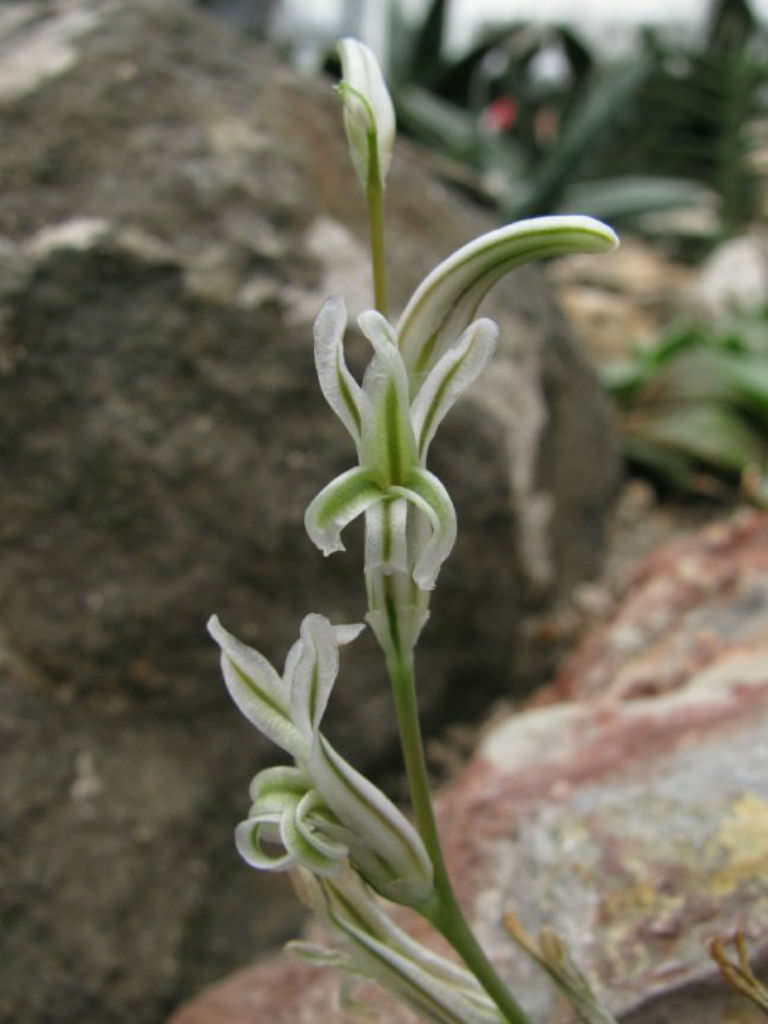
The 2-lipped flowers are white with green to brown veins and appear spirally arranged on simple, slender stalks from late spring to fall. The flower stalks can grow up to 8.8 inches (22 cm) long.
Origin
Haworthia emelyae var. comptoniana is native to South Africa. It is a rare succulent known from only one or two localities in the Eastern Cape province near Willowmore.
How to Grow and Care for Haworthia emelyae var. comptoniana
Hardiness: USDA hardiness zone 10a to 11b: from 30°F (-1.1°C) to 50°F (10°C).
Haworthias are not considered difficult houseplants to grow. If you can keep a pot of Aloe alive on a windowsill, you can probably do the same with a dish of Haworthia. As with all succulents, the most common issue is overwatering. Never let them sit in water under any circumstances. At the same time, you can grow these little decorative plants in interesting containers such as teacups and even miniature baby shoes. If you're given a Haworthia in such a container, make sure it has adequate drainage; if it doesn't, consider popping the plant out and adding a layer of gravel to the bottom to reduce the soil's wicking action. Finally, look out for sunburned spots on your plants.
Haworthias are small, usually between 3 and 5 inches (7.5 cm and 12.5 cm) in height, and relatively slow-growing. Therefore, people often grow them in small clusters in wide, shallow dishes. Over time, clusters will naturally enlarge as the mother plant sends off small plantlets.
See more at How to Grow and Care for Haworthia.
Links
- Back to genus Haworthia
- Succupedia: Browse succulents by Scientific Name, Common Name, Genus, Family, USDA Hardiness Zone, Origin, or cacti by Genus
Photo Gallery
Click on a photo to see a larger version.