Scientific Name
Euphorbia obesa subsp. symmetrica (A.C.White, R.A.Dyer & B.Sloane) G.D.Rowley
Synonym(s)
Euphorbia symmetrica
Common Name(s)
Stone Spurge
Scientific Classification
Family: Euphorbiaceae
Subfamily: Euphorbioideae
Tribe: Euphorbieae
Subtribe: Euphorbiinae
Genus: Euphorbia
Etymology
The specific epithet "symmetrica" (pronounced "sim-MET-ree-ka") means "symmetrical" and refers to the strongly symmetrical, evenly ribbed, and regularly shaped stem. Unlike Euphorbia obesa subsp. obesa, which typically elongates and becomes cylindrical as it matures, Euphorbia obesa subsp. symmetrica is distinguished by its tendency to stay rounder and flatter, often growing wider than it is tall.
Origin
Euphorbia obesa subsp. symmetrica is native to South Africa (Cape Province).
Description
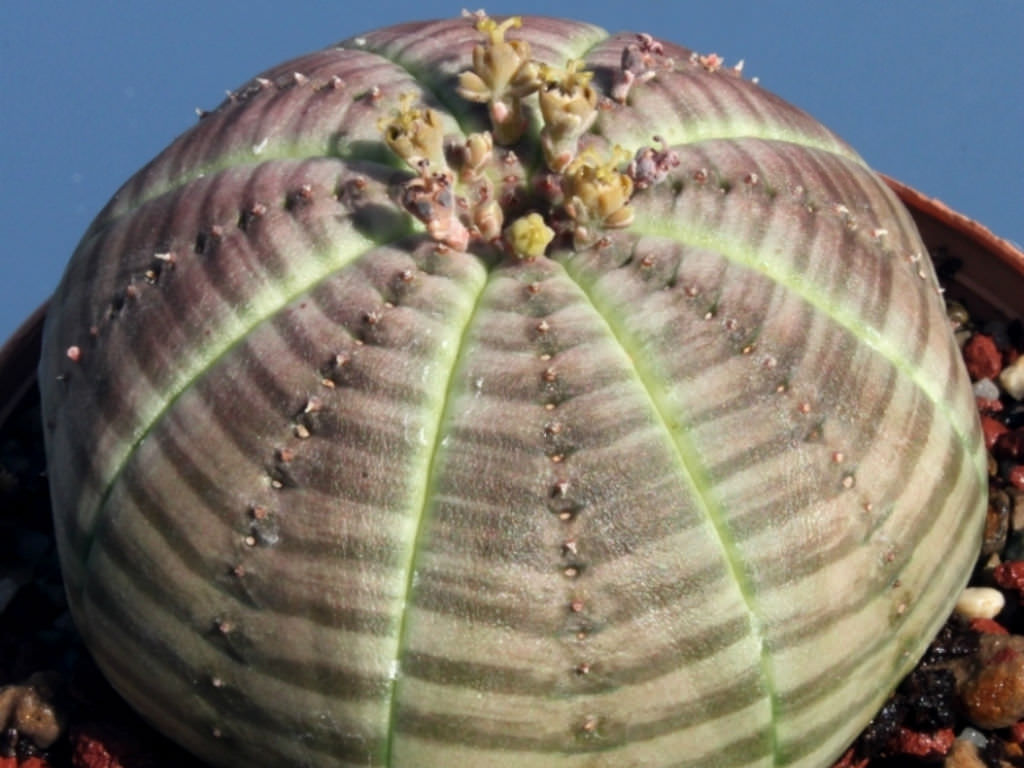
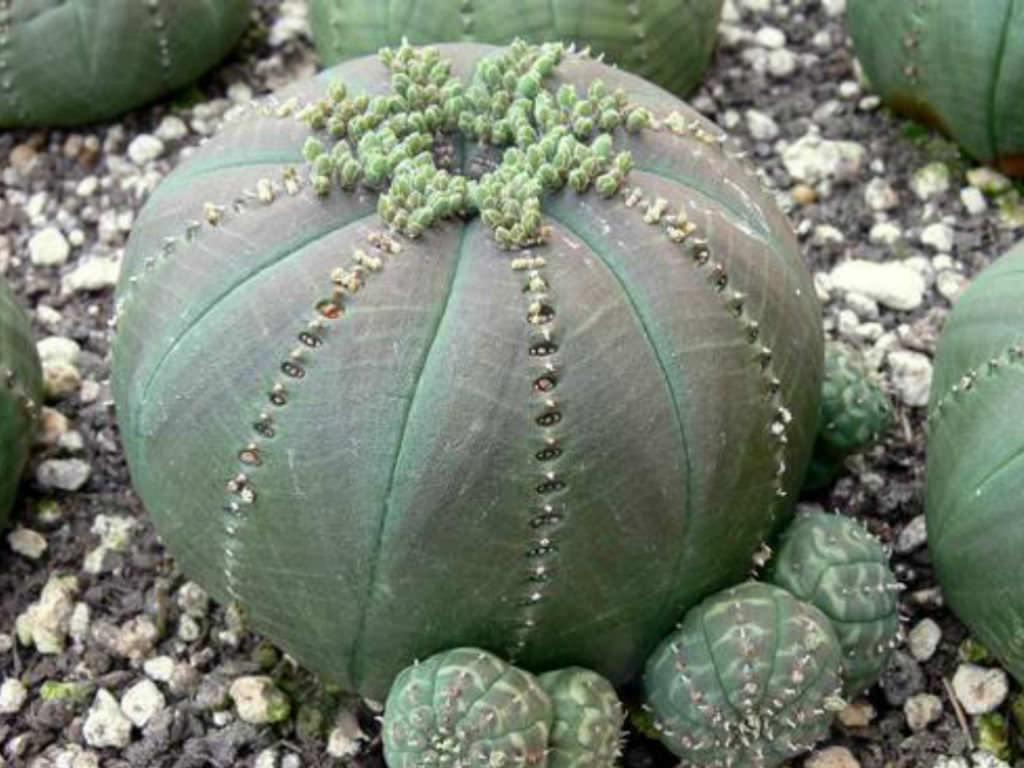
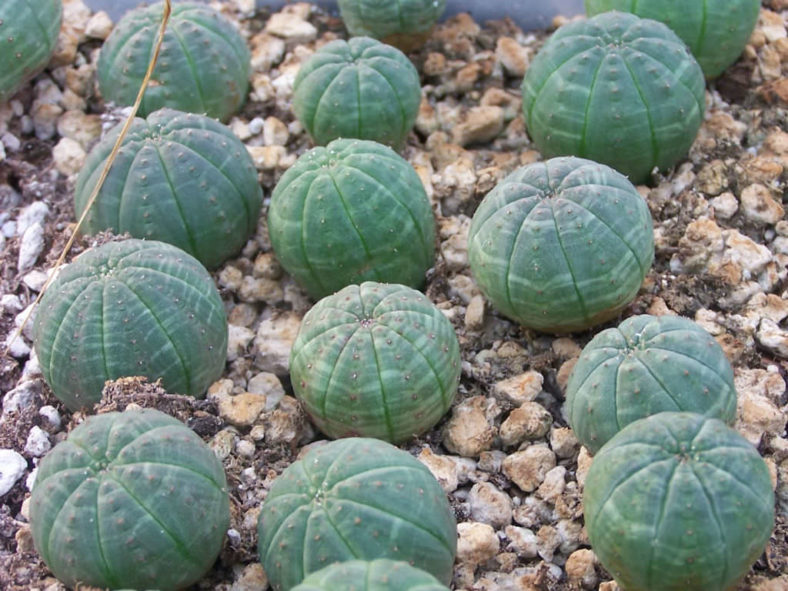
Euphorbia obesa subsp. symmetrica, also known as Euphorbia symmetrica, is a small succulent with a nearly spherical, somewhat flattened, usually solitary stem with 8 to 10 slightly raised ribs. The stem can grow up to 2.4 inches (6 cm) tall and 3.2 inches (8 cm) in diameter. The color of the stem may be green or purplish to pinkish, changing depending on the season and growing conditions. Each sector is characterized by a row of dots along its midrib, the marks left by old discarded cyathia.
As the plant grows, the cyathia are replaced by newer ones at the inner end of each row. Male and female cyathia are born on different specimens. They are yellow and appear in summer on branched stalks at the top of the stem. The fruits are small, 3-angled capsules.
How to Grow and Care for Euphorbia obesa subsp. symmetrica
Hardiness: USDA hardiness zones 10a to 11b: from 30°F (-1.1°C) to 50°F (10°C).
As the Baseball Plant often grows in partial shade in its native habitat, place it on a windowsill where it receives sun for only part of the day, preferably during the morning. If you move the plant outdoors during the summer, gradually acclimate it to the increased light and position it under the deep shade of a tree or shrub, where it will receive direct sunlight only at times of day when the sun is not directly overhead. If it begins to lose its plaid coloring, it needs more light.
Like most succulents, Baseball Plant will rot in soggy soil, so keep it in a clay pot filled with a potting mix specifically designed for cacti and succulents. Use a pot with at least one drainage hole. You can create your own if you don't have such a mix available.
Water the plant thoroughly about once a week until water runs from the pot's drainage holes from spring through fall. Add 10-10-10 plant food at one-quarter strength to each watering; about 2 drops of the plant food in 1 quart of water. Stop fertilizing the plant during its dormant winter period, and allow the soil to dry out before watering again.
Only repot the plant when its girth grows large enough to press against the edges of its current container. Handle the plant carefully, preferably wearing gloves, because when broken, the white sap it exudes can irritate the skin.
Learn more at How to Grow and Care for Euphorbia.
Links
- Back to genus Euphorbia
- Succupedia: Browse succulents by Scientific Name, Common Name, Genus, Family, USDA Hardiness Zone, Origin, or cacti by Genus
Photo Gallery
Click on a photo to see a larger version.