Scientific Name
Eriosyce glabrescens (F.Ritter) P.C.Guerrero & Helmut Walter
Synonym(s)
Chileorebutia glabrescens, Eriosyce napina subsp. glabrescens, Eriosyce napina var. glabrescens, Eriosyce odieri subsp. glabrescens, Neoporteria napina f. glabrescens, Thelocephala glabrescens
Scientific Classification
Family: Cactaceae
Subfamily: Cactoideae
Tribe: Notocacteae
Genus: Eriosyce
Etymology
The specific epithet "glabrescens" (pronounced "gla-BRES-senz") means "becoming glabrous" and refers to the tendency of the stem of this species to lose spines, and thus become glabrous, as it matures.
Origin
Eriosyce glabrescens is native to Chile.
Description
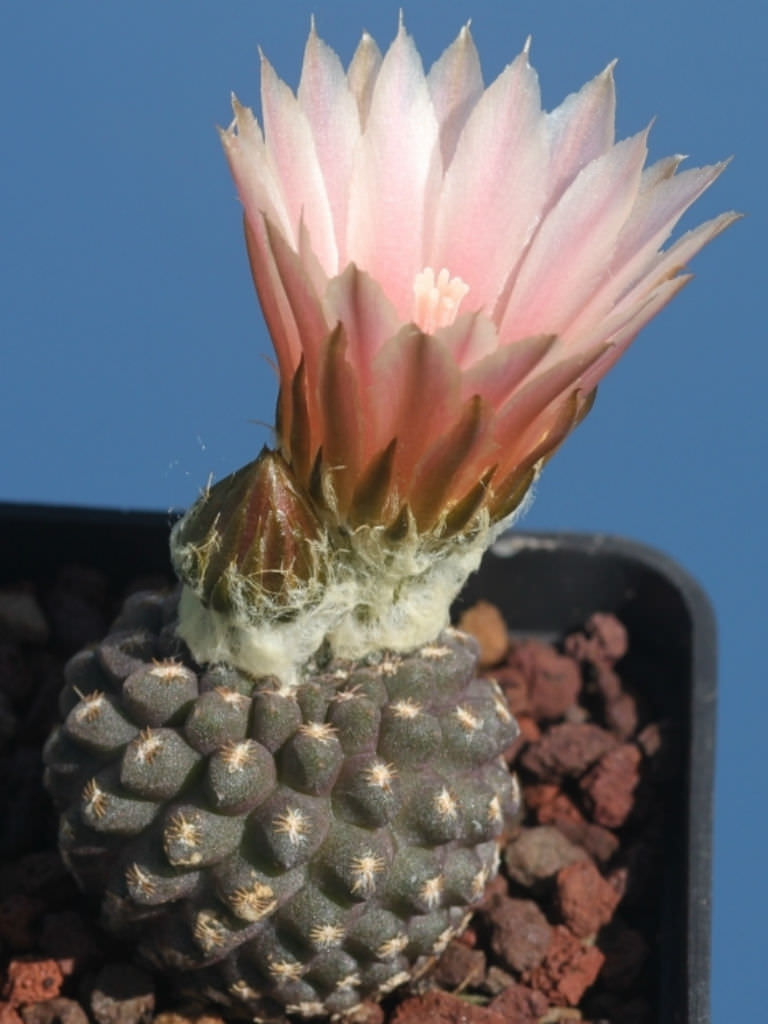
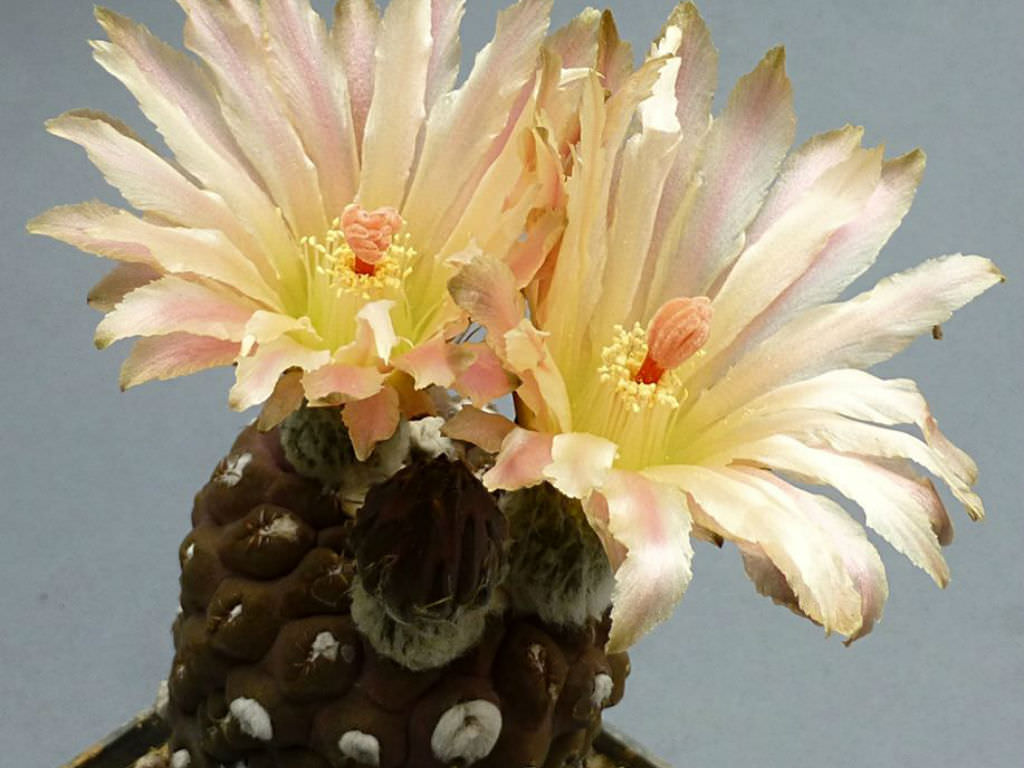
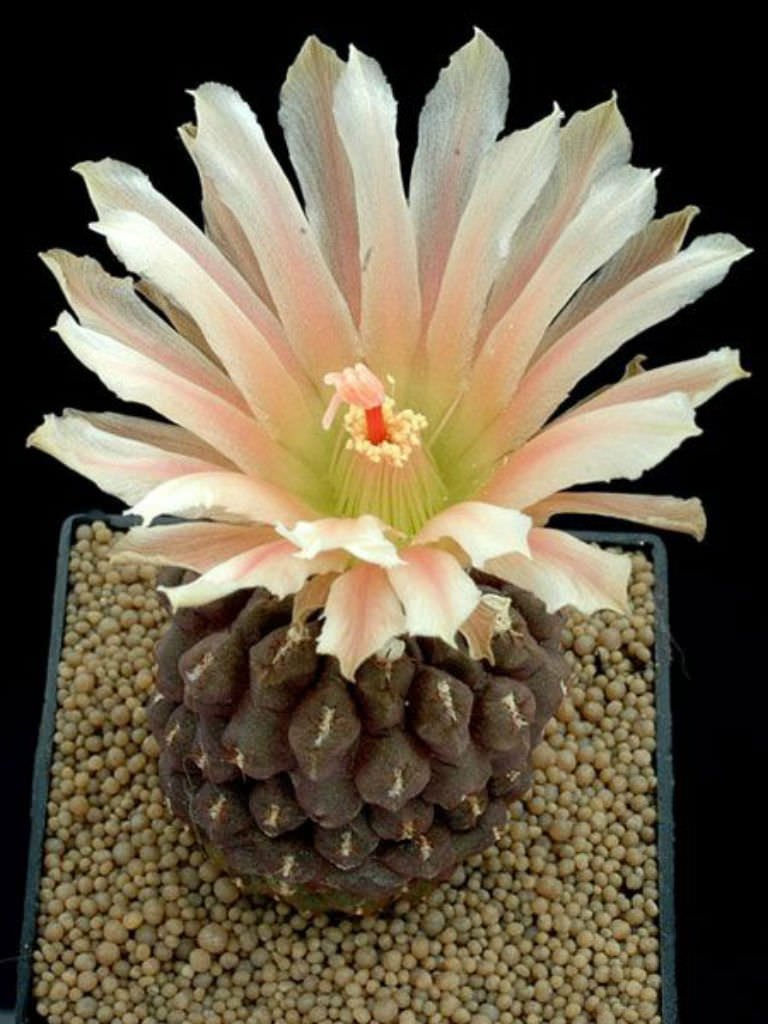
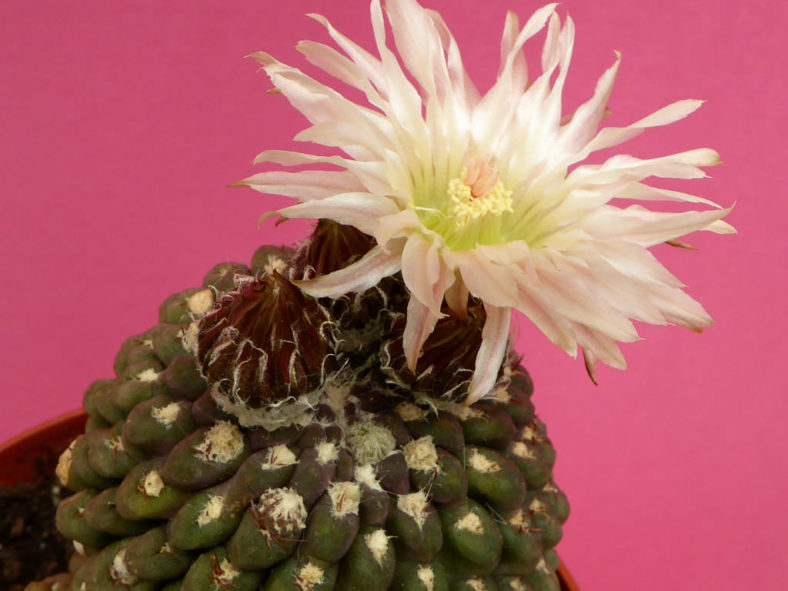
Eriosyce glabrescens, formerly known as Eriosyce napina subsp. glabrescens, is a small geophytic cactus with a solitary, spherical or flattened stem that slowly grows atop a thick underground taproot. The stem is glaucous blue, glossy green, or dark purple, with brown, olive, or grey tones, and can grow up to 2.2 inches (8 cm) tall and have an equal diameter. The spines are pale yellowish-brown or reddish-brown and do not develop black tones. Young specimens usually have between 5 and 8 spines, but as the cactus matures, the number of spines decreases, and older specimens may be nearly spineless.
The flowers are pale yellowish-red to dull pink and can reach 1.4 inches (3.5 cm) in length and 2.4 inches (6 cm) in diameter.
How to Grow and Care for Eriosyce glabrescens
Hardiness: USDA hardiness zones 9b to 11b: from 25°F (-3.9°C) to 50°F (10°C).
Eriosyce cacti require strong sun exposure to develop good spinal growth, but tolerate light shade. Therefore, some light shade may be useful on the hottest summer days.
A rich, fast-draining cactus mix is ideal. Good drainage is essential for health.
Water your Eriosyce every two weeks or slightly less often during the summer, depending on how moist the soil remains. In the winter rest period, cut watering back to once a month, or in humid areas, not at all. One of the key factors in success with these cacti is avoiding any hint of wet soil. Because their root systems are weak, they are especially prone to root rot, which can eventually kill your plant.
During the summer, regular doses of cactus fertilizer will help it grow its best. However, use diluted fertilizer for the best results.
See more at How to Grow and Care for Eriosyce.
Links
- Back to genus Eriosyce
- Succupedia: Browse succulents by Scientific Name, Common Name, Genus, Family, USDA Hardiness Zone, Origin, or cacti by Genus
Photo Gallery
Click on a photo to see a larger version.