Scientific Name
Echinocereus enneacanthus Engelm.
Synonym(s)
Echinocereus uehri
Common Name(s)
Alicoche Banana Cactus, Banana Cactus, Cob Cactus, Green Strawberry, Green Strawberry Hedgehog, Smallspine Pitaya, Pitaya, Prostrate Hedgehog, Prostrate Hedgehog Cactus, Purple Pitaya, Strawberry Cactus, Strawberry Hedgehog Cactus
Scientific Classification
Family: Cactaceae
Subfamily: Cactoideae
Tribe: Pachycereeae
Genus: Echinocereus
Etymology
The specific epithet "enneacanthus" (pronounced "en-nee-uh-KAN-thus") means "nine-spined" and likely refers to the number of spines observed in the type specimen(s).
Origin
Echinocereus enneacanthus is native to the United States (Texas and New Mexico) and Mexico (Chihuahua and Coahuila). It grows in well-drained limestone gravel uplands, grasslands, low basins, and river bottoms in desert and desert-margin lands, usually at elevations below 2,000 feet (610 m).
Description
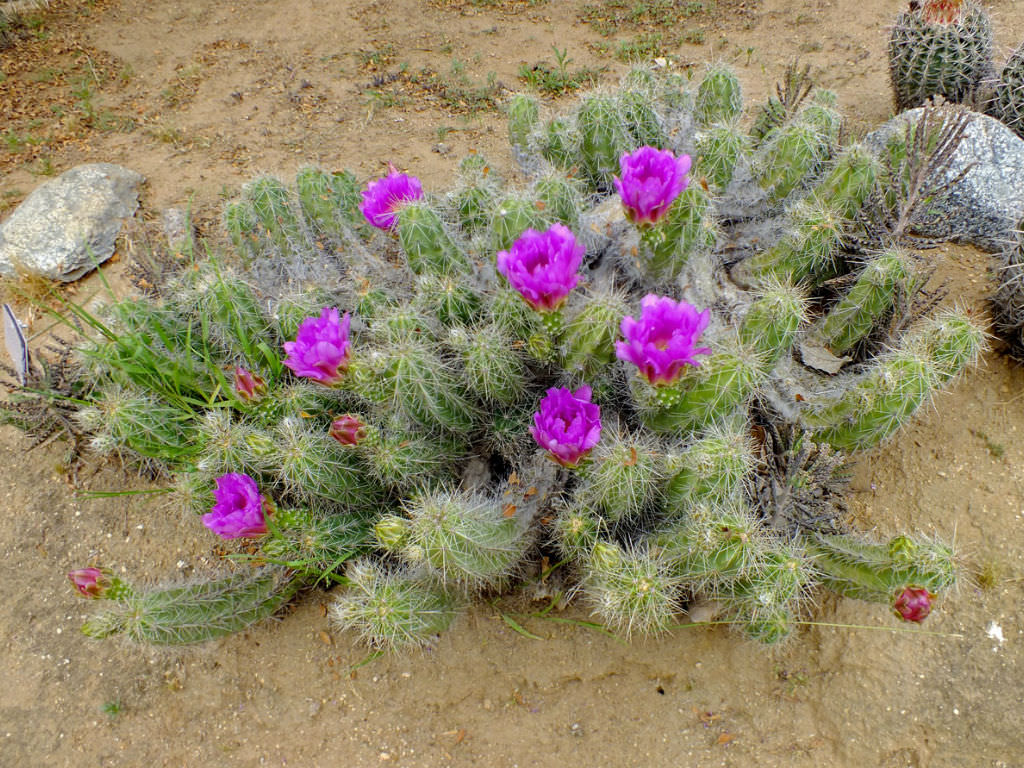
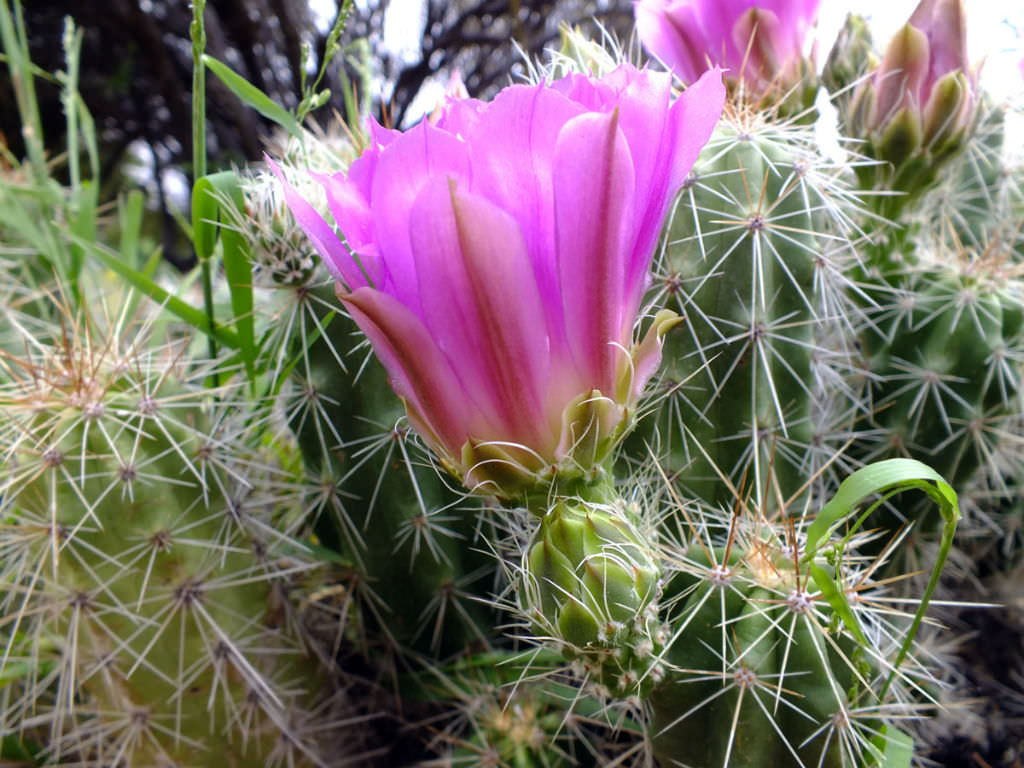
Echinocereus enneacanthus is a clump-forming cactus with decumbent, dull green stems that usually have 7 to 10 ribs lined with clusters of long spines. The stems are cylindrical and can grow up to 3.3 feet (1 m) long and 6 inches (15 cm) in diameter, but they are usually much shorter. The spines vary from white to pale tan or purplish-gray, and they are often extensively tipped or banded with brown. Each areole bears 5 to 10 radial and 1 to 5 central spines. The radial spines can grow up to 1.4 feet (3.5 cm) long, while the central spines can reach up to 1.9 inches (4.8 cm) in length.
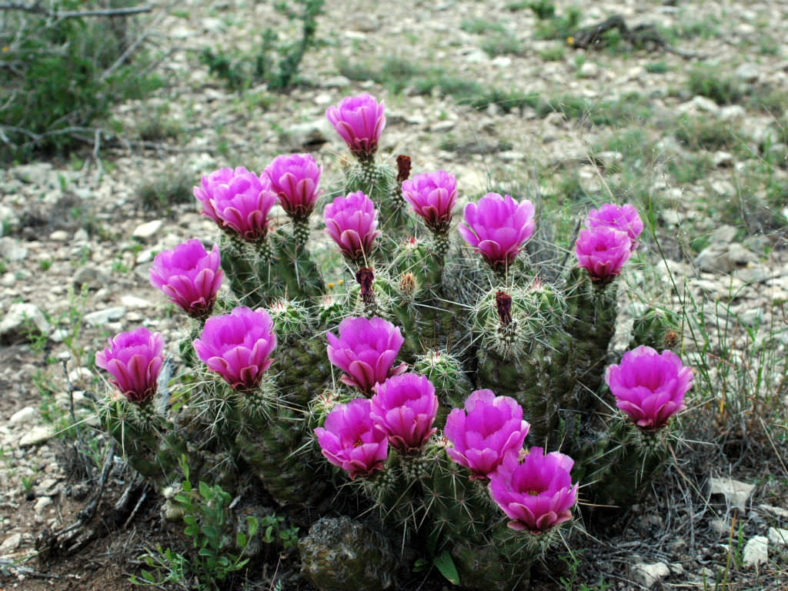
The flowers are pink or magenta, darker toward the center, and appear in early spring, opening during mid-morning. They are funnel-shaped and can measure up to 3 inches (7.5 cm) long and 3.6 inches (9 cm) in diameter. The edible spiny fruits are pale yellow-green or dull red, with white or pale pink pulp and tiny black seeds. They are spherical or egg-shaped and can grow up to 1.2 inches (3 cm) in diameter.
Varieties of Echinocereus enneacanthus
- Echinocereus enneacanthus var. brevispinus (not accepted as a separate variety and is treated as a synonym of Echinocereus enneacanthus var. carnosus)
- Echinocereus enneacanthus var. carnosus
- Echinocereus enneacanthus var. enneacanthus
How to Grow and Care for Echinocereus enneacanthus
Hardiness: USDA hardiness zone 9a to 11b: from 20°F (-6.7°C) to 50°F (10°C).
If you can grow other globucactictus successfully, you can most likely grow Echinocereus well. One of the key factors in success with these is avoiding any hint of wet soil. Because their root systems are weak, they are especially prone to root rot, which can eventually kill your plant. Otherwise, they thrive on a program of intense light, little water, and a steady diet of light fertilizer. Echinocereus is vulnerable to mealybugs and aphids.
Echinocereus are slow-growing cacti that should only need repotting every other year or so. You can delay repotting by removing plantlets and potting them in their own pots. When repotting a cactus, remove it from its pot and remove any clumped soil. These plants tend to be shallow-rooted with weak root systems, so take care not to damage their roots.
See more at How to Grow and Care for Echinocereus.
Links
- Back to genus Echinocereus
- Succupedia: Browse succulents by Scientific Name, Common Name, Genus, Family, USDA Hardiness Zone, Origin, or cacti by Genus
Photo Gallery
Click on a photo to see a larger version.