Scientific Name
Echidnopsis cereiformis Hook.f.
Synonym(s)
Ceropegia cereiformis, Stapelia cylindrica
Scientific Classification
Family: Apocynaceae
Subfamily: Asclepiadoideae
Tribe: Stapeliae
Genus: Echidnopsis
Etymology
The specific epithet "cereiformis" (pronounced "ker-ee-IF-for-miss") means "Cereus-shaped; having the form of a Cereus" and refers to the resemblance of this species to the members of the genus Cereus.
Origin
Echidnopsis cereiformis is native to Sudan, Ethiopia, Eritrea, and Yemen.
Description
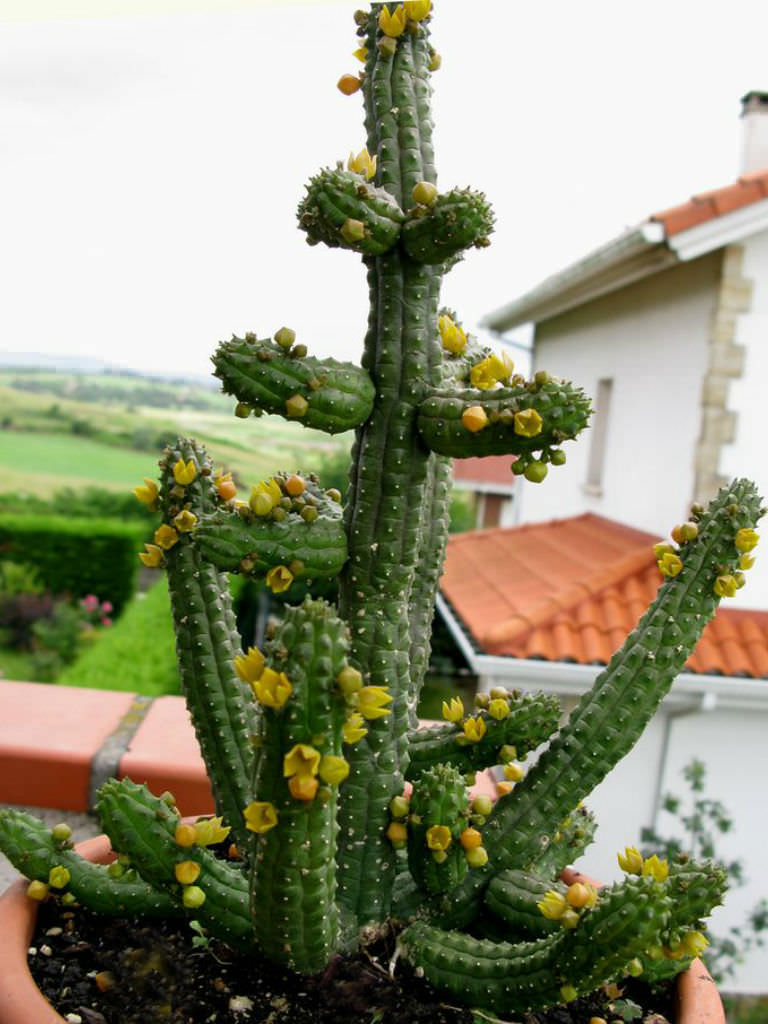
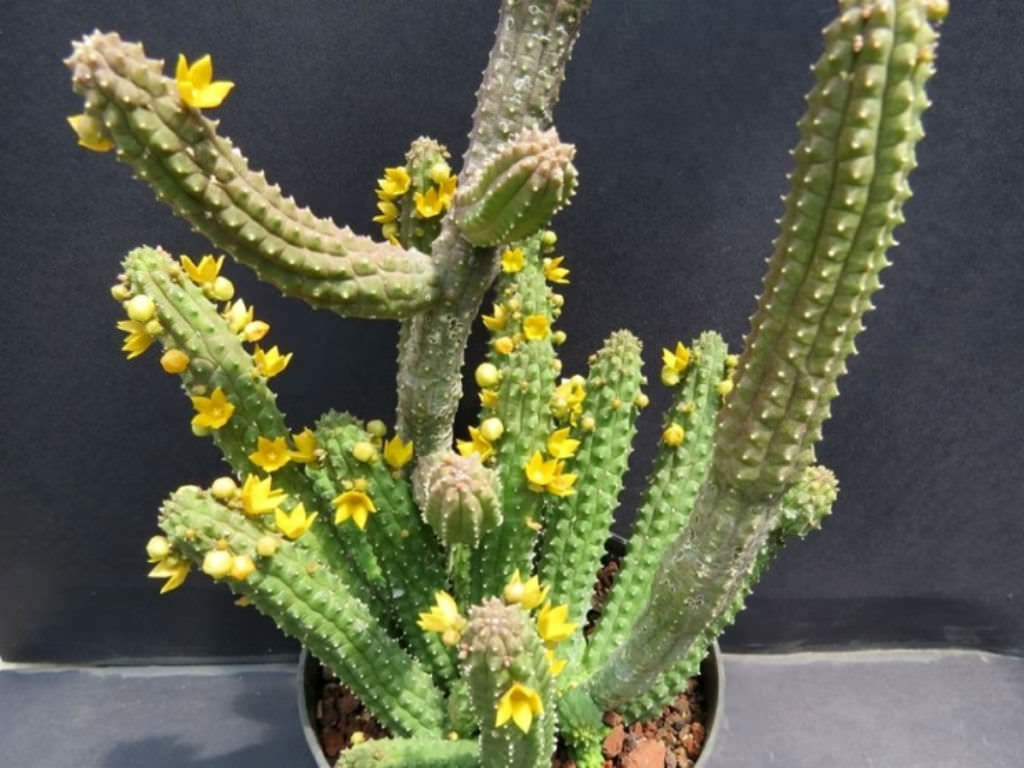
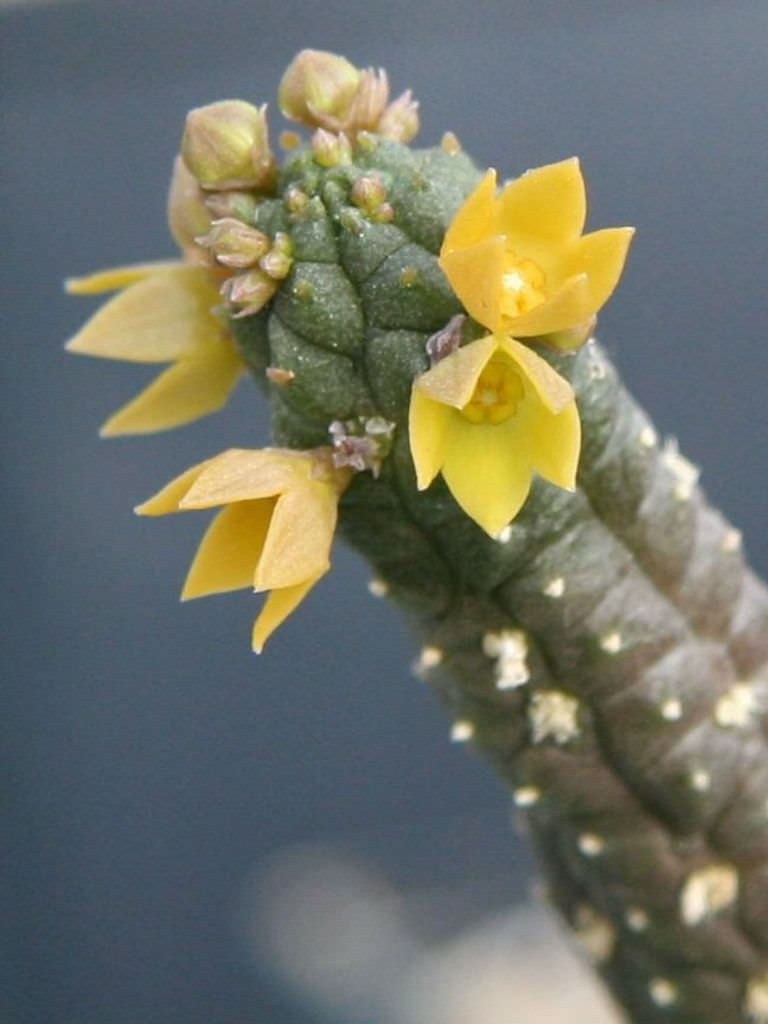
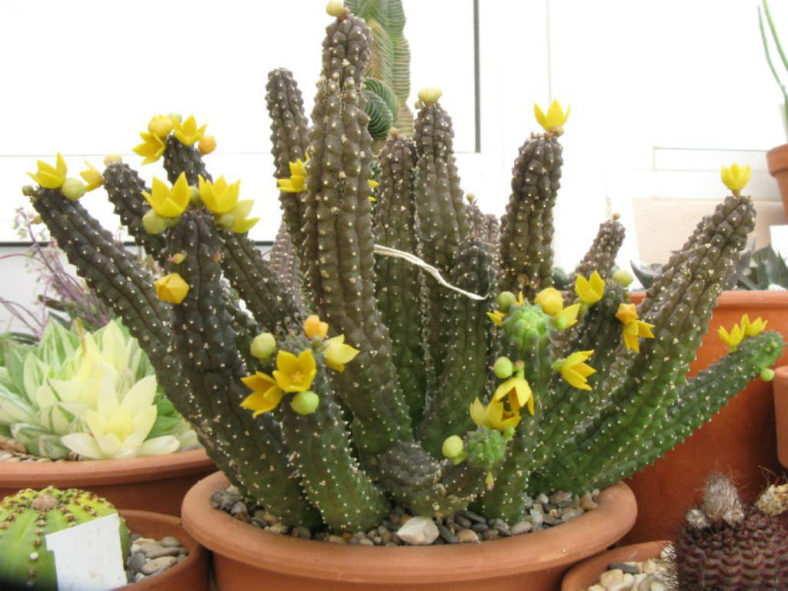
Echidnopsis cereiformis is a small succulent with cylindrical stems that have 6 to 10, usually 8 ribs lined with slightly prominent, more or less hexagonal tubercles. The stems grow erect at first, becoming prostrate with age, typically up to 12 inches (30 cm) long, sometimes up to 24 inches (60 cm). They range from green to dull dark green, brownish-green, or reddish. Each tubercle has a leaf rudiment at the tip, which soon dries out.
In the fall, the plant produces lovely, bell-shaped, usually yellow-to-orange, sometimes brownish or brownish-purple flowers along the stems, mainly near the tips.
Forms of Echidnopsis cereiformis
- Echidnopsis cereiformis var. brunnea (not accepted as a separate variety and is treated as a synonym of Echidnopsis cereiformis)
How to Grow and Care for Echidnopsis cereiformis
Hardiness: USDA hardiness zone 10a to 11b: from 30°F (-1.1°C) to 50°F (10°C).
Stapeliads are relatively easy to grow. However, they should be treated as outdoor plants as they will easily rot indoors and cannot flower without exposure to outdoor temperature fluctuations. They should be grown under cover so that watering can be controlled. They require a reasonable amount of sunlight to promote flowering and maintain a well-shaped plant. Very shady positions will produce very poor flowering. Stapeliads come from climates where they survive extremely high summer temperatures, so most growth occurs in spring and autumn, with flowering in fall as the weather starts to cool down. Water in moderation when needed during the growing season, ensuring the soil is fairly dry between waterings. Do not water between November 1 and March 1.
The easiest and best way to propagate Stapeliads is from stem cuttings, which can be taken year-round. Seed is also a method of propagation.
See more at How to Grow and Care for Stapeliads.
Links
- Back to genus Echidnopsis
- Succupedia: Browse succulents by Scientific Name, Common Name, Genus, Family, USDA Hardiness Zone, Origin, or cacti by Genus
Photo Gallery
Click on a photo to see a larger version.