Scientific Name
Echeveria secunda Booth ex Lindl.
Synonym(s)
Cotyledon secunda, Echeveria glauca, Echeveria pumila
Common Name(s)
Blue Echeveria, Old Hens and Chicks, Hens and Chicks, Glaucous Echeveria
Scientific Classification
Family: Crassulaceae
Subfamily: Sempervivoideae
Tribe: Sedeae
Genus: Echeveria
Etymology
The specific epithet "secunda" (pronounced "se-KUN-duh") means "secund; arranged on one side only" and refers to the flowers of this species, which are arranged on one side of the flower stalk.
Origin
Echeveria secunda is native to Mexico. It usually grows on lava in Durango, San Luis Potosi, Guanajuato, Queretaro, Michoacan, Hidalgo, Mexico City, Tlaxcala, Morelos, Puebla, and Oaxaca at elevations above 6,560 feet (2,000 m).
Description
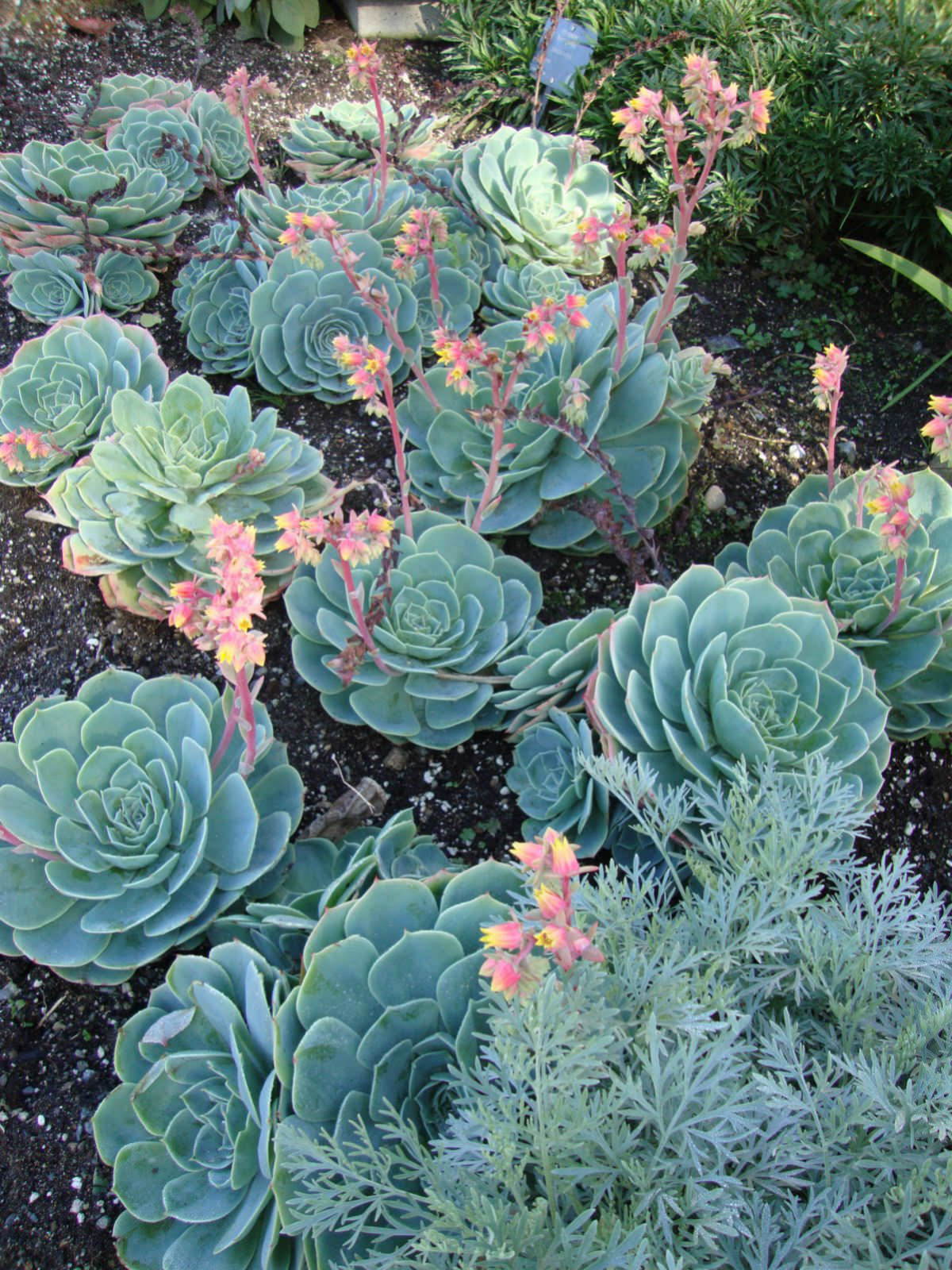
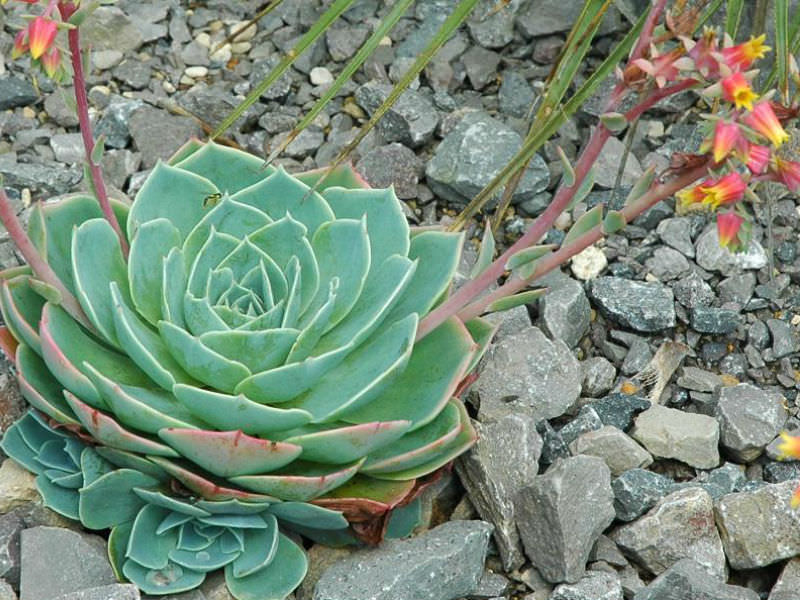
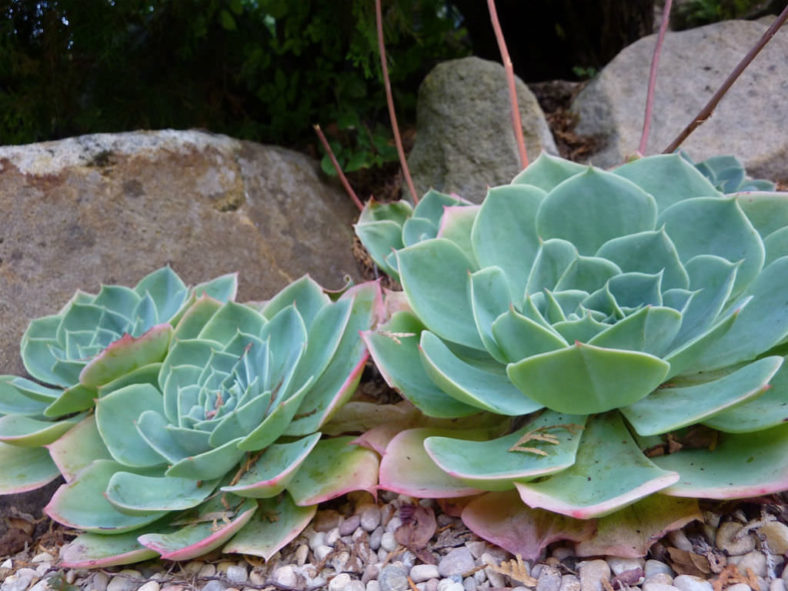
Echeveria secunda is a succulent plant that forms tight, short-stemmed rosettes of pale bluish-green leaves with a fine powdery coating. It is a highly variable species with several forms that differ only slightly in leaf size and shape, degree of glaucousness, and flower size and shape. The rosettes can grow up to 6 inches (15 cm) in diameter and produce offsets, forming attractive clumps over time. The leaves are thick, fleshy, spoon-shaped, and keeled, measuring up to 3.2 inches (8 cm) long and 1.8 inches (4.5 cm) wide. They have edges and tips adorned with a hint of pink, red, or brown, which is more conspicuous in winter.
The bell-shaped flowers can reach a length of 0.5 inches (1.3 cm) and a diameter of 0.3 inches (0.8 cm). They are orange-red to deep pink with yellow tips and appear in late spring on arching stalks that can grow up to 16 inches (40 cm) long.
Hybrids of Echeveria secunda
How to Grow and Care for Echeveria secunda
Hardiness: USDA hardiness zones 9b to 11b: from 25°F (-3.9°C) to 50°F (10°C).
Most common Echeveria species are not complicated succulents to grow, provided you follow a few basic rules. First, be careful never to let water sit in the rosette, as it can cause rot or fungal diseases that will kill the plant. Additionally, remove dead leaves from the bottom of the plant as it grows. These dead leaves provide a haven for pests, and Echeverias are susceptible to mealybugs. Finally, as with all succulents, careful watering habits and plenty of light will help ensure success.
Most Echeveria can be easily propagated from leaf cuttings, although a few are better propagated from seeds or stem cuttings. To propagate a leaf cutting, place the individual leaf in a succulent or cacti mix and cover the dish until the new plant sprouts.
Repot as needed, preferably during the warm season. To repot a succulent, ensure the soil is dry, then gently remove the pot. Gently remove the old soil from the roots, being careful to remove any rotted or dead roots. Treat any cuts with a fungicide.
See more at How to Grow and Care for Echeveria.
Links
- Back to genus Echeveria
- Succupedia: Browse succulents by Scientific Name, Common Name, Genus, Family, USDA Hardiness Zone, Origin, or cacti by Genus
Photo Gallery
Click on a photo to see a larger version.