Scientific Name
Echeveria agavoides 'Ebony'
Common Name(s)
Molded Wax, Molded Wax Agave, Molded Wax Plant, Wax Agave, Wax Echeveria
Scientific Classification
Family: Crassulaceae
Subfamily: Sempervivoideae
Tribe: Sedeae
Genus: Echeveria
Etymology
The generic name "Echeveria" (pronounced "ech-eh-VER-ee-a") honors Atanasio Echeverría y Godoy🡕 (fl.1771–1803), an 18th-century botanical artist and naturalist from New Spain who trained at the Royal Art Academy in Mexico City.
The specific epithet "agavoides" (pronounced "ah-gav-OH-id-eez") means "Agave-like; resembling Agave" and refers to the likeness of the species to the members of the genus Agave.
The cultivar epithet 'Ebony' likely refers to the dark, purplish-brown, sometimes almost black-colored leaf margins.
Description
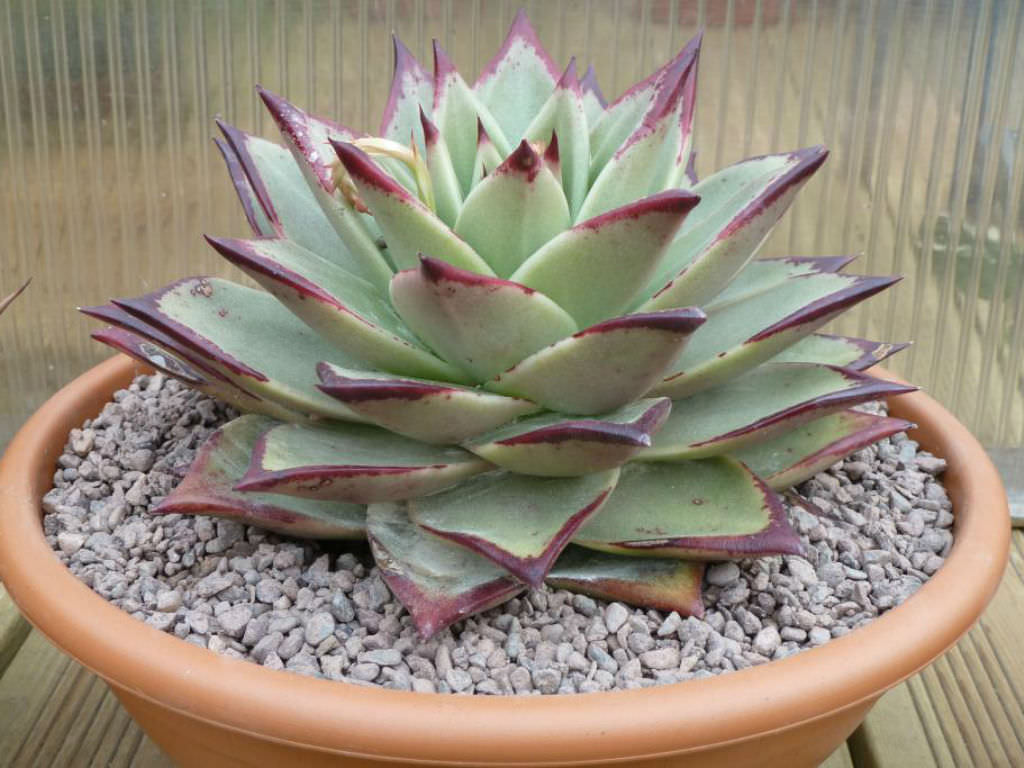
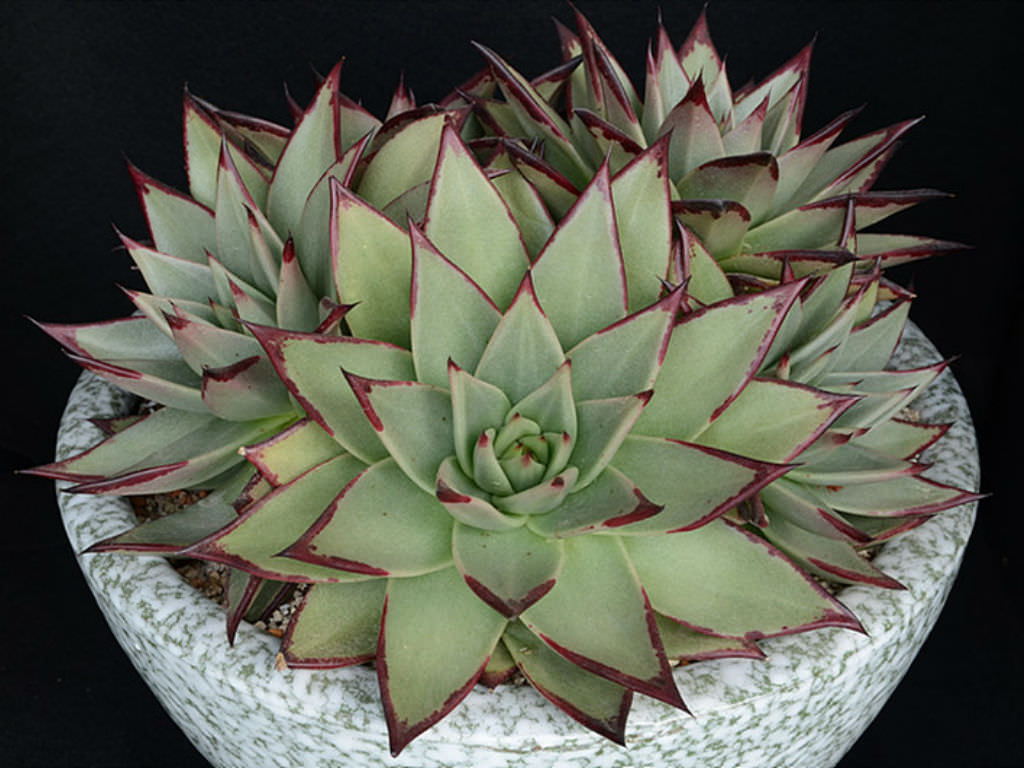
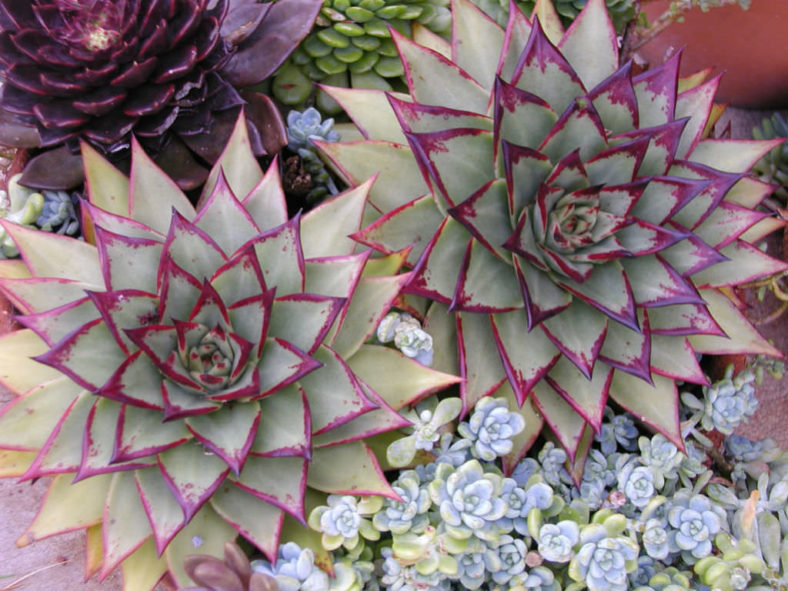
Echeveria agavoides 'Ebony' is a stunning succulent that forms a tight, usually solitary rosette of gray-green leaves with dark, purplish-brown margins. The rosette can reach a diameter of 6 inches (15 cm) and then reduce in size as it eventually starts to offset. The leaves are ovate-deltoid and taper to a rigid, spiny point.
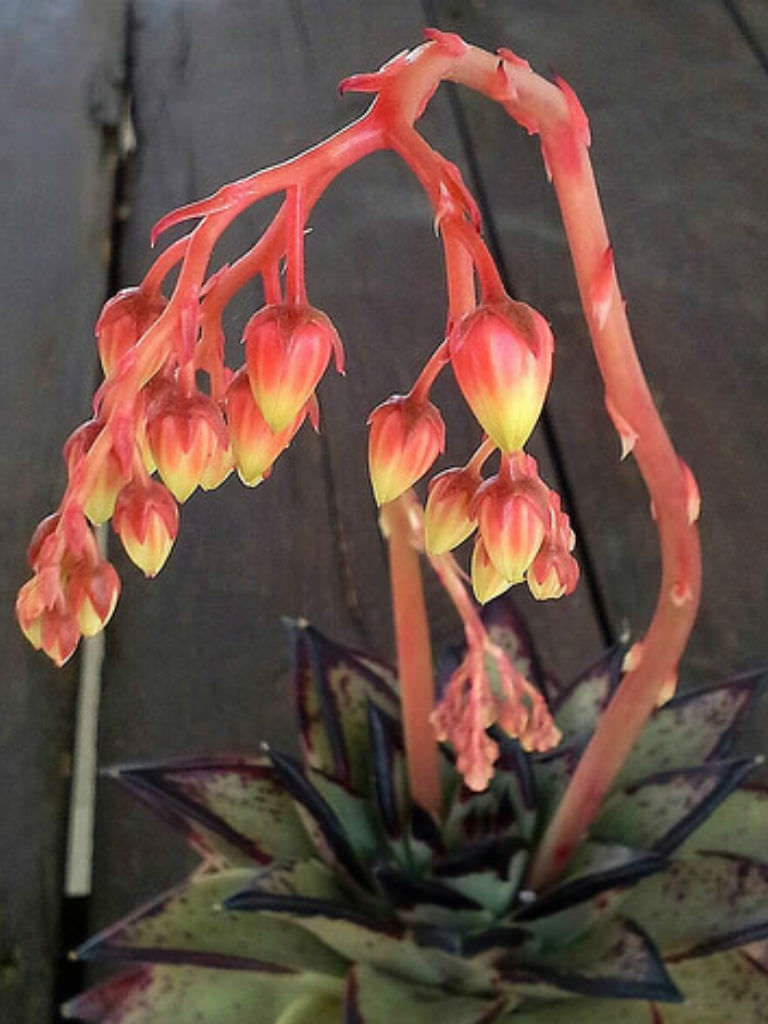
The flowers are pinkish-red with yellow tips and appear in summer in arching clusters on stalks that can grow up to 10 inches (25 cm) tall.
Origin
Echeveria agavoides 'Ebony' is a cultivar of Echeveria agavoides. It was first distributed by the International Succulent Introduction of the Huntington Botanical Gardens as ISI 92-44, from a cutting taken from plants at the Huntington Botanical Gardens (HBG 62638), originally wild-collected in Coahuila, Mexico, by John Trager and Myron Kimnach.
Hybrids of Echeveria agavoides 'Ebony'
How to Grow and Care for Echeveria agavoides 'Ebony'
Hardiness: USDA hardiness zones 9b to 11b: from 25°F (-3.9°C) to 50°F (10°C).
Most common Echeveria species are not complicated succulents to grow, provided you follow a few basic rules. First, never let water sit in the rosette, as it can cause rot or fungal diseases that may even kill the plant. Additionally, remove dead leaves from the bottom of the plant as it grows. These dead leaves provide a haven for pests, and Echeverias are susceptible to mealybugs. Finally, as with all succulents, maintaining careful watering habits and providing ample light will help ensure success.
Repot as needed, preferably during the warm season. To repot a succulent, ensure the soil is dry, then gently remove the succulent from its pot. Knock away the old soil from the roots, removing any rotted or dead roots. Treat any cuts with a fungicide.
Most Echeverias can be easily propagated from leaf cuttings, although some are better propagated from seeds or stem cuttings. To propagate a leaf cutting, place the leaf in succulent potting soil and cover the dish until the new plant sprouts.
Learn more at How to Grow and Care for Echeveria.
Links
- Back to genus Echeveria
- Succupedia: Browse succulents by Scientific Name, Common Name, Genus, Family, USDA Hardiness Zone, Origin, or cacti by Genus
Photo Gallery
Click on a photo to see a larger version.