Scientific Name
Dracaena trifasciata 'Laurentii'
Common Name(s)
Striped Mother-in-Law's Tongue, Striped Snake Plant, Variegated Snake Plant
Synonym(s)
Sansevieria laurentii, Sansevieria trifasciata var. laurentii, Sansevieria zeylanica var. laurentii, Sansevieria trifasciata 'Laurentii'
Scientific Classification
Family: Asparagaceae
Subfamily: Nolinoideae
Genus: Dracaena
Etymology
The cultivar name "Laurentii" (pronounced "law-REN-tee-eye") honors Emile Laurent (1861-1904), a Belgian botanist and plant collector in tropical Africa.
Origin
Dracaena trifasciata 'Laurentii' is a popular cultivar of Dracaena trifasciata, believed to have evolved in its native habitat. The first shoots of this plant arrived from Africa in 1900 in the backpack of Emile Laurent. He donated one shoot to the Royal Gardens, while the other he sent to the National Botanic Garden in Meise. The director of the Botanic Garden saw potential in the plant and began cultivating it for sale, leading to its presence in nearly every Belgian living room.
Description
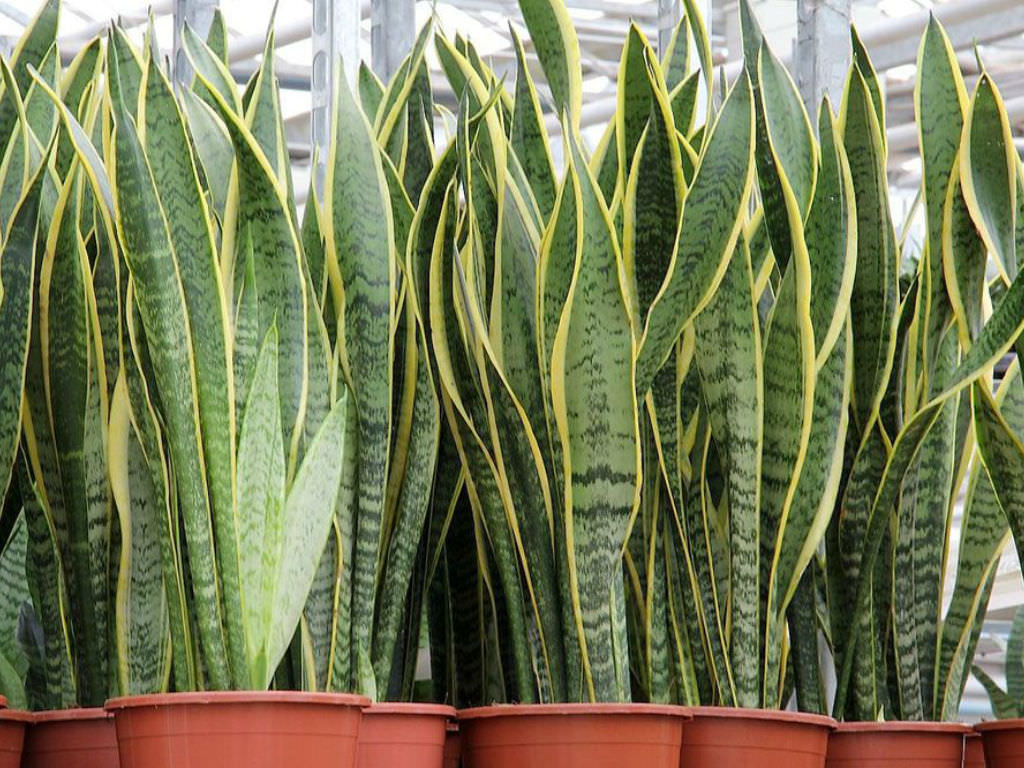
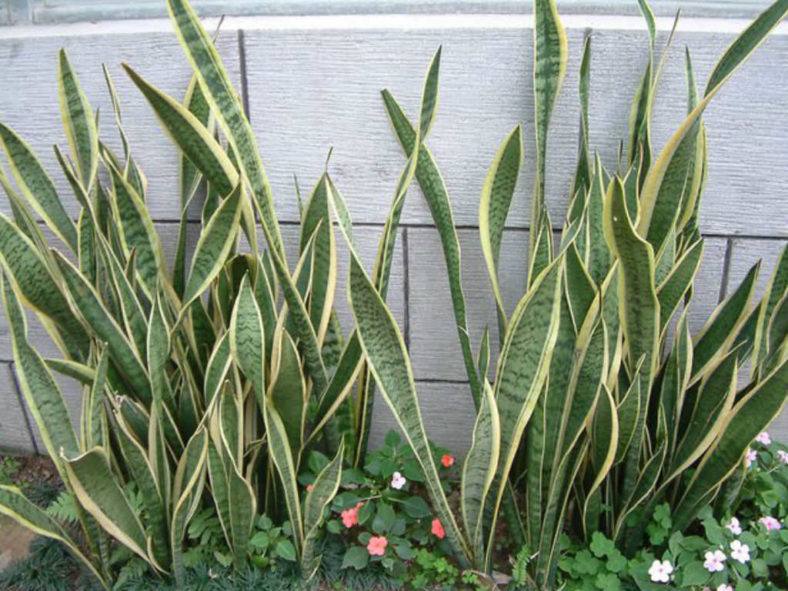
Dracaena trifasciata 'Laurentii', formerly known as Sansevieria trifasciata 'Laurentii', is a slow-growing succulent that forms a tight clump of many erect, strap-shaped, sharply pointed, dark green leaves with silvery-green, zig-zag crossbanding and broad, golden yellow bands along its margins. It spreads by creeping rhizomes that are sometimes above ground and occasionally underground. The leaves grow from a basal rosette. They can grow up to 4 feet (1.2 m) tall, but are usually about 2 feet (60 cm), and 2.4 inches (6 cm) wide.
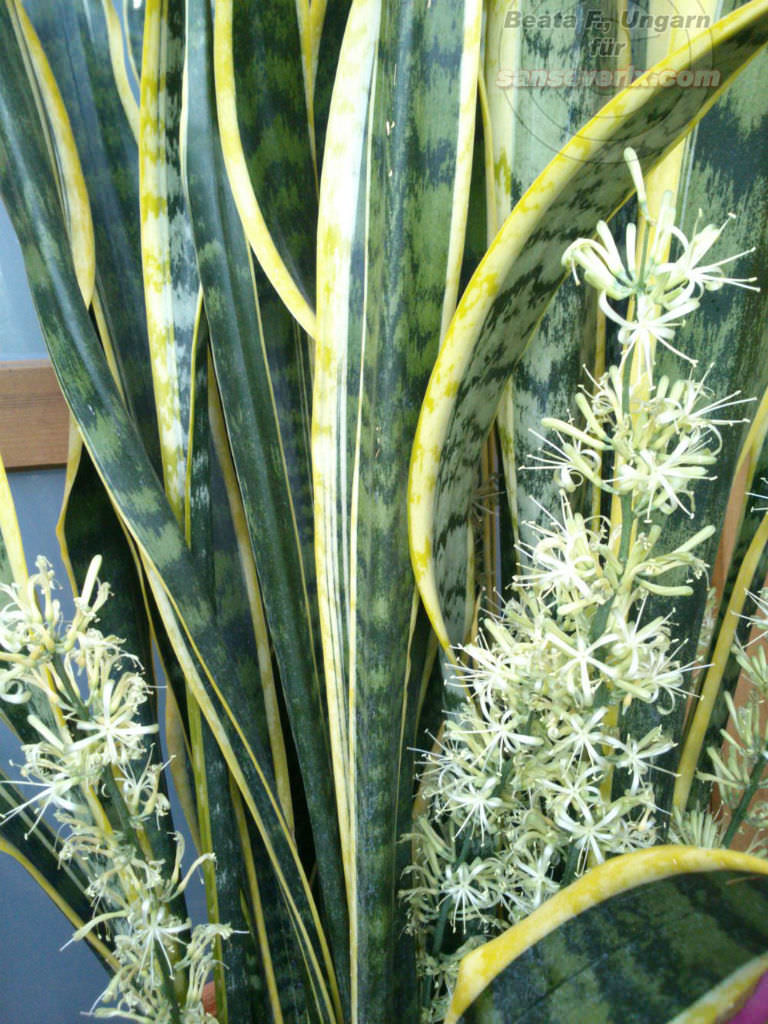
The fragrant flowers are tubular, greenish-white, and appear in erect racemes within the foliage in spring. They rarely appear on indoor plants.
How to Grow and Care for Dracaena trifasciata 'Laurentii'
Hardiness: USDA hardiness zones 10a to 11b: from 30°F (-1.1°C) to 50°F (10°C).
Place Sansevierias in moderately bright or filtered light. Good locations include a spot in front of a north-facing window or the front of a bright, sunny window covered by a sheer curtain. Although the plant tolerates low light, bright light brings out the colors in the leaves. However, intense light may cause the leaf edges to turn yellow.
Allow the soil to dry completely before watering, and water deeply until water drips through the drainage hole. Allow the pot to drain, and discard the water in the saucer. Never allow the soil to become soggy; never let the pot stand in water. Water sparingly throughout the winter. Like most succulent plants that store water in their leaves, Sansevieria rots quickly in excessively wet soil.
Place the Sansevieria at an average room temperature. Protect the plant from drafts and cold temperatures, as it is damaged at temperatures below 50°F (10°C).
Feed the plant once every three weeks throughout the summer. Use a general-purpose fertilizer for houseplants diluted to one-half the strength suggested on the container. Sansevieria is a light feeder, and too much fertilizer can cause the leaves to fall over.
See more at How to Grow and Care for Sansevieria.
Links
- Back to genus Dracaena
- Succupedia: Browse succulents by Scientific Name, Common Name, Genus, Family, USDA Hardiness Zone, Origin, or cacti by Genus
Photo Gallery
Click on a photo to see a larger version.