

Crassula ovata 'Crosby's Compact', commonly known as Dwarf Jade Plant, is a dwarf cultivar of Crassula ovata. It is a popular, slow-growing succulent shrub with small, green leaves that turn vibrant red in high light or cool, dry conditions.
Taxonomy of Crassula ovata 'Crosby's Compact'
Scientific Name
Crassula ovata 'Crosby's Compact'
Synonym(s)
Crassula argentea 'Crosby's Compact', Crassula ovata 'Crosby's Dwarf'
Common Name(s)
Dwarf Jade Plant
Scientific Classification
Family: Crassulaceae
Subfamily: Crassuloideae
Genus: Crassula
Etymology
The generic name "Crassula" (pronounced "KRASS-oo-la") means "somewhat thick" and refers to the thick, fleshy, and succulent nature of the leaves and stems that are characteristic of nearly every species in this genus.
The specific epithet "ovata" (pronounced "oh-VAY-tuh") means "ovate; egg-shaped (broader at the base)" and refers to the shape of the leaves of this species.
The cultivar epithet 'Crosby's Compact' honors Franklin (Frank) D. Crosby, a succulent grower who, alongside Ed (Emerald) Hummel, selected this cultivar in the 1960s at his Cactus Ranch nursery in Malibu, California, United States. The term "Compact" refers to the unique dwarf growth habit of this cultivar.
Origin of Crassula ovata 'Crosby's Compact'
Crassula ovata 'Crosby's Compact' is an attractive dwarf cultivar of Crassula ovata. It is one of many selected by Ed (Emerald) Hummel and Franklin (Frank) D. Crosby at Crosby's Cactus Ranch nursery in Malibu, California, United States.
Description of Crassula ovata 'Crosby's Compact'
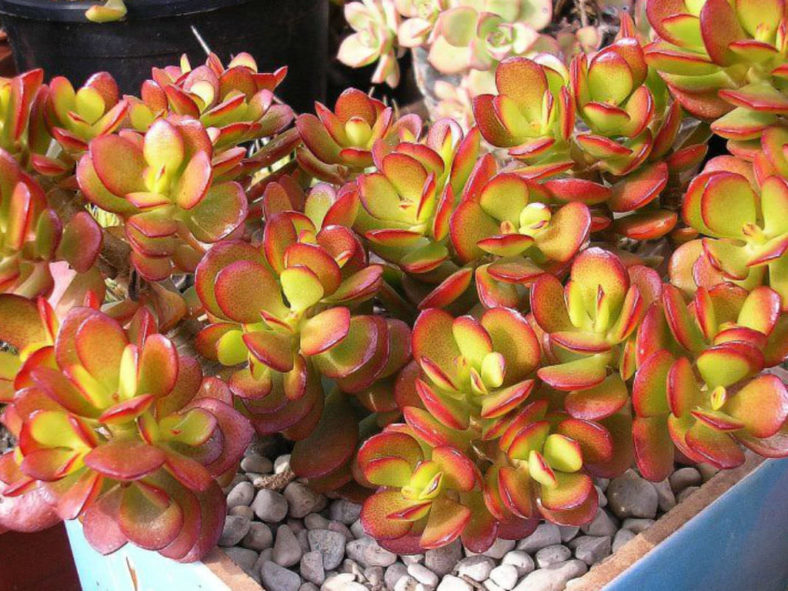
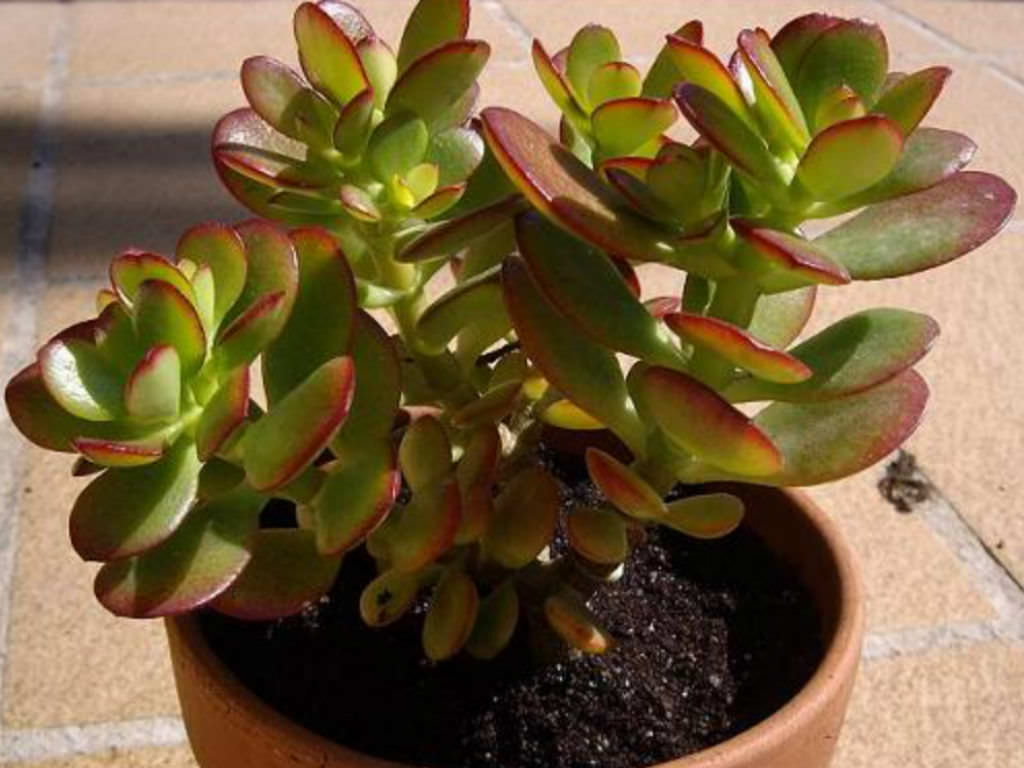
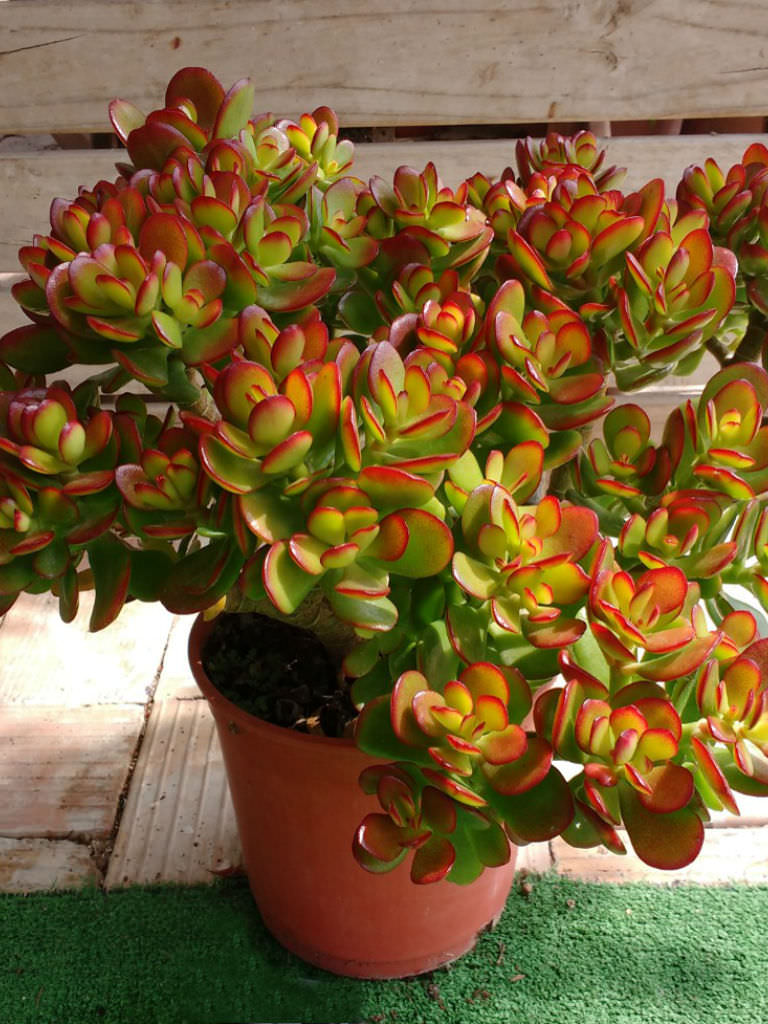
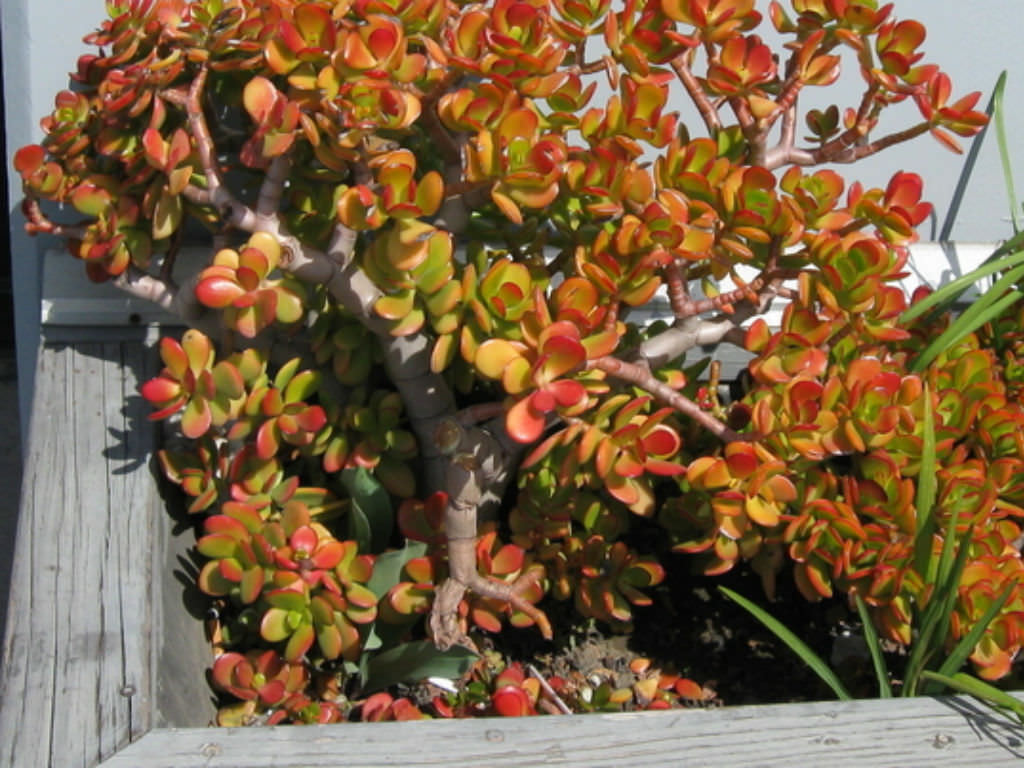
Crassula ovata 'Crosby's Compact' is a highly branched succulent shrub with thick stems bearing attractive, green leaves with red margins. It slowly grows and can reach a height of 3 feet (90 cm). The leaves are obovate, measuring up to 1 inch (2.5 cm) long. The new leaves can be suffused entirely with red tones.
The flowers are small, white, star-shaped, and appear in clusters at the tips of the branches in late fall and winter.
How to Grow and Care for Crassula ovata 'Crosby's Compact'
Light: This plant needs about 4 to 6 hours of direct sunlight daily to thrive. While it can survive in partial shade, it requires direct sunlight for flowering. If you keep it indoors, place it in a bright spot.
Soil: For optimal growth, use well-draining soil when planting Crassula ovata 'Crosby's Compact'. You can use commercial potting soil mixes specifically designed for succulents, or make your own.
Hardiness: The plant can tolerate a wide range of temperatures and may even survive light frosts. However, prolonged cold is usually fatal. Crassula ovata 'Crosby's Compact' grows best in USDA Plant Hardiness Zones 10a to 11b, with average minimum winter temperatures ranging from 30°F to 50°F (-1.1°C to 10°C).
Watering: Proper watering is most important for this plant. Although it does not need frequent watering, during the growing season, it requires deep watering when the soil is dry. It needs little water in the summer and even less in winter when it is semi-dormant.
Fertilizing: Crassula ovata 'Crosby's Compact' does not require much fertilizer, as it is a slow-growing plant. However, it can benefit from a small amount of organic fertilizer in mid-spring, when it starts to grow actively.
Repotting: This plant can be left in its current pot, as it does not mind being root-bound. However, it is best to repot it every two to three years or when it becomes top-heavy. The ideal time to repot is in the spring, when new growth begins.
Propagation: Generally, Crassula ovata 'Crosby's Compact' is propagated by stem cuttings or leaves, but can also be started from seeds. The fastest way to get a decent-sized plant is by using a stem cutting. Always take cuttings during the growing season. The best time to sow the seeds is in spring or summer.
Learn more at How to Grow and Care for Crassula.
Toxicity of Crassula ovata 'Crosby's Compact'
Crassula ovata has been used as a medicinal plant in some regions. However, some sources suggest that it may be toxic to cats, dogs, and horses, and mildly toxic to humans if ingested or comes into contact with the skin. These claims, however, have yet to be proven.
Links
- Back to genus Crassula
- Succupedia: Browse succulents by Scientific Name, Common Name, Genus, Family, USDA Hardiness Zone, Origin, or cacti by Genus
Photo Gallery
Click on a photo to see a larger version.
Internal Links
- Explore all plants within the genus Crassula.
- Explore all plants within the family Crassulaceae.