Scientific Name
Crassula natans Thunb.
Common Names
Floating Crassula, Floating Pigmyweed
Scientific Classification
Family: Crassulaceae
Subfamily: Crassuloideae
Genus: Crassula
Etymology
The generic name "Crassula" (pronounced "KRASS-oo-la") means "somewhat thick" and refers to the thick, fleshy, and succulent nature of the leaves and stems that are characteristic of nearly every species in this genus.
The specific epithet "natans" (pronounced "NAT-ans") means "swimming" or "floating" and refers to the growth habit of this species.
Varieties of Crassula natans
- Crassula natans var. minus
- Crassula natans var. natans
Origin of Crassula natans
Crassula natans is native to South Africa and Lesotho.
Description of Crassula natans
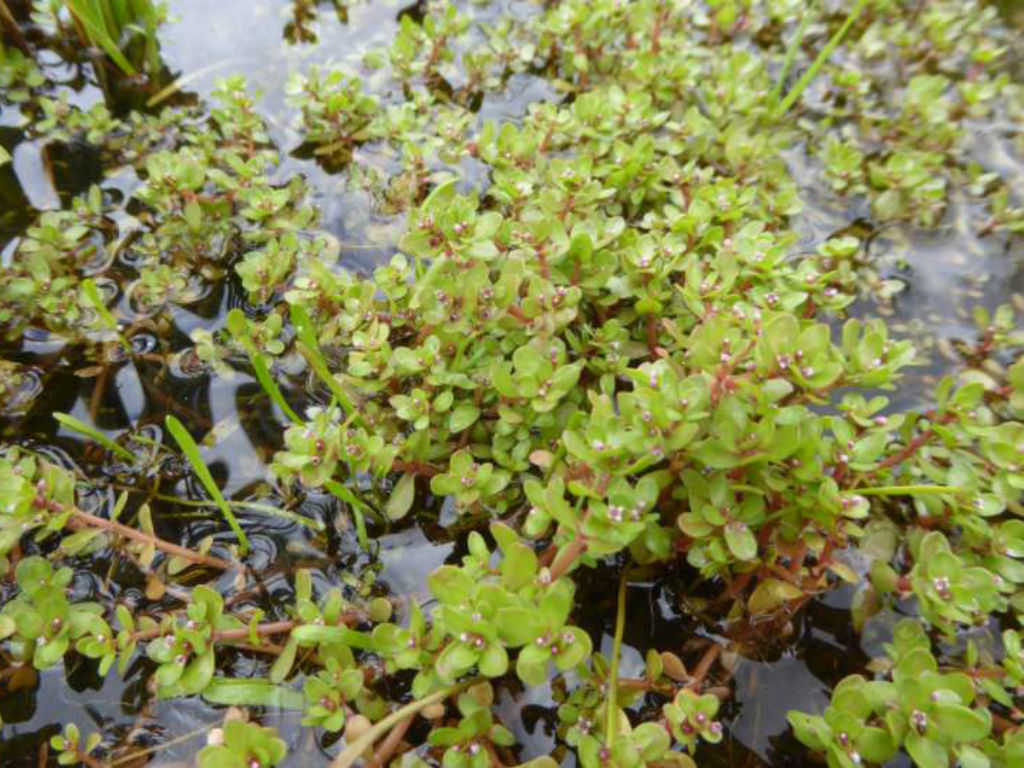
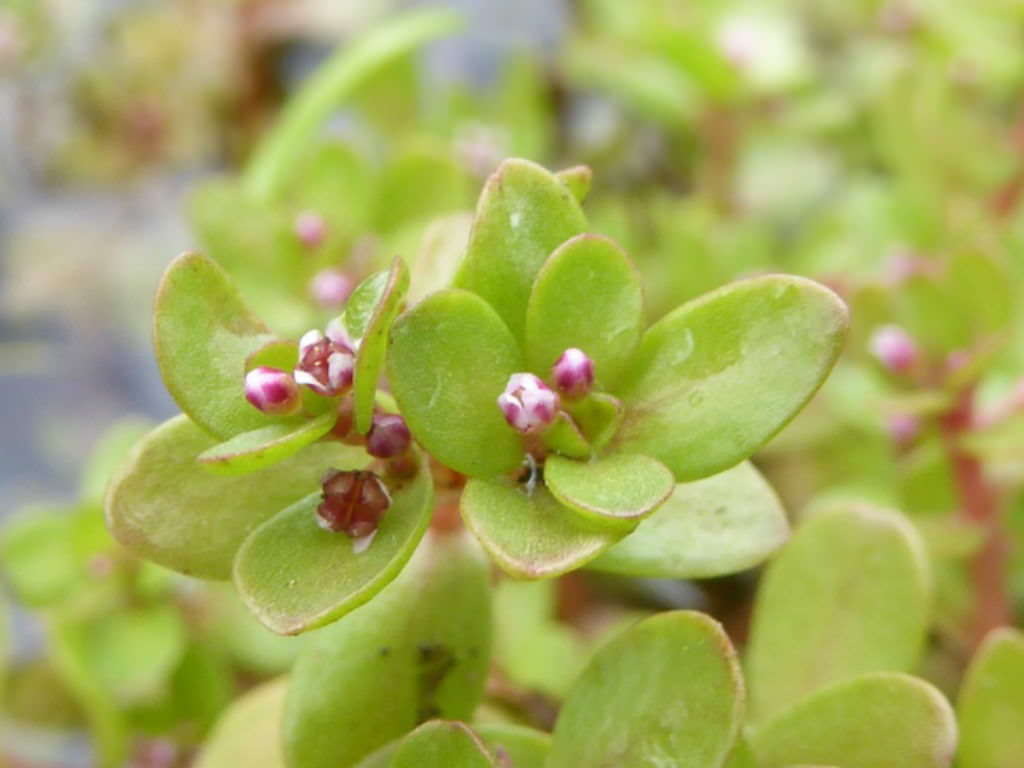
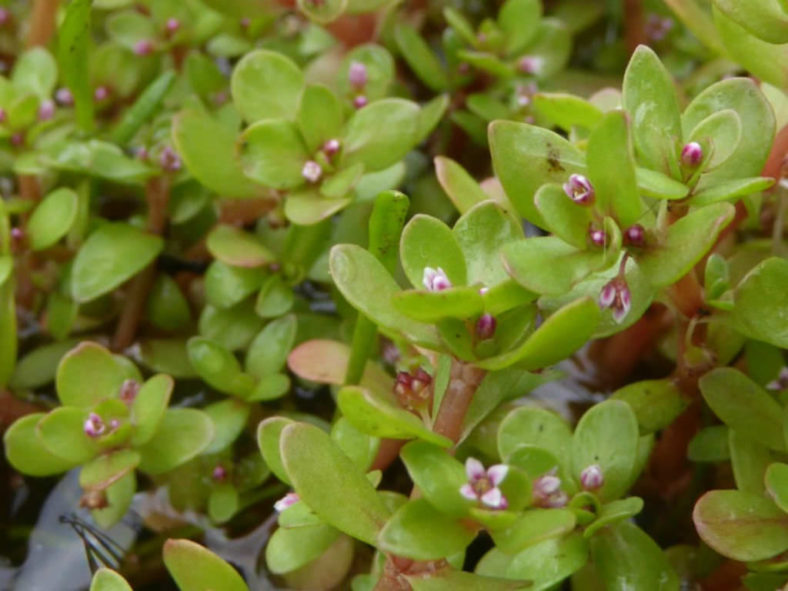
Crassula natans is a usually aquatic annual or rarely rhizomatous decumbent perennial with branches that may be erect, decumbent, or floating in the water. The branches are slender and can grow up to 10 inches (25 cm) long, but are usually much shorter. They are often multi-branched when growing in a marshy area. The leaves are green, oblanceolate to obovate, measuring up to 0.5 inches (1.2 cm) long and 0.15 inches (0.4 cm) wide.
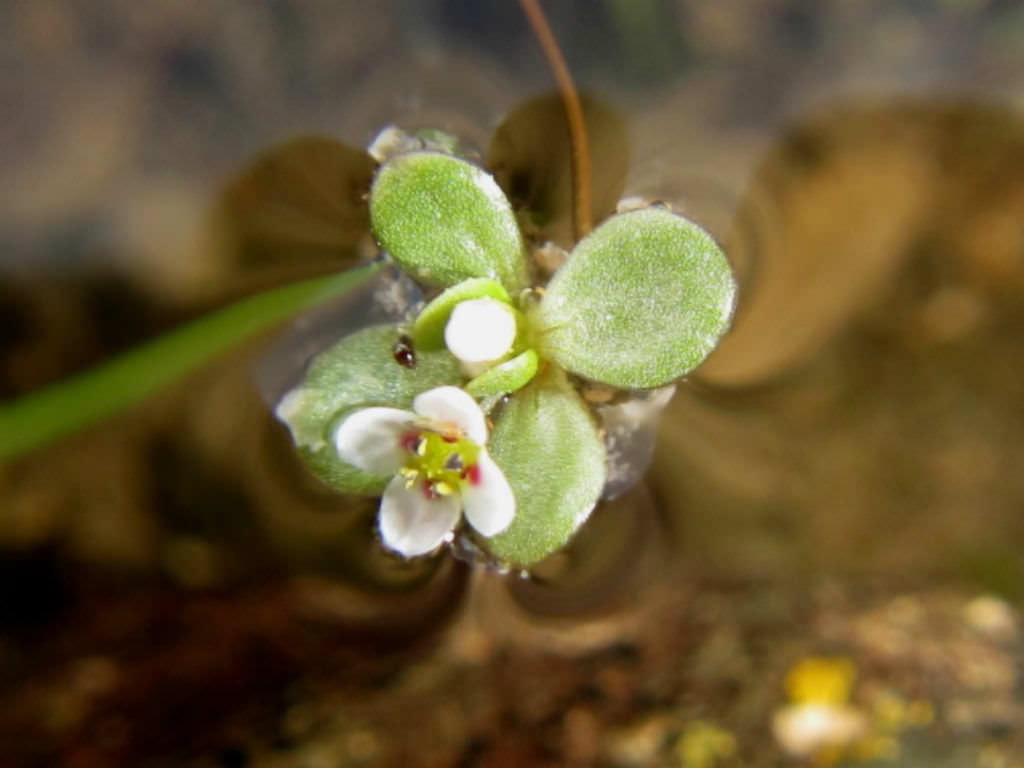
The flowers are cup-shaped, white or pinkish, and appear mostly near branch tips from summer to fall.
How to Grow and Care for Crassula natans
This Crassula is endemic to the wetlands of the Cape Fold area of the Western Cape region of South Africa. It has become naturalized in Western Australia, where it grows in wet winter depressions, gullies, and lakes in the Great Southern, Wheatbelt, South West, and Peel regions. It is also found throughout southern South Australia, New South Wales, and Victoria.
It grows in moist soil, often in clay pans and in and around shallow standing water of dams and rock pools. On moist soil, plants are often deep red, tufted, less than 2.4 inches (6 cm) tall, and with up to 3 flowers per node. When inundated, the floating branches become up to 14 inches (35 cm) long and are swollen at the base where they bear linear leaves, while the floating leaves are oblanceolate and much broader and rarely produce more than one flower per node. The floating stems are little-branched and may be unbranched in plants growing in rock pools without much organic matter.
Collect whole plants as they dry off, turning red-brown with mature fruit spikes. These will contain tiny brown seeds when rubbed with your fingers. Place the plants in a tray and leave them to dry for two weeks. Then rub the plants gently by hand or with a rubber bung to dislodge the seeds. Use a sieve to separate the unwanted material. Be very careful, as the seeds are tiny. Store the seeds with a desiccant, such as dried silica beads or dry rice, in an airtight container in a cool, dry place.
Links
- Back to genus Crassula
- Succupedia: Browse succulents by Scientific Name, Common Name, Genus, Family, USDA Hardiness Zone, Origin, or cacti by Genus
Photo Gallery
Click on a photo to see a larger version.