

Cleistocactus candelilla is a cactus that creates a thicket of erect to spreading stems, making it an excellent choice for landscaping. This species is notable for its tubular, red-violet flowers. It was first described in 1952 by Martín Cárdenas🡕 in the Cactus and Succulent Journal🡕, published by the Cactus and Succulent Society of America.
Taxonomy of Cleistocactus candelilla
Scientific Name
Cleistocactus candelilla Cárdenas
Synonym(s)
Echinopsis candelilla
Scientific Classification
Family: Cactaceae
Subfamily: Cactoideae
Tribe: Trichocereeae
Genus: Cleistocactus
Etymology
The generic name "Cleistocactus" (pronounced "Kly-stoh-KAK-tus") refers to the narrow, scarcely opening tubular flowers of the genus; thus, it may be interpreted as "the cactus with closed flowers."
The specific epithet "candelilla" (pronounced "kan-duh-LEE-luh") means "little candle" and refers to the small, colorful, tubular flowers of this species.
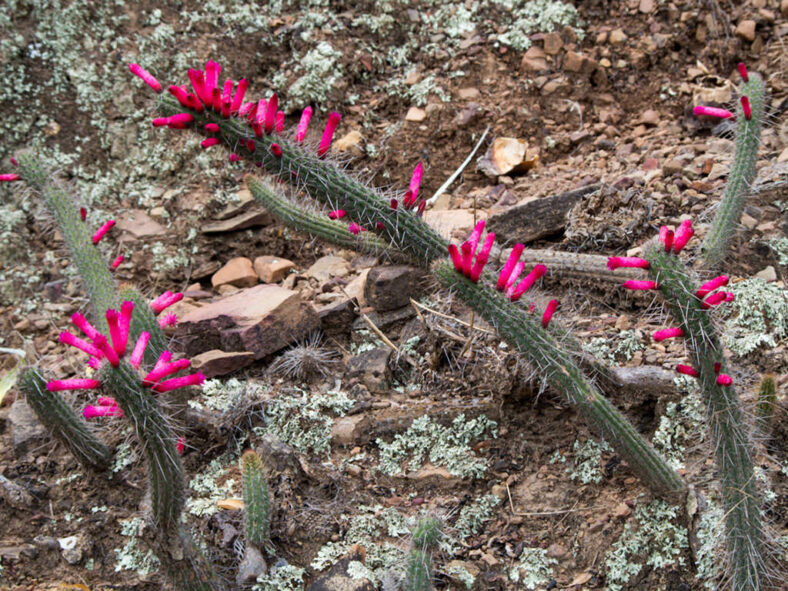
Origin of Cleistocactus candelilla
Cleistocactus candelilla is native to Bolivia, specifically in the departments of Santa Cruz, Cochabamba, and Potosí. It grows mainly in desert or dry scrub biomes at elevations ranging from 4,265 to 8,530 feet (1,300 to 2,600 m).
Description of Cleistocactus candelilla
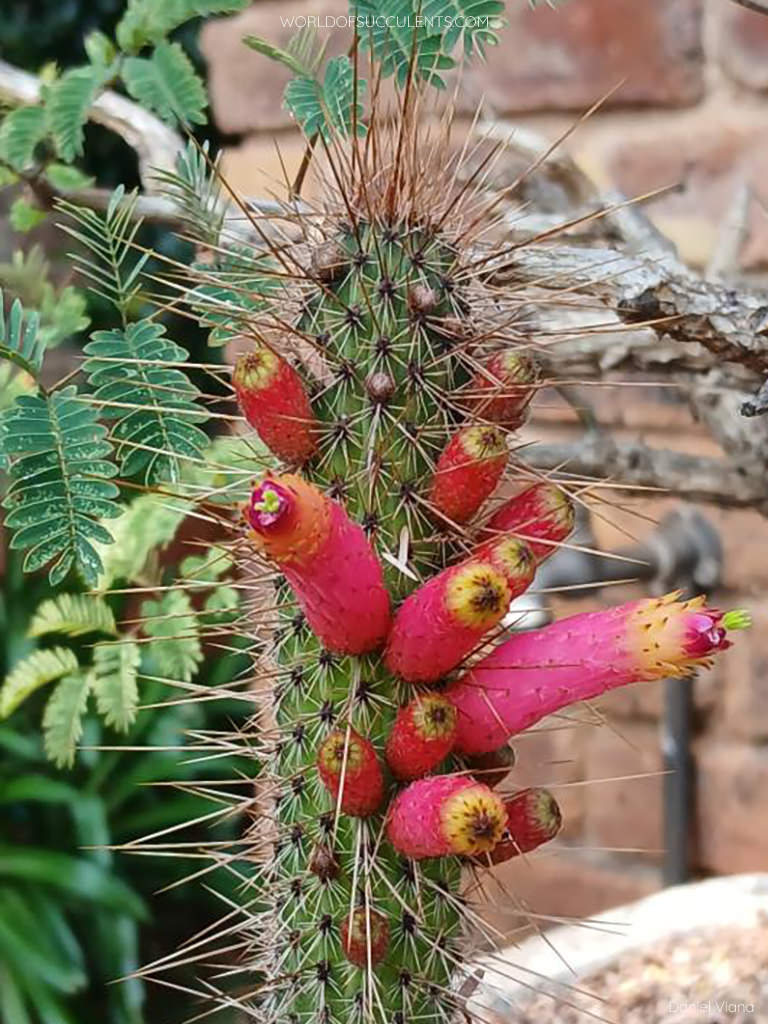
Cleistocactus candelilla is a shrubby cactus with slender, green, cylindrical stems that have 11 to 13 conspicuously furrowed ribs. It can grow up to 3.3 feet (1 m) and branches from the base. The stems are either erect or sprawling, with a diameter up to 2 inches (5 cm). The areoles, which are spaced about 0.2 inches (0.5 cm) apart, have brown felt. Each areole has 3 to 4 central spines that are slightly flattened and can reach up to 1 inch (2.5 cm) long, as well as 13 to 15 shorter radial spines that reach up to 0.2 inches (0.5 cm) long. The upper part of the spines is yellowish-brown, while the lower part is whitish.
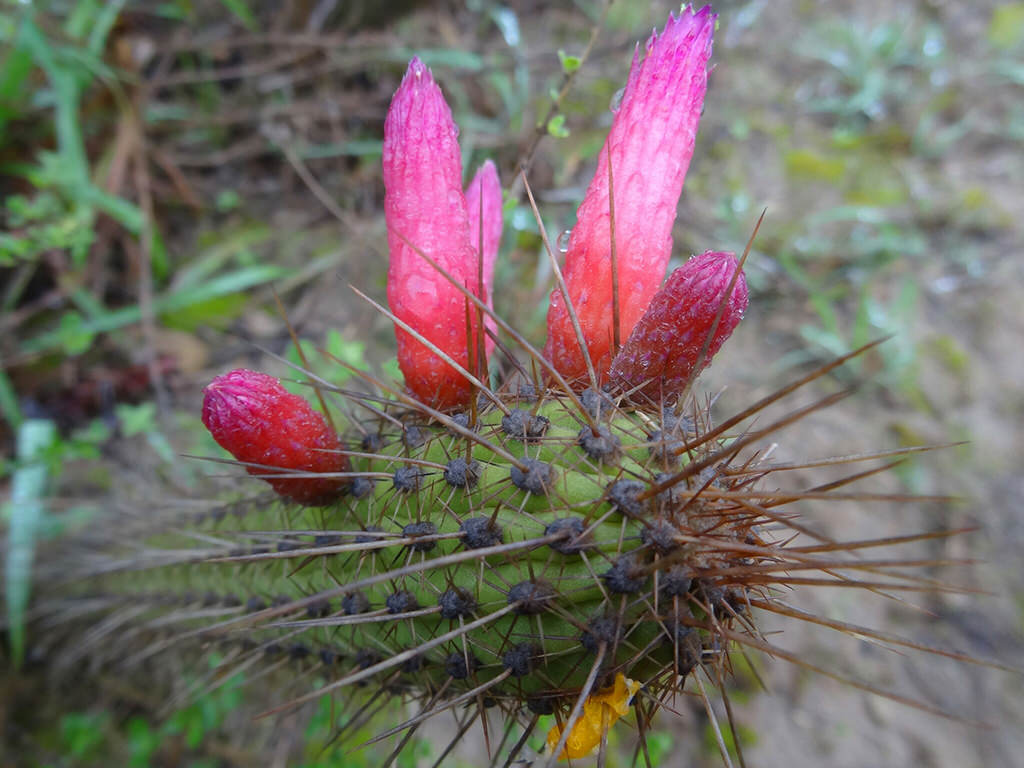
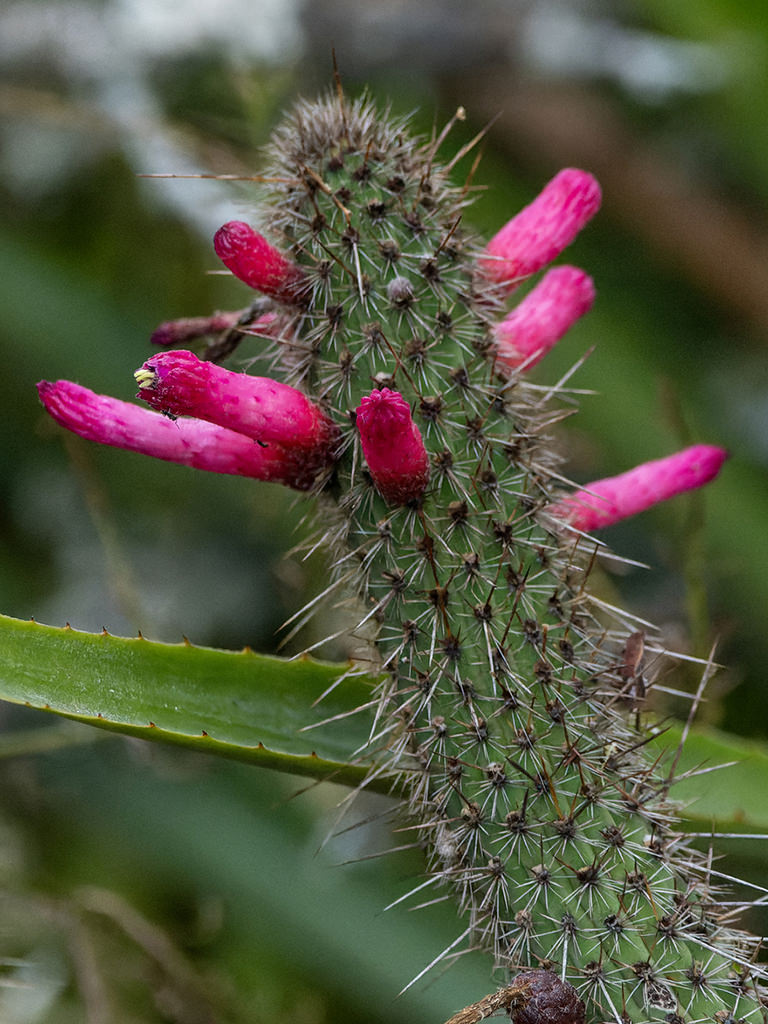
In late spring and summer, Cleistocactus candelilla produces striking red-violet flowers, which may have yellow tips. The flowers, which are covered with a few scales and inconspicuous hairs, are straight or slightly curved and can measure up to 1.6 inches (4 cm) in length. They typically appear from near the top of the stems. The fruits are spherical, light salmon-red, and have a few short, white hairs arising from the scales. They can grow up to 0.4 inches (1 cm) in diameter and contain glossy black seeds.
How to Grow and Care for Cleistocactus candelilla
Light: For optimal growth, plant Cleistocactus candelilla in an area that receives at least 6 hours of direct sunlight each day. In extremely hot climates, it's advisable to provide some light shade during the afternoon. If you are growing it indoors, a sunny window is ideal. To promote balanced growth, rotate the pot a quarter turn every week or two. If possible, move the cactus outdoors from spring to fall.
Soil: This cactus grows best in well-draining soil. You can use a commercial cactus soil mix or create your own.
Temperature: During the growing season, Cleistocactus candelilla thrives in warm temperatures, while in winter, it prefers cooler conditions. It is hardy in USDA Plant Hardiness Zones 9b-11b, which have average annual extreme minimum winter temperatures ranging from 25°F to 50°F (-3.9°C to 10°C).
Watering: Water thoroughly from spring to fall, but allow the soil to dry out before watering again. In the fall, reduce watering to every five weeks if the soil dries out. Suspend watering during the winter when the plant goes dormant.
Fertilizing: During its growing season, this cactus requires regular fertilizing. Use a balanced, water-soluble fertilizer diluted to 1/4 strength at each watering. A 10-10-10 fertilizer is ideal. However, stop fertilizing during the winter.
Repotting: Repot Cleistocactus candelilla once a year when it is young, and again as it matures and outgrows its pot.
Propagation: The easiest way to propagate this cactus is by stem cuttings, as seed propagation is a slower process. The best time to take cuttings and sow seeds is during spring and summer.
Learn more in "How to Grow and Care for Cleistocactus."
Toxicity of Cleistocactus candelilla
Cleistocactus candelilla is considered non-toxic to humans and pets, but it is best to keep it out of reach of pets and children due to its sharp spines.
Photo Gallery
Click on a photo to see a larger version.
Internal Links
- Explore all plants within the genus Cleistocactus.
- Explore all plants within the family Cactaceae.
References
- Cactus and Succulent Society of America (1952). Cactus and Succulent Journal, Vol. 24, p. 146.
- Cleistocactus candelilla Cárdenas🡕. Plants of the World Online. Kew Science. Retrieved January 17, 2026.
- Cleistocactus candelilla🡕. iNaturalist. Retrieved January 17, 2026.