Scientific Name
Cereus spegazzinii F.A.C.Weber
Synonym(s)
Monvillea spegazzinii, Piptanthocereus spegazzinii
Common Name(s)
Moonlight Cactus, Night-blooming Cereus
Scientific Classification
Family: Cactaceae
Subfamily: Cactoideae
Tribe: Cereeae
Genus: Cereus
Etymology
The specific epithet "spegazzinii" (pronounced "speg-uh-ZIN-ee-eye") honors Carlo Luigi Spegazzini (1858-1926), an Italian-born Argentinian botanist and mycologist.
Origin
Cereus spegazzinii is native to Argentina, Bolivia, Brazil, and Paraguay.
Description
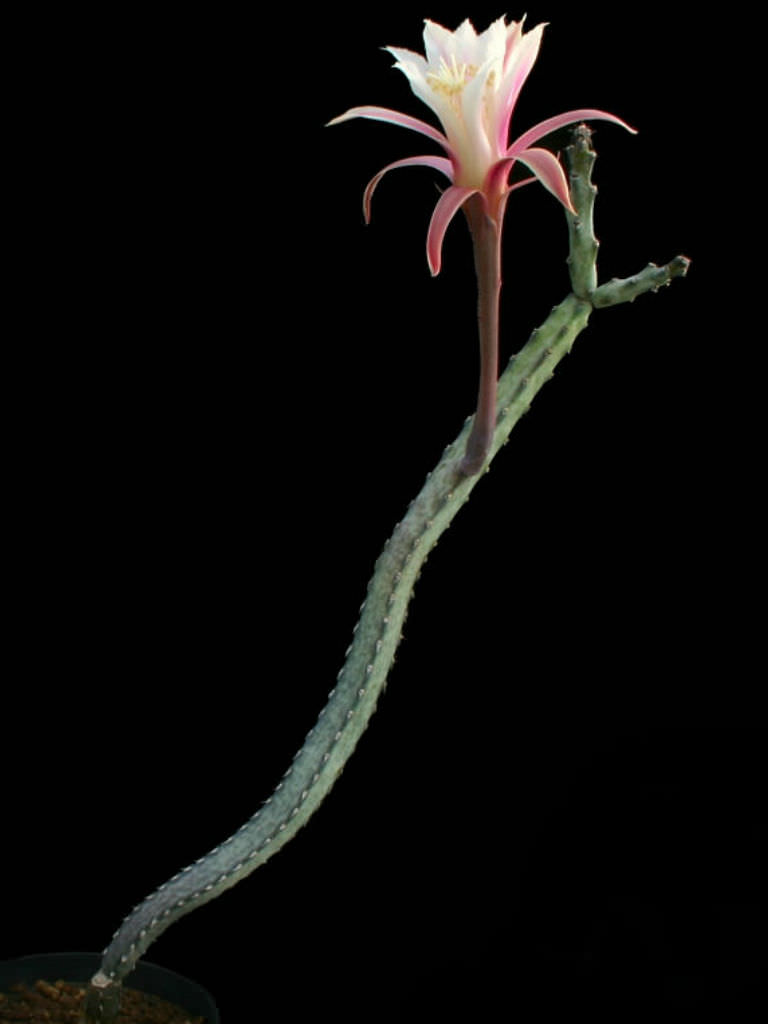
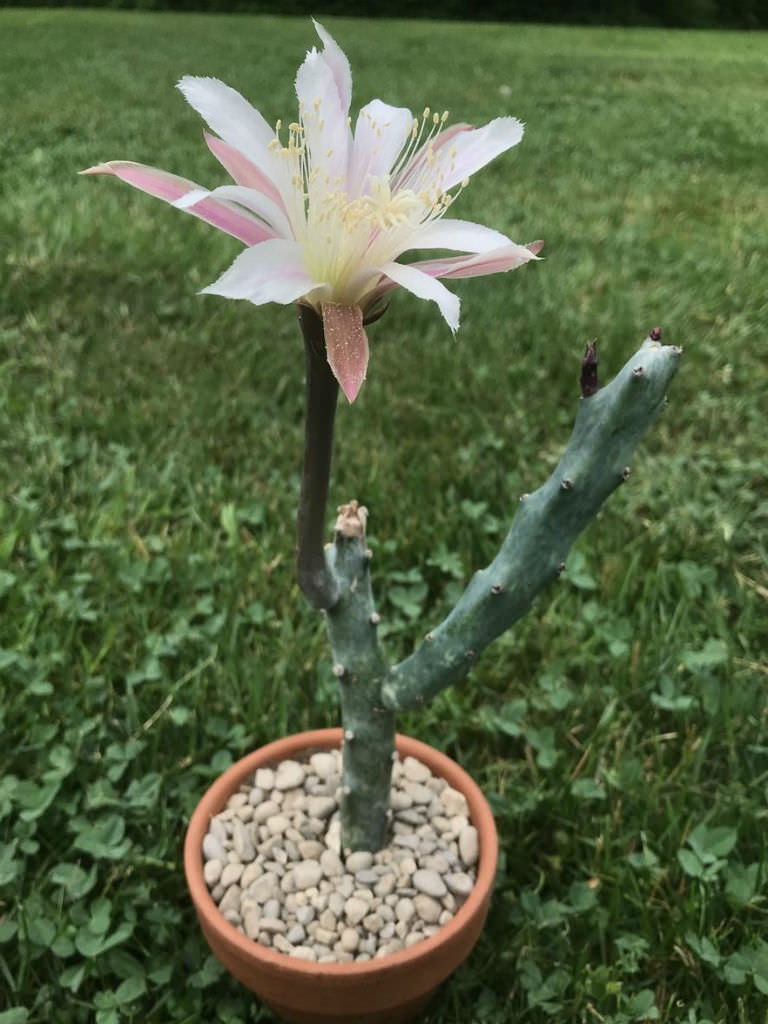
Cereus spegazzinii, also known as Monvillea spegazzinii, is an erect, sloping, or almost creeping cactus that grows and branches abundantly. The stems are cylindrical, blue-green, and can grow up to 6 feet (1.8 m) long and 2.6 inches (6.5 cm) in diameter. They have 3 to 5 ribs with very wide areoles. The young plants usually have 2 to 3 blackish spines, while the older ones have one central spine and five radial spines measuring up to 0.6 inches (1.5 cm) long.
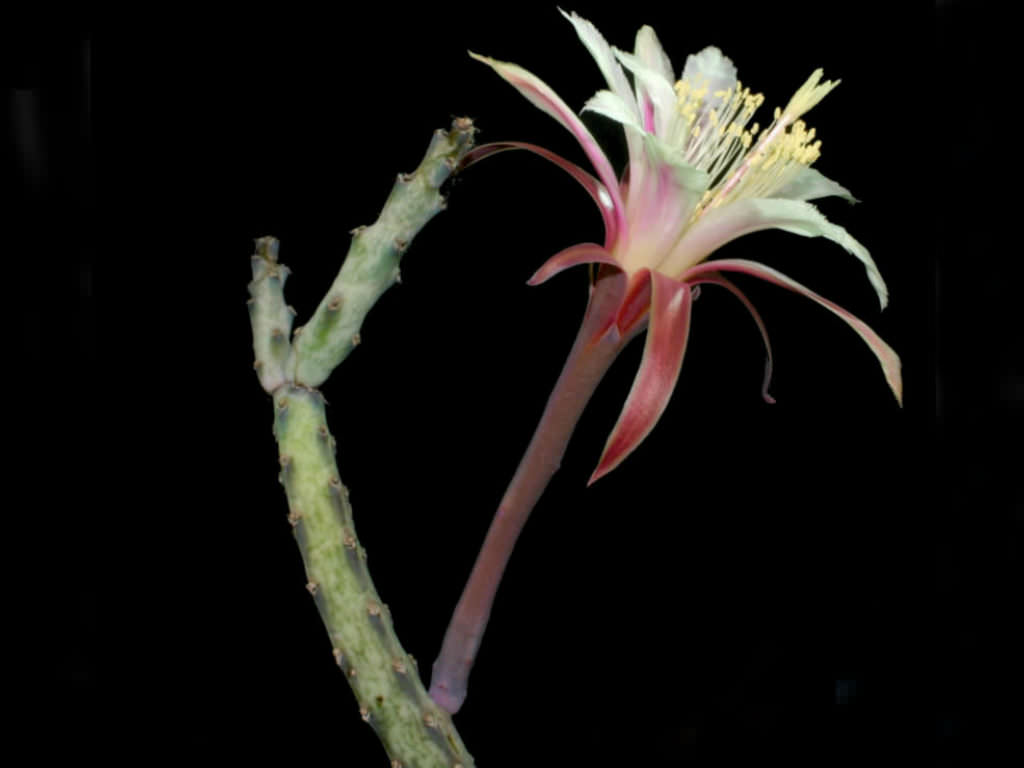
This cactus is one of the most prolific bloomers of all cacti. The flowers appear from spring to summer and open at night. They have reddish outer perianth segments and white inner ones and can reach up to 5.2 inches (13 cm) in length and 3.6 inches (9 cm) in diameter. The fruits are greenish to pinkish with remnants of the perianth.
Cereus spegazzinii often develops crested stems, and crested specimens can produce normal shoots.
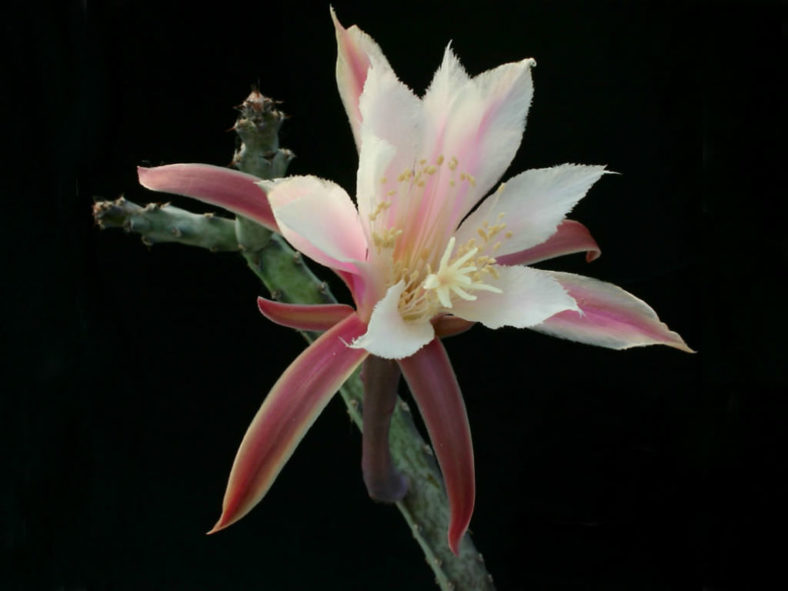
Forms of Cereus spegazzinii
How to Grow and Care for Cereus spegazzinii
Hardiness: USDA hardiness zones 10a to 11b: from 30°F (-1.1°C) to 50°F (10°C).
Like most cacti, Cereus is fairly low-maintenance and hardy. Ensure they receive enough water without becoming waterlogged, especially during the summer, and fertilize them for the best results. If the roots have become black or overly soft, the cactus could be experiencing root rot. Cut away the affected parts and replant. Most gardeners interested in cacti should be able to cultivate these without much problem.
If your Cereus outgrows its container, you may need to repot it. If so, ensure the soil is dry and then remove the pot. Knock away old soil, prune away rotted or dead roots, and then replace it in a new pot and backfill it with new soil. Do not overwater cacti planted in new pots, as this can lead to root rot. The cacti should be left to dry for about a week, then lightly watered.
These cacti propagate pretty easily from cuttings. Sever a branch and replant in moist, well-drained soil.
Learn more at How to Grow and Care for Cereus.
Links
- Back to genus Cereus
- Succupedia: Browse succulents by Scientific Name, Common Name, Genus, Family, USDA Hardiness Zone, Origin, or cacti by Genus
Photo Gallery
Click on a photo to see a larger version.