Scientific Name
Aloiampelos commixta (A.Berger) Klopper & Gideon F.Sm.
Synonym(s)
Aloe commixta
Common Name(s)
Peninsula Rambling Aloe, Table Mountain Aloe
Scientific Classification
Family: Asphodelaceae
Subfamily: Asphodeloideae
Genus: Aloiampelos
Etymology
The specific epithet "commixta" (pronounced "kom-MIKS-ta") means "mixed" or "intermingled" and refers to the way the stems of this species are intermingled as they sprawl across the ground.
Origin
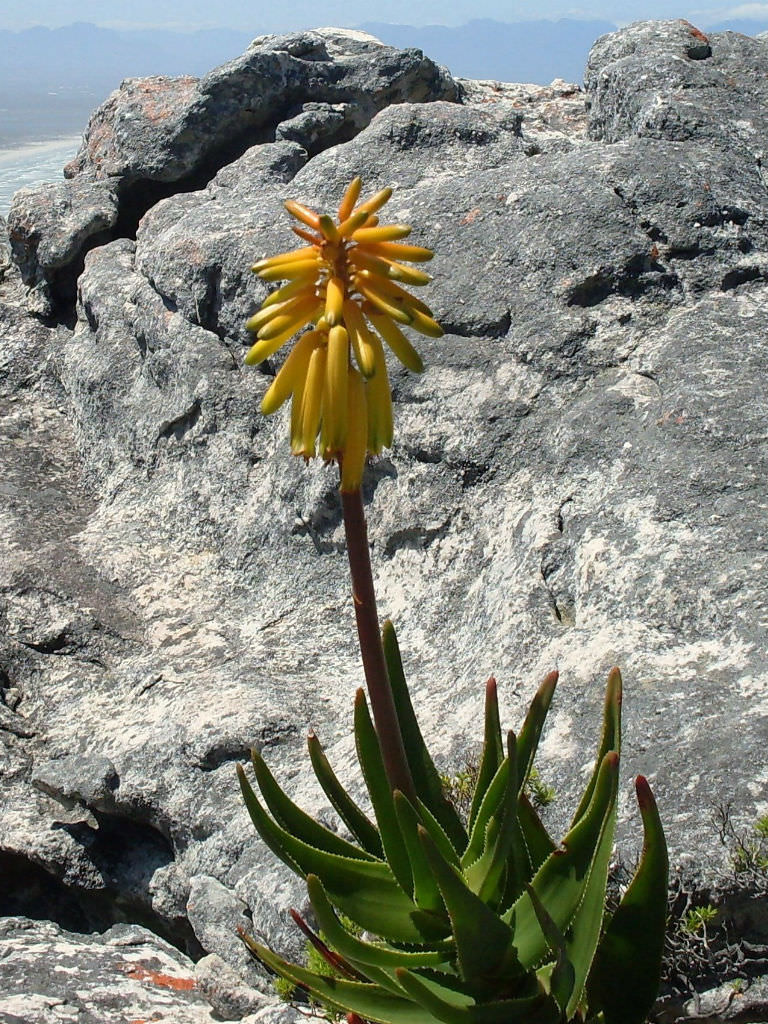
This species is native to South Africa. It grows in acid soil on rocky places in winter-rainfall areas of the southwestern Western Cape, at elevations between 0 and 660 feet (0 and 200 m) above sea level.
Description
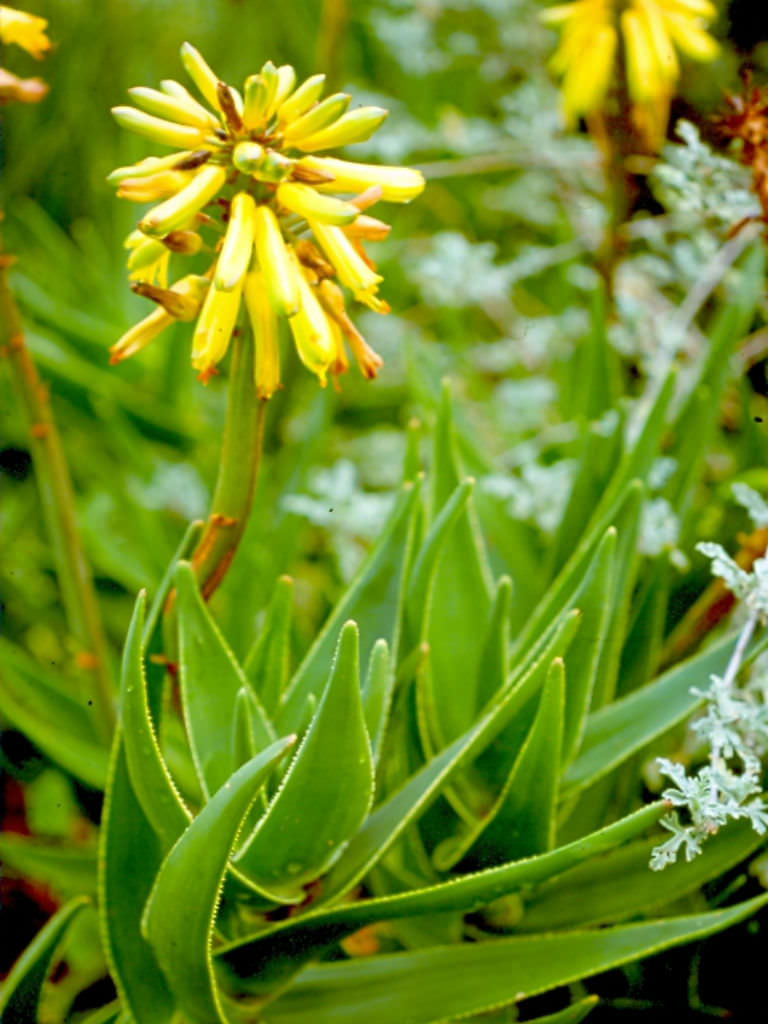
Aloiampelos commixta, formerly known as Aloe commixta, is a succulent shrub with long stems that bear fleshy, lance-shaped leaves with tiny, whitish teeth along the margins. The stems can grow up to 3.3 feet (1 m) long and tend to sprawl along the ground and over rocks. Much of the branching occurs at or below ground level. As the plant grows, the lower leaves drop off, leaving smooth, whitish stems at the base. The leaves are fleshy and pale to bright green with a waxy surface. They are erect, spreading, or slightly incurving, and evenly spaced along the stem, measuring up to 8 inches (20 cm) long.
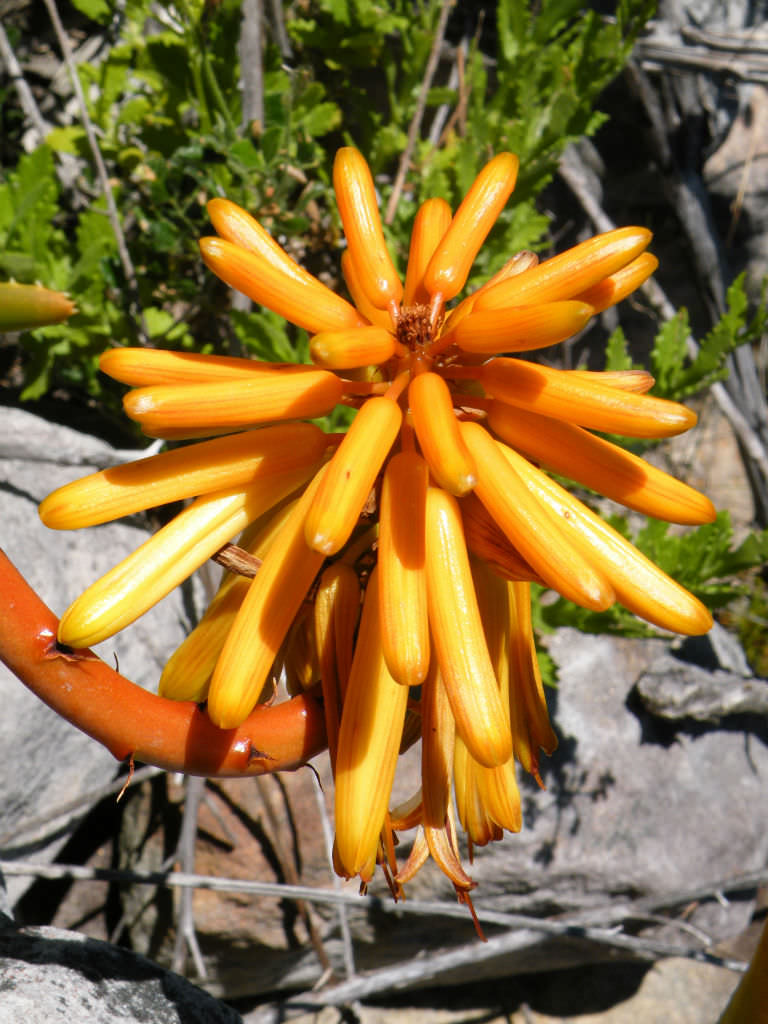
The reddish buds open into bright yellow flowers with a touch of orange. They appear in late winter, bunched together in a small, rounded raceme at the top of erect, long, stout stalks. There are often two or three flower stalks from one stem.
How to Grow and Care for Aloiampelos commixta
Hardiness: USDA hardiness zone 10a to 11b: from 30°F (-1.1°C) to 50°F (10°C).
Due to their hardiness and the wide range of flower colors, these slender succulents have become popular ornamental plants in South African gardens. The commoner species (such as the more widespread Aloes of the Eastern Cape) are also increasingly grown in gardens overseas.
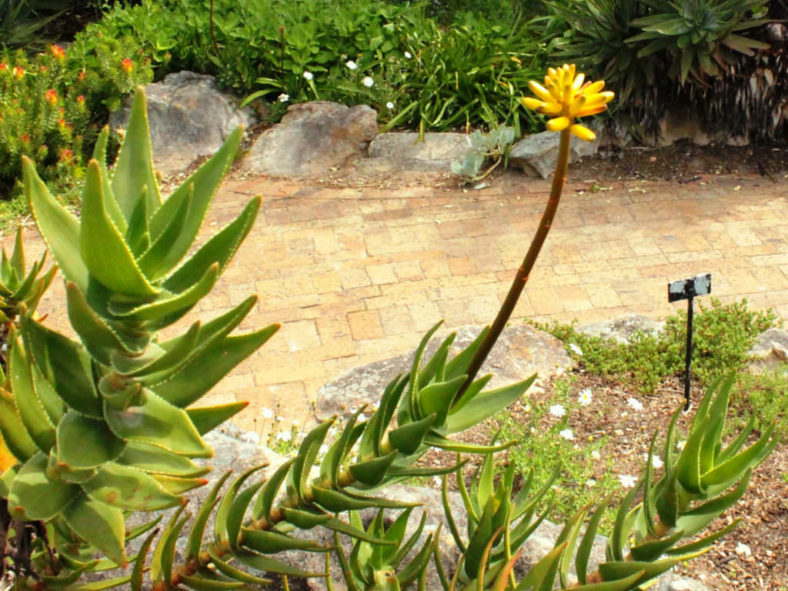
Climbing Aloes require a sunny, well-drained position and are particularly suitable for rockeries. The taller, climbing species are commonly planted along fences and boundaries, growing through the surrounding foliage. However, the lower, rambling species are better suited for rockeries, slopes, or terraces, where they will naturally cascade down.
See more at How to Grow and Care for Climbing Aloes.
Links
- Back to genus Aloiampelos
- Succupedia: Browse succulents by Scientific Name, Common Name, Genus, Family, USDA Hardiness Zone, Origin, or cacti by Genus
Photo Gallery
Click on a photo to see a larger version.