Scientific Name
Aloe perfoliata (variegated) – an informal descriptive name
This plant is not found in the wild and therefore cannot be classified as a distinct form. Its variegation is unstable, and it does not meet the criteria for recognition as a distinct cultivar under the ICNCP🡕.
Accepted Scientific Name
Aloe perfoliata L.
Common Name(s)
Mitre Aloe
Synonym(s)
Aloe mitriformis (variegated) – an informal descriptive name
Scientific Classification
Family: Asphodelaceae
Subfamily: Asphodeloideae
Genus: Aloe
Etymology
The specific epithet "perfoliata" (pronounced "per-foh-lee-AY-tuh") means "perfoliate; with the stem appearing to pass through the leaf" and refers to the way the stem seems to pass through the leaves of the plant.
Description
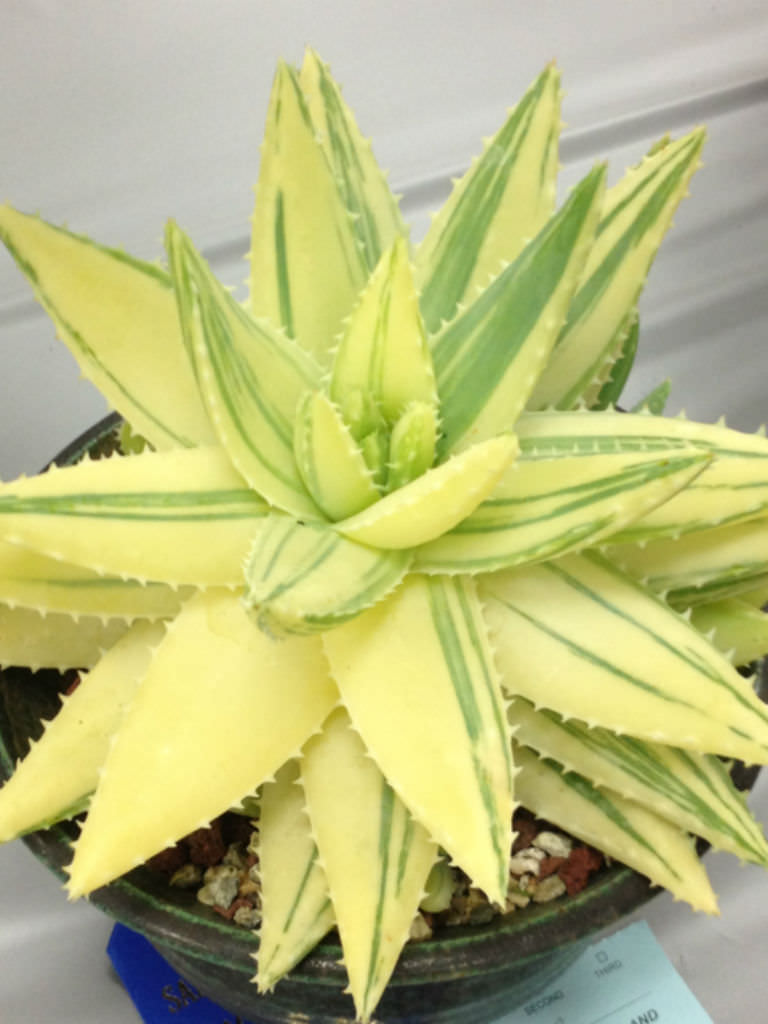
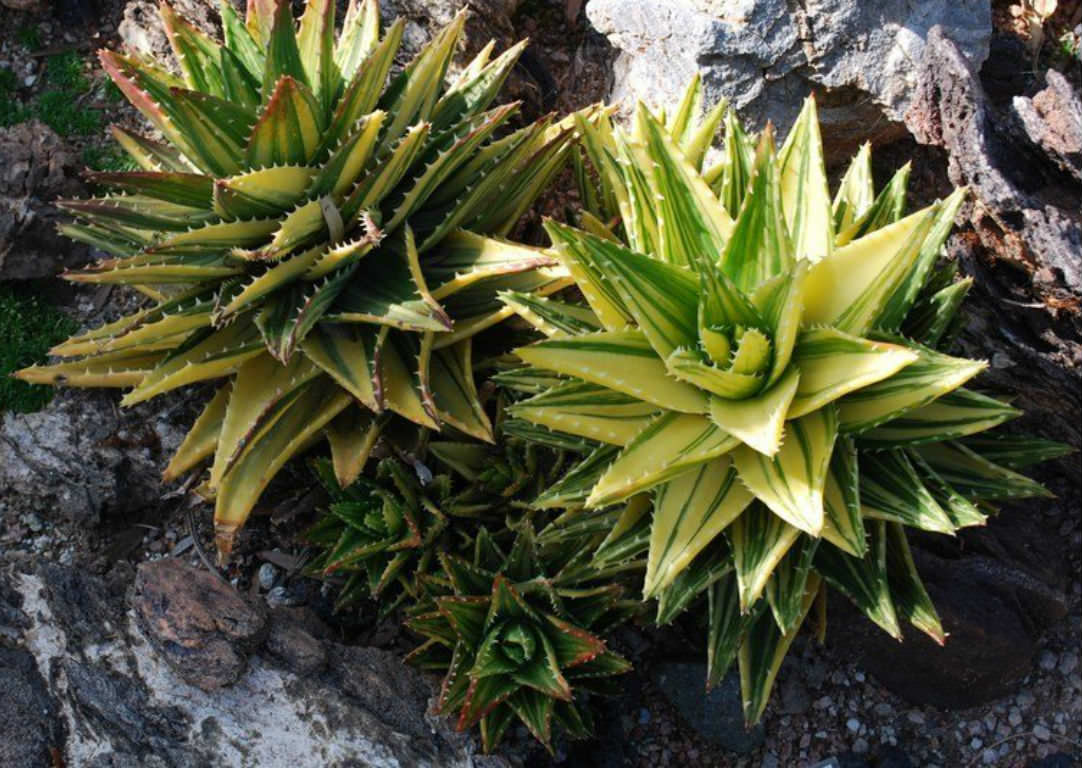
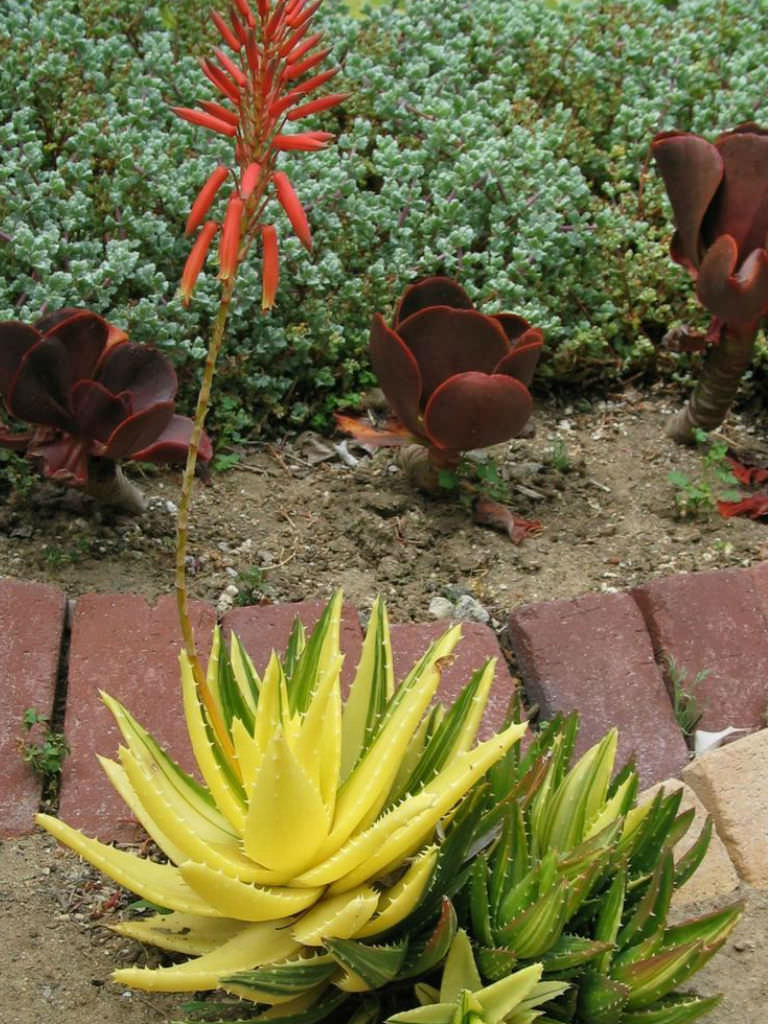
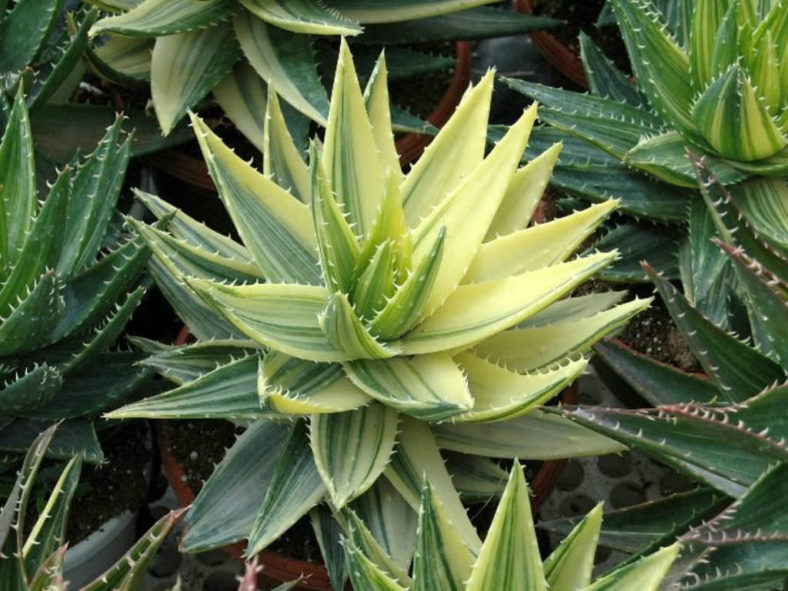
Aloe perfoliata (variegated), also known as Aloe mitriformis (variegated), is an attractive succulent that forms elongated rosettes of green to bluish-green leaves irregularly striped with yellow. The variegated leaves are broad, thick, and fleshy, often curved inwards, and have little, white, harmless teeth along the margins. They are sometimes almost entirely yellow.
The flowers are dull to bright red and appear in summer, usually on branched inflorescences.
Origin
Aloe perfoliata (variegated) is a sport of Aloe perfoliata selected in cultivation for its variegated foliage.
How to Grow and Care for Aloe perfoliata (variegated)
Hardiness: USDA hardiness zones 9a to 11b: from 20°F (-6.7°C) to 50°F (10°C).
Aloes can live long and thrive with very little care. These plants are great for beginners.
When growing Aloes indoors, place your plants near a southern or southwest-facing window with plenty of bright, indirect light. To keep your Aloes looking green, avoid exposing them to direct sun, which can cause leaves to brown. Rotate the pots once or twice a week to ensure equal light on all sides of the plants. Rotating your Aloe also helps balance the plant's look, as leaves tend to grow toward the sunlight.
Outdoors, provide light shade, especially during the hottest parts of the day. A covered patio or porch is an excellent spot for growing Aloe outdoors.
Plant Aloes in well-drained soil specially formulated for cacti and other succulents, or make your own soil mix. Drainage is essential because excessive moisture around the roots can cause root rot.
These succulents need regular watering but are very tolerant of short periods of drought. Water deeply, but only when the soil is completely dry. Reduce watering during the winter months. Overwatering is the leading cause of Aloe plants dying. Do not let water stand in the rosettes.
Learn more at How to Grow and Care for Aloe.
Links
- Back to genus Aloe
- Succupedia: Browse succulents by Scientific Name, Common Name, Genus, Family, USDA Hardiness Zone, Origin, or cacti by Genus
Photo Gallery
Click on a photo to see a larger version.