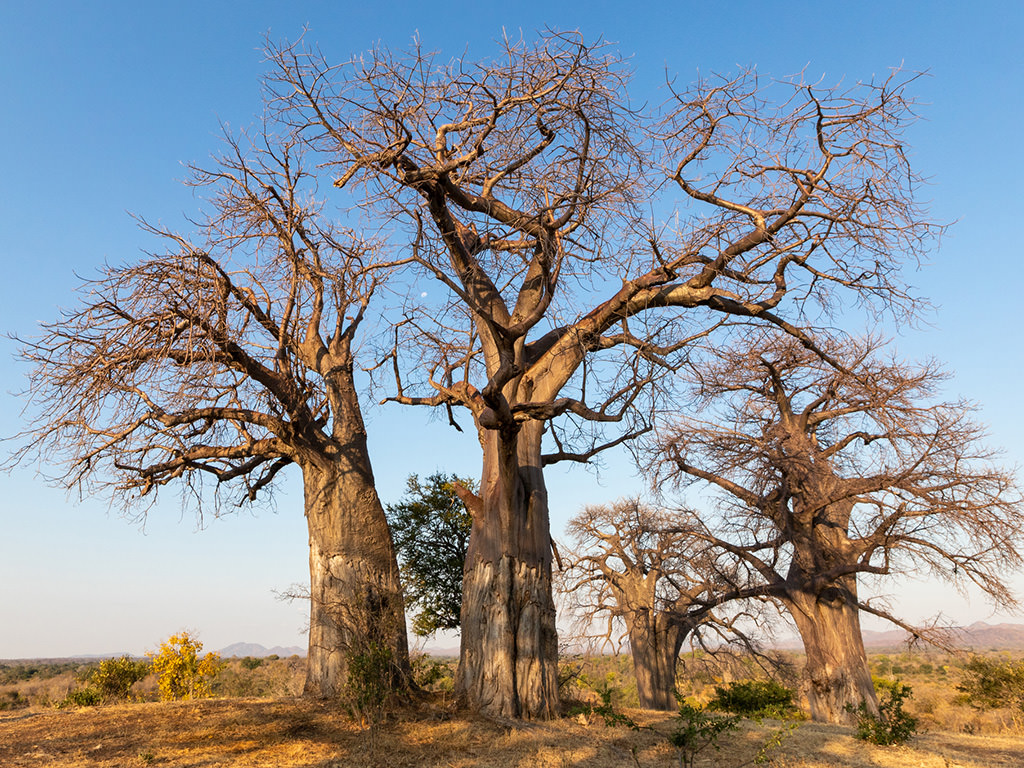
Adansonia digitata, commonly known as African Baobab, is the largest succulent plant in the world. This remarkable tree has traditionally been valued for its contributions as a source of food, water, health remedies, and shelter. Its massive trunk and thick, tapering branches give it the appearance of a root system, which is why it is also referred to as the "Upside-down Tree." According to a popular tale, God planted Adansonia digitata upside down, leading many traditional Africans to believe that it grows in this manner.
Taxonomy of Adansonia digitata
Scientific Name
Adansonia digitata L.
Synonym(s)
Adansonia bahobab, Adansonia baobab, Baobabus digitata
Common Name(s)
African Baobab, Baobab, Cream of Tartar Tree, Dead-rat Tree, Lemonade Tree, Monkey-bread Tree, Upside-down Tree
Scientific Classification
Family: Malvaceae
Subfamily: Bombacoideae
Genus: Adansonia
Etymology
The specific epithet "digitata" (pronounced "dig-ee-TAH-tuh") means "digitate; having finger-like divisions" and refers to the hand-like (digitate) compound leaves, which typically bear five, sometimes up to seven, finger-like leaflets.
Description of Adansonia digitata
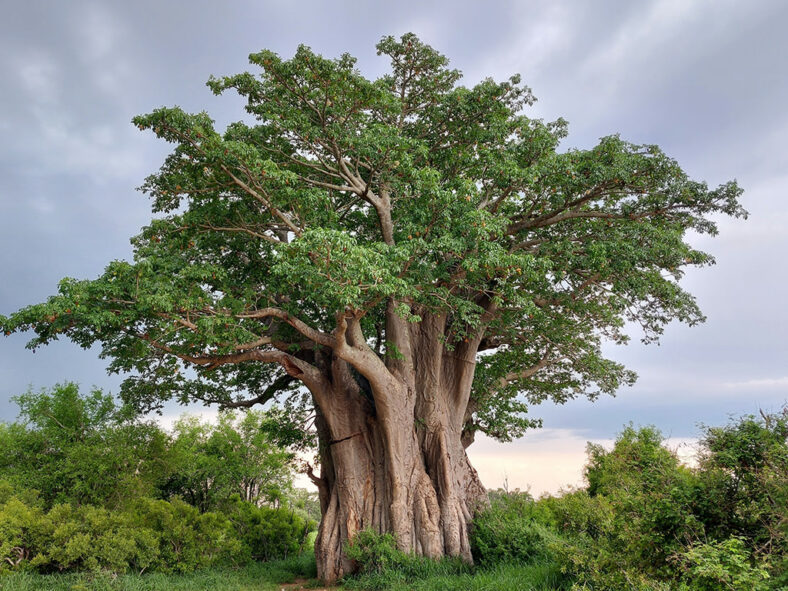
Adansonia digitata is a massive deciduous tree with single or multiple cylindrical or fluted trunks that give rise to tapering, irregularly distributed branches. It can grow up to 82 feet (25 m) tall, and its trunks can reach up to 35 feet (10.7 m) in diameter. The trunks are covered with a grayish-brown bark layer up to 4 inches (10 cm) thick. The bark is usually smooth but can often be variously folded and seamed due to years of growth. The leaves are divided into usually 5 to 7 finger-like leaflets measuring up to 6 inches (15 cm) long and 2.8 inches (7 cm) broad. They drop during the winter and appear again from late spring to early summer, crowded at the ends of branches.
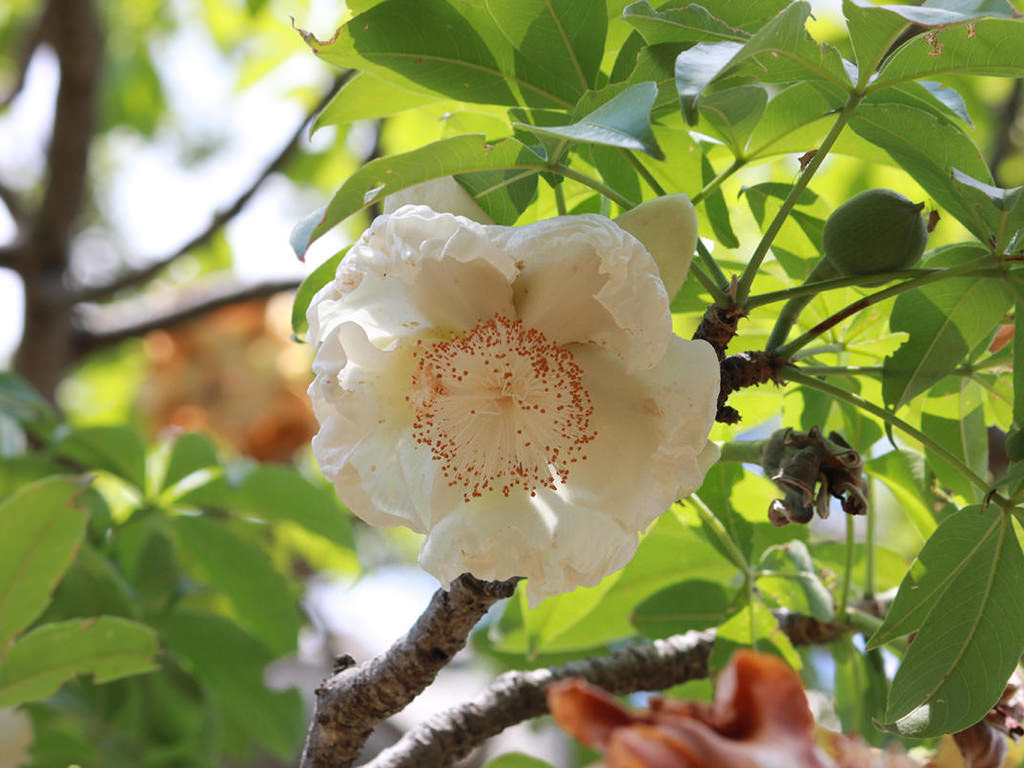
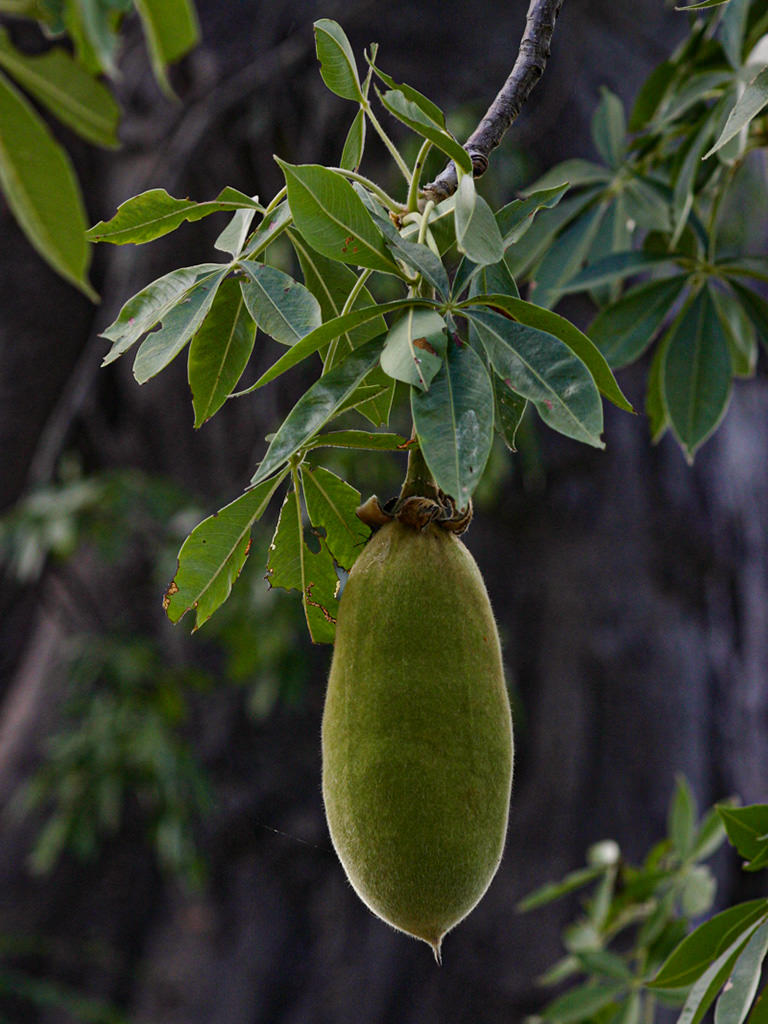
Flowering occurs in both the dry and wet seasons. The solitary flowers have a green, deeply 5-lobed calyx, white petals, and a white androecium surmounted by 720 to 1,600 free filaments. They can measure up to 6 inches (15 cm) long and 5 inches (12.5 cm) in diameter and hang down on slender stalks that can reach up to 3 feet (90 cm) in length. The flowers appear in the late afternoon and fall within 24 hours, turning brown and smelling quite unpleasant. The fruits vary in shape from spherical to cylindrical and can measure up to 10 inches (25 cm) long and 4.8 inches (12 cm) in diameter. They have stiff, woody outer shells and contain floury acid pulp and black kidney-shaped seeds.
Origin of Adansonia digitata
Adansonia digitata is native to semiarid sub-Saharan Africa. It grows in woodlands or thickets, mainly in drier lowland areas, from Angola through Southern Africa to East Africa as far north as southern Sudan and Ethiopia.
How to Grow and Care for Adansonia digitata
Adansonia digitata can be easily grown from seed. You can crack open the dry fruits to get the seeds. After that, wash away the powdery coating, soak the seeds in hot water, let them cool, and then soak them for another 24 hours before sowing. For best results, sow the seeds in spring or summer in a container with a well-draining seed-starting mix.
After that, cover the seed with sand, place the container in a warm, semi-shaded spot, and water regularly until germination. It may take 2 to 6 weeks for seeds to germinate. Once the seedlings are about 2 inches (5 cm) tall, transplant them into individual containers. Sandy soil with compost and bone meal is the best option for planting.
Adansonia digitata grows quickly when young and is suitable for large gardens, estates, or parkland as long as the soil is not waterlogged. When young, the plants do not look like their adult counterparts. They can be grown in containers for many years before planting. This way, you can move them to a warm position in a glasshouse or indoors behind a sunny window to protect them from frost damage.
Temperature: Adansonia digitata cannot tolerate frost. It grows best in USDA Plant Hardiness Zones 10b to 11b, with average minimum winter temperatures ranging from 35°F to 50°F (1.7°C to 10°C).
Toxicity of Adansonia digitata
Adansonia digitata is a traditional African food plant with various medicinal uses. The leaves, roots, flowers, fruit pulp, and seeds are all edible and non-toxic for people and pets.
Photo Gallery
Click on a photo to see a larger version.