

Do you hang your head in shame whenever we tout succulents as the easiest plants to grow? You are not alone. Trust me. Succulents are plants adapted to survive prolonged periods with very little water and play by their own rules. So here are some tips to help you keep your babies alive.
1. Give Them Breathing Room
While a few succulents do well indoors, including Aloe and Kalanchoe, most hail from warm, arid climates and depend on good air circulation to breathe. So, while that succulent terrarium looks adorable, forget about it. You will have way more luck keeping your plants outdoors.
2. Provide Some Shade
Most succulents do not thrive, despite widespread belief, in the hottest temperatures and full sun. While they appreciate plenty of light and very few survive in full shade, most succulents need sun protection, especially when temperatures exceed 90°F (32°C) or when they are small. Solid green, pale, or variegated varieties are most at risk of sunburn. If you plan to blast your plants with the brightest sun possible, choose plants that are red, gray, blue, or densely covered with spines, which help reflect the sun's rays.
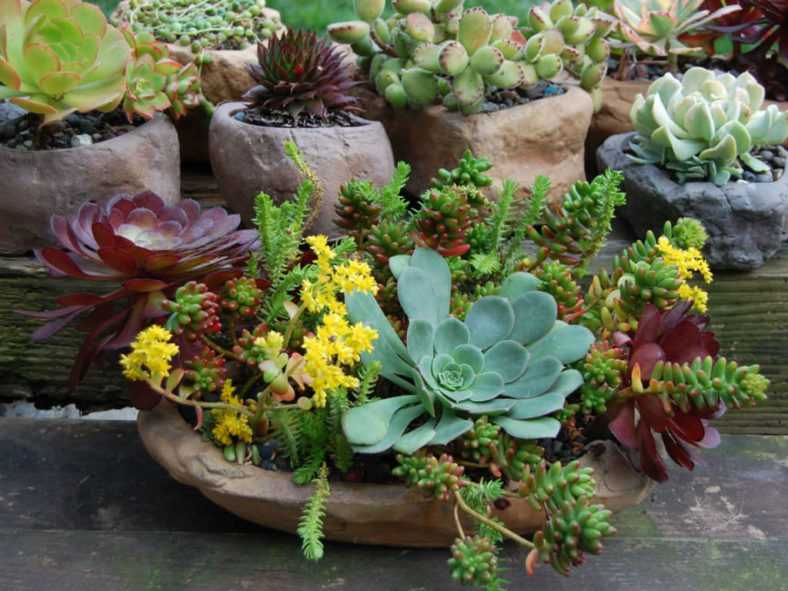
3. Start with the Right Soil
Use a well-draining soil mix. Or, if you are a DIY enthusiast, amend a traditional potting soil with coarse perlite, crushed lava, or pumice.
4. Low-water is not No-water
Perhaps you have killed your succulents by overwatering them, which is far more common than underwatering, which causes rot. But maybe you have already gotten the memo, are diligently dehydrating your plants, and wonder why they are dying. Well, newsflash: they need some water. Succulents prefer soil that dries slightly before watering. But what does this mean, you ask? It means you will likely be a-ok if, during dry times, you water small pots about once a week and large pots about every two weeks.
5. Include Drainage
Remember, succulent roots hate excess water. Make sure your container has drainage. We sometimes create attractive centerpieces in pots without drainage. You have to water these compositions, but only lightly. You must follow all other rules.
6. Succulents Need Food, Too
A once-yearly feeding is enough. Use any well-balanced organic fertilizer, cut the dose in half, and feed at the beginning of the plant's growing season for the best results.
7. Rethink Propagation
While you might be used to plucking a stem from your favorite geranium, rosemary bush, or houseplant and dunking it in water to watch roots grow, that won't work for propagating succulents. Try the opposite method. When you have a plant you like, pluck a stem and let it dry out in the shade for at least three days. This process, known as healing, forms a callus and helps prevent rot. Place your new stem in the soil mix mentioned above, and you're ready.
8. Beware of Frost
While some succulents, including certain types of Sedum and Sempervivum, can withstand freezing temperatures, most cannot. When in doubt, assume that any drop below freezing will cause damage or death to your plant. The easiest frost-protection solution is to keep plants in containers light enough to move indoors or under awnings when a cold snap is forecast. Also, unlike the rest of your garden, succulents have a higher chance of survival if they are dry before a cold snap, not wet.
Source: sunset.com
Links
- Succupedia: Browse succulents by Scientific Name, Common Name, Genus, Family, USDA Hardiness Zone, Origin, or cacti by Genus